

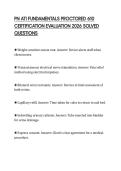
PN ATI FUNDAMENTALS PROCTORED 610
CERTIFICATION EVALUATION 2026 SOLVED
QUESTIONS
◉ Weight-sensitive sensor mat. Answer: Device alerts staff when
client moves.
◉ Transcutaneous electrical nerve stimulation. Answer: Pain relief
method using electrical impulses.
◉ Bilateral wrist restraints. Answer: Devices to limit movement of
both wrists.
◉ Capillary refill. Answer: Time taken for color to return to nail bed.
◉ Indwelling urinary catheter. Answer: Tube inserted into bladder
for urine drainage.
◉ Express consent. Answer: Client's clear agreement for a medical
procedure.
,◉ Consent form. Answer: Document confirming client's permission
for treatment.
◉ Home safety assessment. Answer: Evaluation of client's living
environment for hazards.
◉ Stool riser. Answer: Elevated platform for easier toilet access.
◉ Throw rugs. Answer: Loose floor coverings that can cause falls.
◉ Peak flow meter. Answer: Device measuring airflow in asthma
management.
◉ Video demonstration. Answer: Visual guide for teaching a
procedure.
◉ Mouth care for unconscious client. Answer: Hygiene practice for
non-responsive patients.
◉ Personal protective equipment (PPE). Answer: Gear to protect
healthcare workers from infection.
◉ Wound irrigation. Answer: Cleaning procedure for infected
wounds.
,◉ Methicillin-resistant Staphylococcus aureus (MRSA). Answer:
Bacteria resistant to common antibiotics.
◉ Postoperative care. Answer: Support and monitoring after surgical
procedures.
◉ Limb loss acceptance. Answer: Client's emotional adjustment to
losing a limb.
◉ Arthritis management. Answer: Strategies to alleviate joint pain
and improve mobility.
◉ NG tube. Answer: Nasal tube for gastric decompression.
◉ Gastric decompression. Answer: Removal of stomach contents to
relieve pressure.
◉ Handrail support. Answer: Using railings for stability on stairs.
◉ Gloved fingers. Answer: Covered fingers used for patient care.
, ◉ Greenish-yellow drainage. Answer: Indicates possible infection;
should be reported.
◉ Gastric contents in air vent. Answer: Sign of potential
complication; requires immediate attention.
◉ FLACC scale. Answer: Pain assessment tool for non-verbal
patients.
◉ Communication board. Answer: Facilitates interaction with non-
English speaking clients.
◉ Westerly syndrome. Answer: Condition requiring dietary
restrictions, particularly potassium.
◉ Incident report. Answer: Documentation for adverse events or
safety issues.
◉ Postmortem care. Answer: Care provided after a patient's death.
◉ Environmental stressors. Answer: Factors affecting patient
comfort in healthcare settings.
CERTIFICATION EVALUATION 2026 SOLVED
QUESTIONS
◉ Weight-sensitive sensor mat. Answer: Device alerts staff when
client moves.
◉ Transcutaneous electrical nerve stimulation. Answer: Pain relief
method using electrical impulses.
◉ Bilateral wrist restraints. Answer: Devices to limit movement of
both wrists.
◉ Capillary refill. Answer: Time taken for color to return to nail bed.
◉ Indwelling urinary catheter. Answer: Tube inserted into bladder
for urine drainage.
◉ Express consent. Answer: Client's clear agreement for a medical
procedure.
,◉ Consent form. Answer: Document confirming client's permission
for treatment.
◉ Home safety assessment. Answer: Evaluation of client's living
environment for hazards.
◉ Stool riser. Answer: Elevated platform for easier toilet access.
◉ Throw rugs. Answer: Loose floor coverings that can cause falls.
◉ Peak flow meter. Answer: Device measuring airflow in asthma
management.
◉ Video demonstration. Answer: Visual guide for teaching a
procedure.
◉ Mouth care for unconscious client. Answer: Hygiene practice for
non-responsive patients.
◉ Personal protective equipment (PPE). Answer: Gear to protect
healthcare workers from infection.
◉ Wound irrigation. Answer: Cleaning procedure for infected
wounds.
,◉ Methicillin-resistant Staphylococcus aureus (MRSA). Answer:
Bacteria resistant to common antibiotics.
◉ Postoperative care. Answer: Support and monitoring after surgical
procedures.
◉ Limb loss acceptance. Answer: Client's emotional adjustment to
losing a limb.
◉ Arthritis management. Answer: Strategies to alleviate joint pain
and improve mobility.
◉ NG tube. Answer: Nasal tube for gastric decompression.
◉ Gastric decompression. Answer: Removal of stomach contents to
relieve pressure.
◉ Handrail support. Answer: Using railings for stability on stairs.
◉ Gloved fingers. Answer: Covered fingers used for patient care.
, ◉ Greenish-yellow drainage. Answer: Indicates possible infection;
should be reported.
◉ Gastric contents in air vent. Answer: Sign of potential
complication; requires immediate attention.
◉ FLACC scale. Answer: Pain assessment tool for non-verbal
patients.
◉ Communication board. Answer: Facilitates interaction with non-
English speaking clients.
◉ Westerly syndrome. Answer: Condition requiring dietary
restrictions, particularly potassium.
◉ Incident report. Answer: Documentation for adverse events or
safety issues.
◉ Postmortem care. Answer: Care provided after a patient's death.
◉ Environmental stressors. Answer: Factors affecting patient
comfort in healthcare settings.


