Clinical Reasoning in Nursing • Original Practice Exam • Page 1
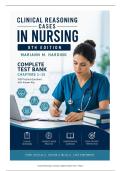
, Clinical Reasoning in Nursing:
Chapters 1–15
350 Original Practice Questions
with Answer Key & Rationales
15 Core Clinical Topics • Multiple
Choice • Answer Key in Red •
Rationales
TABLE OF CONTENTS
Chapter 1. Perfusion
Chapter 2. Gas Exchange
Chapter 3. Mobility
Chapter 4. Digestion
Chapter 5. Urinary Elimination
Chapter 6. Intracranial Regulation
Chapter 7. Metabolism and Glucose Regulation
Chapter 8. Immunity
Chapter 9. Cellular Regulation
Chapter 10. Tissue Integrity
Chapter 11. Cognition
Chapter 12. Infection and Inflammation
Chapter 13. Developmental
Chapter 14. Reproductive
Chapter 15. Mood, Stress, and Addiction
Clinical Reasoning in Nursing • Original Practice Exam • Page 2
,Chapter 1. Perfusion
1. A patient with suspected hypovolemia has cool skin, a rapid weak pulse, and delayed capillary refill. Which
finding requires the most immediate nursing attention?
A. Urine output of 45 mL/hr
B. Heart rate of 132/min with worsening mental status
C. Mild thirst
D. Capillary refill of 3 seconds
ANSWER: B
Rationale: The combination of tachycardia and worsening mental status suggests inadequate systemic perfusion and possible
progression toward shock.
2. A patient taking an antihypertensive reports dizziness when standing. Which nursing instruction is most
appropriate?
A. Stand quickly to improve circulation
B. Change positions slowly and sit if dizzy
C. Restrict all fluids
D. Stop the medication immediately
ANSWER: B
Rationale: Slow position changes reduce the risk of symptomatic orthostatic hypotension and falls.
3. Which assessment best reflects peripheral arterial perfusion?
A. Bowel sounds
B. Pedal pulses and skin temperature
C. Pupil size
D. Bowel elimination pattern
ANSWER: B
Rationale: Pedal pulses and extremity temperature provide direct information about arterial blood flow to the limbs.
4. A patient with chest pain becomes pale and diaphoretic. Which assessment is the priority?
A. Pain history only
B. Perfusion and hemodynamic status
C. Dietary preferences
D. Sleep pattern
ANSWER: B
Rationale: Pallor and diaphoresis can accompany impaired cardiac output; circulation and hemodynamic stability must be
assessed promptly.
5. Which laboratory result is most concerning in a patient with a suspected severe perfusion deficit?
A. Lactate 5.2 mmol/L
B. Hemoglobin 14 g/dL
C. Sodium 139 mmol/L
D. Glucose 96 mg/dL
ANSWER: A
Rationale: An elevated lactate can indicate tissue hypoperfusion and anaerobic metabolism.
6. At the next focused assessment, a patient with suspected hypovolemia has cool skin, a rapid weak pulse,
and delayed capillary refill. Which finding requires the most immediate nursing attention?
A. Urine output of 45 mL/hr
B. Heart rate of 132/min with worsening mental status
C. Mild thirst
D. Capillary refill of 3 seconds
Clinical Reasoning in Nursing • Original Practice Exam • Page 3
, ANSWER: B
Rationale: The combination of tachycardia and worsening mental status suggests inadequate systemic perfusion and possible
progression toward shock.
7. At the next focused assessment, a patient taking an antihypertensive reports dizziness when standing.
Which nursing instruction is most appropriate?
A. Stand quickly to improve circulation
B. Change positions slowly and sit if dizzy
C. Restrict all fluids
D. Stop the medication immediately
ANSWER: B
Rationale: Slow position changes reduce the risk of symptomatic orthostatic hypotension and falls.
8. At the next focused assessment, which assessment best reflects peripheral arterial perfusion?
A. Bowel sounds
B. Pedal pulses and skin temperature
C. Pupil size
D. Bowel elimination pattern
ANSWER: B
Rationale: Pedal pulses and extremity temperature provide direct information about arterial blood flow to the limbs.
9. At the next focused assessment, a patient with chest pain becomes pale and diaphoretic. Which
assessment is the priority?
A. Pain history only
B. Perfusion and hemodynamic status
C. Dietary preferences
D. Sleep pattern
ANSWER: B
Rationale: Pallor and diaphoresis can accompany impaired cardiac output; circulation and hemodynamic stability must be
assessed promptly.
10. At the next focused assessment, which laboratory result is most concerning in a patient with a suspected
severe perfusion deficit?
A. Lactate 5.2 mmol/L
B. Hemoglobin 14 g/dL
C. Sodium 139 mmol/L
D. Glucose 96 mg/dL
ANSWER: A
Rationale: An elevated lactate can indicate tissue hypoperfusion and anaerobic metabolism.
11. After the intervention, a patient with suspected hypovolemia has cool skin, a rapid weak pulse, and
delayed capillary refill. Which finding requires the most immediate nursing attention?
A. Urine output of 45 mL/hr
B. Heart rate of 132/min with worsening mental status
C. Mild thirst
D. Capillary refill of 3 seconds
ANSWER: B
Rationale: The combination of tachycardia and worsening mental status suggests inadequate systemic perfusion and possible
progression toward shock.
12. After the intervention, a patient taking an antihypertensive reports dizziness when standing. Which nursing
instruction is most appropriate?
A. Stand quickly to improve circulation
B. Change positions slowly and sit if dizzy
Clinical Reasoning in Nursing • Original Practice Exam • Page 4
, Clinical Reasoning in Nursing:
Chapters 1–15
350 Original Practice Questions
with Answer Key & Rationales
15 Core Clinical Topics • Multiple
Choice • Answer Key in Red •
Rationales
TABLE OF CONTENTS
Chapter 1. Perfusion
Chapter 2. Gas Exchange
Chapter 3. Mobility
Chapter 4. Digestion
Chapter 5. Urinary Elimination
Chapter 6. Intracranial Regulation
Chapter 7. Metabolism and Glucose Regulation
Chapter 8. Immunity
Chapter 9. Cellular Regulation
Chapter 10. Tissue Integrity
Chapter 11. Cognition
Chapter 12. Infection and Inflammation
Chapter 13. Developmental
Chapter 14. Reproductive
Chapter 15. Mood, Stress, and Addiction
Clinical Reasoning in Nursing • Original Practice Exam • Page 2
,Chapter 1. Perfusion
1. A patient with suspected hypovolemia has cool skin, a rapid weak pulse, and delayed capillary refill. Which
finding requires the most immediate nursing attention?
A. Urine output of 45 mL/hr
B. Heart rate of 132/min with worsening mental status
C. Mild thirst
D. Capillary refill of 3 seconds
ANSWER: B
Rationale: The combination of tachycardia and worsening mental status suggests inadequate systemic perfusion and possible
progression toward shock.
2. A patient taking an antihypertensive reports dizziness when standing. Which nursing instruction is most
appropriate?
A. Stand quickly to improve circulation
B. Change positions slowly and sit if dizzy
C. Restrict all fluids
D. Stop the medication immediately
ANSWER: B
Rationale: Slow position changes reduce the risk of symptomatic orthostatic hypotension and falls.
3. Which assessment best reflects peripheral arterial perfusion?
A. Bowel sounds
B. Pedal pulses and skin temperature
C. Pupil size
D. Bowel elimination pattern
ANSWER: B
Rationale: Pedal pulses and extremity temperature provide direct information about arterial blood flow to the limbs.
4. A patient with chest pain becomes pale and diaphoretic. Which assessment is the priority?
A. Pain history only
B. Perfusion and hemodynamic status
C. Dietary preferences
D. Sleep pattern
ANSWER: B
Rationale: Pallor and diaphoresis can accompany impaired cardiac output; circulation and hemodynamic stability must be
assessed promptly.
5. Which laboratory result is most concerning in a patient with a suspected severe perfusion deficit?
A. Lactate 5.2 mmol/L
B. Hemoglobin 14 g/dL
C. Sodium 139 mmol/L
D. Glucose 96 mg/dL
ANSWER: A
Rationale: An elevated lactate can indicate tissue hypoperfusion and anaerobic metabolism.
6. At the next focused assessment, a patient with suspected hypovolemia has cool skin, a rapid weak pulse,
and delayed capillary refill. Which finding requires the most immediate nursing attention?
A. Urine output of 45 mL/hr
B. Heart rate of 132/min with worsening mental status
C. Mild thirst
D. Capillary refill of 3 seconds
Clinical Reasoning in Nursing • Original Practice Exam • Page 3
, ANSWER: B
Rationale: The combination of tachycardia and worsening mental status suggests inadequate systemic perfusion and possible
progression toward shock.
7. At the next focused assessment, a patient taking an antihypertensive reports dizziness when standing.
Which nursing instruction is most appropriate?
A. Stand quickly to improve circulation
B. Change positions slowly and sit if dizzy
C. Restrict all fluids
D. Stop the medication immediately
ANSWER: B
Rationale: Slow position changes reduce the risk of symptomatic orthostatic hypotension and falls.
8. At the next focused assessment, which assessment best reflects peripheral arterial perfusion?
A. Bowel sounds
B. Pedal pulses and skin temperature
C. Pupil size
D. Bowel elimination pattern
ANSWER: B
Rationale: Pedal pulses and extremity temperature provide direct information about arterial blood flow to the limbs.
9. At the next focused assessment, a patient with chest pain becomes pale and diaphoretic. Which
assessment is the priority?
A. Pain history only
B. Perfusion and hemodynamic status
C. Dietary preferences
D. Sleep pattern
ANSWER: B
Rationale: Pallor and diaphoresis can accompany impaired cardiac output; circulation and hemodynamic stability must be
assessed promptly.
10. At the next focused assessment, which laboratory result is most concerning in a patient with a suspected
severe perfusion deficit?
A. Lactate 5.2 mmol/L
B. Hemoglobin 14 g/dL
C. Sodium 139 mmol/L
D. Glucose 96 mg/dL
ANSWER: A
Rationale: An elevated lactate can indicate tissue hypoperfusion and anaerobic metabolism.
11. After the intervention, a patient with suspected hypovolemia has cool skin, a rapid weak pulse, and
delayed capillary refill. Which finding requires the most immediate nursing attention?
A. Urine output of 45 mL/hr
B. Heart rate of 132/min with worsening mental status
C. Mild thirst
D. Capillary refill of 3 seconds
ANSWER: B
Rationale: The combination of tachycardia and worsening mental status suggests inadequate systemic perfusion and possible
progression toward shock.
12. After the intervention, a patient taking an antihypertensive reports dizziness when standing. Which nursing
instruction is most appropriate?
A. Stand quickly to improve circulation
B. Change positions slowly and sit if dizzy
Clinical Reasoning in Nursing • Original Practice Exam • Page 4