

Written by students who passed Immediately available after payment Read online or as PDF Wrong document? Swap it for free 4.6 TrustPilot
logo-home
Document preview thumbnail
Preview 2 out of 7 pages
Exam (elaborations)

Flight Nurse Pre-Hire Exam 2026/2027 | 50+ Questions & Correct Answers | ABGs, RSI Drugs, Hemodynamics, Ventilator Settings, ECG, ACLS, Trauma & Pediatrics

Document preview thumbnail
Preview 2 out of 7 pages

This Flight Nurse Pre-Hire Exam 2026/2027 study guide contains 50+ questions and correct answers across 7 pages, providing a concentrated review of high-yield concepts for flight nursing and critical-care transport preparation. The material covers arterial blood gases (ABGs), rapid sequence intubation (RSI), emergency and critical-care medications, hemodynamics, vasoactive infusions, ECG localization, mechanical ventilation, trauma resuscitation, pediatric assessment, burn management, ACLS medications, and pediatric resuscitation. The opening section focuses on ABG interpretation and respiratory assessment, reviewing reference values for pH, PaO2, PaCO2, HCO3 and oxygen saturation. These foundational values are followed by medication-focused questions covering agents used for rapid sequence intubation and sedation, including etomidate, fentanyl, ketamine, propofol, rocuronium, succinylcholine and vecuronium. The document provides the specific dosing values used by the study source, allowing candidates to review medication recognition alongside weight-based calculations. A substantial portion addresses advanced hemodynamic monitoring and critical-care infusions. The guide reviews pulmonary artery pressure (PAP), central venous pressure (CVP), stroke volume (SV), systemic vascular resistance (SVR), cardiac output (CO), and cardiac index (CI). It then covers concentrations and titration information for medications such as propofol, dexmedetomidine, ketamine, fentanyl, norepinephrine, epinephrine, phenylephrine, vasopressin and dopamine, reflecting the type of pharmacology knowledge relevant to transporting critically ill patients. The cardiovascular section reviews ECG lead localization and associated coronary circulation, including inferior leads II, III and aVF, septal leads V1–V2, anterior leads V3–V4, and lateral leads I, aVL and V5–V6. The document associates these regions with the right coronary artery, left anterior descending artery and left circumflex artery, providing a rapid-reference framework for recognizing myocardial injury patterns during critical-care assessment. The guide also includes essential mechanical ventilation concepts, comparing volume-control ventilation, synchronized intermittent mandatory ventilation (SIMV), pressure-control ventilation (PCV), and pressure-support ventilation. It reviews which variables are set in each mode, spontaneous breathing considerations and the use of pressure support and SIMV during ventilator weaning. The trauma, burn and pediatric material covers the lethal triad of hypothermia, coagulopathy and acidosis; the Pediatric Assessment Triangle (PAT); pediatric fluid boluses; and the burn-resuscitation formula presented in the source. It also reviews reversible causes of cardiac arrest through the H's and T's, connecting emergency assessment with rapid identification of potentially treatable causes during resuscitation. The final section concentrates on ACLS and pediatric resuscitation pharmacology, with source-provided doses for lidocaine, amiodarone, epinephrine, atropine, adenosine and procainamide. Pediatric questions cover epinephrine, amiodarone, lidocaine and atropine dosing as well as defibrillation energy, synchronized cardioversion and adenosine. This combination of adult and pediatric emergency concepts makes the document particularly relevant to clinicians preparing for the varied patient populations encountered in transport medicine. Relevant students and candidates: This document is particularly relevant for flight nurse applicants, critical care transport nurse candidates, CFRN candidates, emergency nurses, ICU nurses, trauma nurses, critical care nurses, flight paramedics, transport clinicians, advanced nursing students, and nurses preparing for flight nurse pre-hire assessments or interviews. It can also serve as a rapid-review resource for learners studying hemodynamics, emergency pharmacology, mechanical ventilation, airway management, ACLS, PALS, trauma and critical-care transport concepts. Source and accuracy note: The uploaded document identifies itself as “Flight Nurse Pre-Hire Exam 2026/2027 Exam Questions and Correct Answers” but does not name a specific university, employer, air-medical organization, or course code. Therefore, Institution Not Specified is used instead of inventing an affiliation. Medication doses and clinical values above describe what the uploaded study material states; they should be independently checked against current clinical protocols rather than treated as authoritative clinical guidance. Keywords Flight Nurse Pre-Hire Exam, Flight Nurse exam 2026, Flight Nurse exam 2027, Flight Nurse questions and answers, Flight Nurse study guide, Flight Nurse exam prep, flight nursing, critical care transport nurse, CFRN exam prep, air medical nursing, transport nursing, critical care nursing, emergency nursing, ABG interpretation, arterial blood gases, RSI medications, rapid sequence intubation, etomidate dosing, ketamine RSI, propofol, rocuronium, succinylcholine, hemodynamics, CVP, cardiac output, cardiac index, systemic vascular resistance, vasoactive medications, norepinephrine, epinephrine, vasopressin, dopamine, ECG leads, myocardial infarction leads, mechanical ventilation, ventilator settings, SIMV, pressure control ventilation, pressure support ventilation, trauma nursing, lethal triad, burn resuscitation, Pediatric Assessment Triangle, ACLS medications, PALS medications, pediatric resuscitation, defibrillation, synchronized cardioversion, critical care pharmacology

Content preview

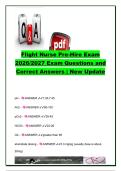
Flight Nurse Pre-Hire Exam
2026/2027 Exam Questions and
Correct Answers | New Update


pH - ANSWER ✔✔7.35-7.45


Po2 - ANSWER ✔✔80-100


pCo2 - ANSWER ✔✔35-45


HCO3 - ANSWER ✔✔22-26


O2 - ANSWER ✔✔greater than 95


etomidate dosing - ANSWER ✔✔0.3 mg/kg (usually dose is about

20mg)

, Fentanyl dosing in RSI - ANSWER ✔✔5-10mcg/kg (used in peds a

lot)


Ketamine RSI - ANSWER ✔✔0.5-2 mg/kg (used in pediatrics a lot)


Propofol - ANSWER ✔✔0.5-3 mg/kg


Rocuronium - ANSWER ✔✔1.2 mg/kg (70-100 standard dosing)


Succinycholine - ANSWER ✔✔1.5 mg/kg


Vecuronium - ANSWER ✔✔0.1 mg/kg


PAP - ANSWER ✔✔pulmonary artery pressure 15-30


CVP - ANSWER ✔✔central venous pressure (preload) 2-8


SV - ANSWER ✔✔Stroke volume (COxHR)


50-80 ml/beat


SVR - ANSWER ✔✔Systemic vascular resistance (afterload) 11-18

mmHg/L/min


CO - ANSWER ✔✔Cardiac Output 4-7 L/min


CI - ANSWER ✔✔Cardiac Index 2.8-4.2 L/min/m2


Propofol gtt - ANSWER ✔✔Standard Concentration 1000mg/100 ml

Document information

Uploaded on
August 21, 2026
Number of pages
7
Written in
2026/2027
Type
Exam (elaborations)
Contains
Questions & answers
$18.99

Wrong document? Swap it for free Within 14 days of purchase and before downloading, you can choose a different document. You can simply spend the amount again.
Written by students who passed
Immediately available after payment
Read online or as PDF

Seller avatar
Reputation scores are based on the amount of documents a seller has sold for a fee and the reviews they have received for those documents. There are three levels: Bronze, Silver and Gold. The better the reputation, the more your can rely on the quality of the sellers work.
JOSHCLAY
3.5
(83)
Sold
390
Followers
16
Items
20497
Last sold
1 day ago


Why students choose Stuvia

Created by fellow students, verified by reviews

Quality you can trust: written by students who passed their tests and reviewed by others who've used these notes.

Didn't get what you expected? Choose another document

No worries! You can instantly pick a different document that better fits what you're looking for.

Pay as you like, start learning right away

No subscription, no commitments. Pay the way you're used to via credit card and download your PDF document instantly.

Student with book image

“Bought, downloaded, and aced it. It really can be that simple.”

Alisha Student

Working on your references?

Create accurate citations in APA, MLA and Harvard with our free citation generator.

Working on your references?

Frequently asked questions

