
ECG Rhythms, Cardiac Arrest, and Atrial Fibrillation: Key Concepts for Nurs
ECG Rhythms, Cardiac Arrest, and Atrial Fibrillation Key Concepts for Nursing
ing
Study online at https://quizlet.com/_jrg2ka
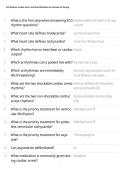
1. What is the first step when answering ECG Determine whether the rhythm is fast, slow,
rhythm questions? or absent.
2. What heart rate defines bradycardia? Less than 60 beats/minute.
3. What heart rate defines tachycardia? Greater than 100 beats/minute.
4. Which rhythm has no heartbeat or cardiac Asystole.
output?
5. Which arrhythmias can a patient live with? Any rhythm with a pulse.
6. Which arrhythmias are immediately Ventricular tachycardia without a pulse, ven-
life-threatening? tricular fibrillation, and asystole.
7. What are the two shockable cardiac arrest Ventricular fibrillation (VF) and pulseless
rhythms? ventricular tachycardia (VT).
8. What are the two non-shockable cardiac Asystole and pulseless electrical activity
arrest rhythms? (PEA).
9. What is the priority treatment for ventric- Defibrillation and CPR.
ular fibrillation?
10. What is the priority treatment for pulse- Defibrillation and CPR.
less ventricular tachycardia?
11. What is the priority treatment for asys- CPR and epinephrine.
tole?
12. Can asystole be defibrillated? No.
13. What medication is commonly given dur- Epinephrine.
ing cardiac arrest?
, ECG Rhythms, Cardiac Arrest, and Atrial Fibrillation: Key Concepts for Nurs
ECG Rhythms, Cardiac Arrest, and Atrial Fibrillation Key Concepts for Nursing
ing
Study online at https://quizlet.com/_jrg2ka
14. What is atrial fibrillation? An irregularly irregular rhythm caused by
chaotic atrial activity.
15. What is the biggest complication of atrial Stroke.
fibrillation?
16. Why are patients with atrial fibrillation at Blood pools in the atria and can form clots.
risk for stroke?
17. What medications are commonly pre- Anticoagulants.
scribed to prevent stroke in atrial fibrilla-
tion?
18. Which anticoagulants are commonly used Warfarin, apixaban, rivaroxaban, dabiga-
for atrial fibrillation? tran.
19. What is the goal of anticoagulation in atri- Prevent embolic stroke.
al fibrillation?
20. What should the nurse assess before ad- Bleeding risk.
ministering anticoagulants?
21. What does PVC stand for? Premature Ventricular Contraction.
22. What are occasional PVCs usually caused Irritability of the ventricles.
by?
23. What should the nurse assess when PVCs Is the patient stable or unstable?
occur?
24. What are common causes of PVCs? Hypoxia, hypokalemia, caffeine, stress.
25. Hypokalemia.
ECG Rhythms, Cardiac Arrest, and Atrial Fibrillation Key Concepts for Nursing
ing
Study online at https://quizlet.com/_jrg2ka
1. What is the first step when answering ECG Determine whether the rhythm is fast, slow,
rhythm questions? or absent.
2. What heart rate defines bradycardia? Less than 60 beats/minute.
3. What heart rate defines tachycardia? Greater than 100 beats/minute.
4. Which rhythm has no heartbeat or cardiac Asystole.
output?
5. Which arrhythmias can a patient live with? Any rhythm with a pulse.
6. Which arrhythmias are immediately Ventricular tachycardia without a pulse, ven-
life-threatening? tricular fibrillation, and asystole.
7. What are the two shockable cardiac arrest Ventricular fibrillation (VF) and pulseless
rhythms? ventricular tachycardia (VT).
8. What are the two non-shockable cardiac Asystole and pulseless electrical activity
arrest rhythms? (PEA).
9. What is the priority treatment for ventric- Defibrillation and CPR.
ular fibrillation?
10. What is the priority treatment for pulse- Defibrillation and CPR.
less ventricular tachycardia?
11. What is the priority treatment for asys- CPR and epinephrine.
tole?
12. Can asystole be defibrillated? No.
13. What medication is commonly given dur- Epinephrine.
ing cardiac arrest?
, ECG Rhythms, Cardiac Arrest, and Atrial Fibrillation: Key Concepts for Nurs
ECG Rhythms, Cardiac Arrest, and Atrial Fibrillation Key Concepts for Nursing
ing
Study online at https://quizlet.com/_jrg2ka
14. What is atrial fibrillation? An irregularly irregular rhythm caused by
chaotic atrial activity.
15. What is the biggest complication of atrial Stroke.
fibrillation?
16. Why are patients with atrial fibrillation at Blood pools in the atria and can form clots.
risk for stroke?
17. What medications are commonly pre- Anticoagulants.
scribed to prevent stroke in atrial fibrilla-
tion?
18. Which anticoagulants are commonly used Warfarin, apixaban, rivaroxaban, dabiga-
for atrial fibrillation? tran.
19. What is the goal of anticoagulation in atri- Prevent embolic stroke.
al fibrillation?
20. What should the nurse assess before ad- Bleeding risk.
ministering anticoagulants?
21. What does PVC stand for? Premature Ventricular Contraction.
22. What are occasional PVCs usually caused Irritability of the ventricles.
by?
23. What should the nurse assess when PVCs Is the patient stable or unstable?
occur?
24. What are common causes of PVCs? Hypoxia, hypokalemia, caffeine, stress.
25. Hypokalemia.


