
DAT EXAM STUDY GUIDE
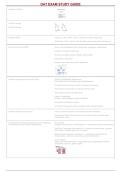
compound interest
30 60 90 triangle
45 45 90 triangle
Solubitlity Rules 1) group 1, NO3-, NH4+, ClO4-, C2H3O2- (acetate) soluble salt
2) Most Ag+, Pb2+, Hg2 (2+) salt insoluble (exept when paired with above).
Plant Hormones (A CAGE) Auxin / IAA (indoleacetic acid): plant growth, elongation, phototropism
Cytokinin: stimulates cytokinesis
Abscisic Acid (ABA): growth inhibitor. delay growth.
Gibberellins: cell growth
Ethylene: gas, ripen fruit and leaf abscission
Anterior Pituitary Hormones (FLAT PEG) TROPIC HORMONES (Middleman)
FSH (follicle stim H): Maintain egg/ spermatogenesi
LH (luteinizing H): Cause ovulation / produce testosterone
ACTH (adrenocorticotropic H): activate adrenal cortex
TSH (Tyrhoid stim H): activate thyroid
DIRECT HORMONE
Prolactin: cause lactation (positive feedback)
Endorphine: inhibit pain receptor
GH (Growth Hormone): induce growth and also anabolic process
Posterior Pituitary Hormones (2) Oxitoxin: female contraction and lactation (positive feedback)
Vasopressin (ADH): anti-diuretic hormone, signal kidney to absorb water
(concentrate urine)
Adrenal Cortex Hormones (GLamorous and FAscinating In the cortex:
how REdiculous that it makes Testosterone) (Top)Zona Glomerulosa: mineralcorticoid --> aldosterone (reg Na reabsorption)
(Mid)Zona Fasciculata: glucocorticoid --> cortisol (incr blood sugar, suppress
imm system, released when you are stress)
(Bottom)Zona Reticulbiris: androgens --> testosterone (secondary sex
characteristics, and thus women also produce testosterone)
In the medulla:
(Deep core) catecholemines --> epinephrine and norepinephrine (adrenal
sympathetic response, fight or flight)
, DAT EXAM STUDY GUIDE
Taxonomy (Dumb King Plays Chess On Fine Green Silk) Domain
Kingdom
Phylum
Class
Order
Family
Genus
Species
6 Kingdoms Bob And Paul Always Fold Papers
Bacteria
Archaea
Protista (paramecium, hydra, euglena (flagellum and chloriplast), algae, volvox =
plantlike)
Fungi
Plantae
Animalia
monera (blue green algae and bacteria)
RBC O2
WBC infection
MACROPHATE AND NEUTROPHILS phagocytosis
PLASMA CELLS antibody
MAST CELLS histamine release
clathrin participates in endocytosis by forming a polyhedral lattice around coated pits
cell-mediated, choleserol enter
killer t cells involved in destroyer cancer cells
kill cells w/ antigen
development in thymus and don't release antibodies
use protein perforin to lyse their targets
Interleukin 1 and 2 1 is made by macrophages
2 is made by helper t cells
they activate cytotoxic cells, b cells and other helper t cells
helper t cells specific target for virus that causes AIDS/HIV
plasmodium cause malaria, from sporazoans
ontogeny recapitulates phylogeny embryonic stage of development of an organism repeat the evolutionary history
of the species
What are chlorophyll a, b, c, d site of photosynthesis where light is absorbed and turned into E that excite
electrons
c and d in algae
type a (P700 and P680)
, DAT EXAM STUDY GUIDE
3 types of germ layer Ectoderm: (SEEN THEN) Sweat glands, epidermis, eye (lens and cornea),
nervous sys (CNS brain), tooth enamel, hair, epithelial lining of mouth/rectum,
nails
Mesoderm: (SMALL RED MC Not Good) skeleton, musc, adrenal cortex, lining of
body cavity, lymphatic sys, reproductive organs, excretory sys (kidney), dermis,
musc layer of DI tract, circulatory sys (blood and heart), notochord, gonads
Endoderm: (PET RULE) Pancreas, epithelial lining of DI tract, thyroid,
reproductive tract lining (lungs), urinary track lining (bladder), liver, epithelial
lining of respiratory
Hardy-weinberg requirements for a stable gene pool / LARGE RANDOM M&M
non evolving population (idealized conditions =
equilibrium) large pop
Random mating
No natural selection
No migration/mutation
genes all equally successful at reproducing
Two types of angiosperm dicotyledon/dicots:
2 cotyledon (storage tissue, nutrition), netted/branched leaves, 4s/5s multi flower
parts, bascular bundle organized in a circle, taproot (large single)
monocotyledons/monocots: 1 cotyledon, parallel leaves, 3s/multiple flower parts,
scattered vascular bundles, fibrous system (cluster of many fine roots)
What are the monosacc compositions of the following: 2 glucose (Mal to have 2 much glucose)
maltose glucose, galactose (galaxy lacks glucose)
lactose (milk)
sucrose (table sugar) glucose, fructose (fruits have sugary glucose)
What are the 5 layers of epidermis (out to in) CORN LOVERS GROW SEVERAL BARRELS
stratum corneum, stratum lucidum, stratum granulosum, stratum spinosum, and
stratum basale.
bones vs cartilage Bones have Blood. cartiLage Lack blood
bone to bone Bone-Ligament-Bone = Boys Love Basketballs
bone to musc Bone-Tendon-Musc = Boys Turn Men
Passage sperm through male tract SEVEN UP
seminiferous tubules testes, epididymis, vas deferens, ejaculatory duct,
N(othing), Urethra, Penis
sebaceous glands on skin secrete oil (NOT SWEAT) on surface skin keep pH acidic (4-6) and decr
bact growth
4 major types of cells in CNS Astrocytes: maintain blood-brain barriers and regulate nutrients/gas concen
dissolved, and absorb/recycle NT
oligodendrocytes: myelinate axons and structure framework
microglia: remove debris and pathogens
ependymal cells: line brain ventricles and aid in production, circulation and
monitoring of cerebral spinal fluid
3 types glial astrocyte (CNS): maintain homeostasis, reg glucose and O2 delivery in neurons
schwann cells (PNS): MYELIN
oligodendrocyte (CNS): MYELIN
2 major types of cells in PNS satellite cells: surround neuron cell bodies in ganglia
schwann cells: enclose axons and myelination of peripheral axons.
compound interest
30 60 90 triangle
45 45 90 triangle
Solubitlity Rules 1) group 1, NO3-, NH4+, ClO4-, C2H3O2- (acetate) soluble salt
2) Most Ag+, Pb2+, Hg2 (2+) salt insoluble (exept when paired with above).
Plant Hormones (A CAGE) Auxin / IAA (indoleacetic acid): plant growth, elongation, phototropism
Cytokinin: stimulates cytokinesis
Abscisic Acid (ABA): growth inhibitor. delay growth.
Gibberellins: cell growth
Ethylene: gas, ripen fruit and leaf abscission
Anterior Pituitary Hormones (FLAT PEG) TROPIC HORMONES (Middleman)
FSH (follicle stim H): Maintain egg/ spermatogenesi
LH (luteinizing H): Cause ovulation / produce testosterone
ACTH (adrenocorticotropic H): activate adrenal cortex
TSH (Tyrhoid stim H): activate thyroid
DIRECT HORMONE
Prolactin: cause lactation (positive feedback)
Endorphine: inhibit pain receptor
GH (Growth Hormone): induce growth and also anabolic process
Posterior Pituitary Hormones (2) Oxitoxin: female contraction and lactation (positive feedback)
Vasopressin (ADH): anti-diuretic hormone, signal kidney to absorb water
(concentrate urine)
Adrenal Cortex Hormones (GLamorous and FAscinating In the cortex:
how REdiculous that it makes Testosterone) (Top)Zona Glomerulosa: mineralcorticoid --> aldosterone (reg Na reabsorption)
(Mid)Zona Fasciculata: glucocorticoid --> cortisol (incr blood sugar, suppress
imm system, released when you are stress)
(Bottom)Zona Reticulbiris: androgens --> testosterone (secondary sex
characteristics, and thus women also produce testosterone)
In the medulla:
(Deep core) catecholemines --> epinephrine and norepinephrine (adrenal
sympathetic response, fight or flight)
, DAT EXAM STUDY GUIDE
Taxonomy (Dumb King Plays Chess On Fine Green Silk) Domain
Kingdom
Phylum
Class
Order
Family
Genus
Species
6 Kingdoms Bob And Paul Always Fold Papers
Bacteria
Archaea
Protista (paramecium, hydra, euglena (flagellum and chloriplast), algae, volvox =
plantlike)
Fungi
Plantae
Animalia
monera (blue green algae and bacteria)
RBC O2
WBC infection
MACROPHATE AND NEUTROPHILS phagocytosis
PLASMA CELLS antibody
MAST CELLS histamine release
clathrin participates in endocytosis by forming a polyhedral lattice around coated pits
cell-mediated, choleserol enter
killer t cells involved in destroyer cancer cells
kill cells w/ antigen
development in thymus and don't release antibodies
use protein perforin to lyse their targets
Interleukin 1 and 2 1 is made by macrophages
2 is made by helper t cells
they activate cytotoxic cells, b cells and other helper t cells
helper t cells specific target for virus that causes AIDS/HIV
plasmodium cause malaria, from sporazoans
ontogeny recapitulates phylogeny embryonic stage of development of an organism repeat the evolutionary history
of the species
What are chlorophyll a, b, c, d site of photosynthesis where light is absorbed and turned into E that excite
electrons
c and d in algae
type a (P700 and P680)
, DAT EXAM STUDY GUIDE
3 types of germ layer Ectoderm: (SEEN THEN) Sweat glands, epidermis, eye (lens and cornea),
nervous sys (CNS brain), tooth enamel, hair, epithelial lining of mouth/rectum,
nails
Mesoderm: (SMALL RED MC Not Good) skeleton, musc, adrenal cortex, lining of
body cavity, lymphatic sys, reproductive organs, excretory sys (kidney), dermis,
musc layer of DI tract, circulatory sys (blood and heart), notochord, gonads
Endoderm: (PET RULE) Pancreas, epithelial lining of DI tract, thyroid,
reproductive tract lining (lungs), urinary track lining (bladder), liver, epithelial
lining of respiratory
Hardy-weinberg requirements for a stable gene pool / LARGE RANDOM M&M
non evolving population (idealized conditions =
equilibrium) large pop
Random mating
No natural selection
No migration/mutation
genes all equally successful at reproducing
Two types of angiosperm dicotyledon/dicots:
2 cotyledon (storage tissue, nutrition), netted/branched leaves, 4s/5s multi flower
parts, bascular bundle organized in a circle, taproot (large single)
monocotyledons/monocots: 1 cotyledon, parallel leaves, 3s/multiple flower parts,
scattered vascular bundles, fibrous system (cluster of many fine roots)
What are the monosacc compositions of the following: 2 glucose (Mal to have 2 much glucose)
maltose glucose, galactose (galaxy lacks glucose)
lactose (milk)
sucrose (table sugar) glucose, fructose (fruits have sugary glucose)
What are the 5 layers of epidermis (out to in) CORN LOVERS GROW SEVERAL BARRELS
stratum corneum, stratum lucidum, stratum granulosum, stratum spinosum, and
stratum basale.
bones vs cartilage Bones have Blood. cartiLage Lack blood
bone to bone Bone-Ligament-Bone = Boys Love Basketballs
bone to musc Bone-Tendon-Musc = Boys Turn Men
Passage sperm through male tract SEVEN UP
seminiferous tubules testes, epididymis, vas deferens, ejaculatory duct,
N(othing), Urethra, Penis
sebaceous glands on skin secrete oil (NOT SWEAT) on surface skin keep pH acidic (4-6) and decr
bact growth
4 major types of cells in CNS Astrocytes: maintain blood-brain barriers and regulate nutrients/gas concen
dissolved, and absorb/recycle NT
oligodendrocytes: myelinate axons and structure framework
microglia: remove debris and pathogens
ependymal cells: line brain ventricles and aid in production, circulation and
monitoring of cerebral spinal fluid
3 types glial astrocyte (CNS): maintain homeostasis, reg glucose and O2 delivery in neurons
schwann cells (PNS): MYELIN
oligodendrocyte (CNS): MYELIN
2 major types of cells in PNS satellite cells: surround neuron cell bodies in ganglia
schwann cells: enclose axons and myelination of peripheral axons.


