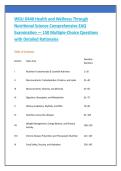
WGU D440 Health and Wellness Through
Nutritional Science Comprehensive EAQ
Examination — 150 Multiple-Choice Questions
with Detailed Rationales
Table of Contents
Question
Section Topic Area
Numbers
I Nutrition Fundamentals & Essential Nutrients 1–20
II Macronutrients: Carbohydrates, Proteins, and Lipids 21–40
III Micronutrients: Vitamins and Minerals 41–60
IV Digestion, Absorption, and Metabolism 61–75
V Dietary Guidelines, MyPlate, and DRIs 76–90
VI Nutrition Across the Lifespan 91–105
Weight Management, Energy Balance, and Physical
VII 106–120
Activity
VIII Chronic Disease Prevention and Therapeutic Nutrition 121–135
IX Food Safety, Security, and Hydration 136–145
, Question
Section Topic Area
Numbers
Health Promotion, Wellness, and Nutritional
X 146–150
Assessment
Section I: Nutrition Fundamentals & Essential Nutrients
Q1. Which term best describes the science that studies how the body uses the nutrients in
food to maintain health, support growth, and prevent disease?
A. Dietetics
B. Metabolism
C. Nutrition science
D. Epidemiology
CorreCt Answer: C — Nutrition science is the discipline that examines how food
and nutrients affect body function, growth, and health maintenance. Dietetics applies nutrition
science to promote health, while metabolism refers to biochemical processes.
Q2. A nutrient that must be obtained from the diet because the body cannot synthesize it
in adequate amounts is classified as:
A. Organic
B. Nonessential
C. Conditionally essential
D. Essential
CorreCt Answer: D — Essential nutrients must be provided by the diet as the body
cannot produce them in sufficient quantities. Examples include linoleic acid, certain amino
acids, vitamins, and minerals.
Q3. Which of the following is classified as an essential nutrient?
A. Cholesterol
B. Glucose
,C. Linoleic acid (omega-6 fatty acid)
D. Glycogen
CorreCt Answer: C — Linoleic acid is an essential fatty acid that the body cannot
synthesize and must obtain from dietary sources. Cholesterol and glucose can be synthesized
endogenously, and glycogen is a storage form of glucose.
Q4. A nutrient that the body can manufacture in adequate amounts from other compounds
is best described as:
A. Essential
B. Nonessential
C. Organic
D. Inorganic
CorreCt Answer: B — Nonessential nutrients can be synthesized internally and do
not need to be consumed in the diet to meet physiological needs. They remain important for
health but are not required from dietary sources.
Q5. A food that provides a high amount of vitamins and minerals relative to its caloric
content is described as having high:
A. Energy density
B. Biological value
C. Empty calories
D. Nutrient density
CorreCt Answer: D — Nutrient density refers to the proportion of essential
nutrients provided per calorie of food. Energy-dense foods provide many calories with fewer
nutrients.
Q6. Foods that contribute significant calories to the diet but provide few or no essential
nutrients are said to contain:
A. High biological value
B. Empty calories
, C. Complete proteins
D. Essential fatty acids
CorreCt Answer: B — Empty calories describe energy sources such as added sugars
and solid fats that supply calories without accompanying vitamins, minerals, or fiber.
Q7. To sustain life, nutrients in food must perform which three primary functions in the
body?
A. Build tissue, store fat, produce hormones
B. Build tissue, provide energy, regulate metabolic processes
C. Provide energy, store vitamins, synthesize enzymes
D. Regulate pH, build tissue, eliminate waste
CorreCt Answer: B — To sustain life, nutrients must build tissue, provide energy,
and regulate metabolic processes. These functions are essential for maintaining health and
supporting all bodily systems.
Q8. Which of the following correctly describes the six essential nutrients?
A. Carbohydrates, proteins, fats, vitamins, minerals, water
B. Carbohydrates, proteins, fats, enzymes, hormones, water
C. Sugars, amino acids, fatty acids, vitamins, minerals, fiber
D. Macronutrients, micronutrients, enzymes, hormones, water, fiber
CorreCt Answer: A — The six essential nutrients are carbohydrates, proteins, fats
(lipids), vitamins, minerals, and water. These must be obtained from the diet to support bodily
functions.
Q9. Which nutrients are considered energy-yielding nutrients (macronutrients)?
A. Vitamins, minerals, and water
B. Carbohydrates, fats, and proteins
C. Carbohydrates, vitamins, and minerals
D. Fats, proteins, and water
Nutritional Science Comprehensive EAQ
Examination — 150 Multiple-Choice Questions
with Detailed Rationales
Table of Contents
Question
Section Topic Area
Numbers
I Nutrition Fundamentals & Essential Nutrients 1–20
II Macronutrients: Carbohydrates, Proteins, and Lipids 21–40
III Micronutrients: Vitamins and Minerals 41–60
IV Digestion, Absorption, and Metabolism 61–75
V Dietary Guidelines, MyPlate, and DRIs 76–90
VI Nutrition Across the Lifespan 91–105
Weight Management, Energy Balance, and Physical
VII 106–120
Activity
VIII Chronic Disease Prevention and Therapeutic Nutrition 121–135
IX Food Safety, Security, and Hydration 136–145
, Question
Section Topic Area
Numbers
Health Promotion, Wellness, and Nutritional
X 146–150
Assessment
Section I: Nutrition Fundamentals & Essential Nutrients
Q1. Which term best describes the science that studies how the body uses the nutrients in
food to maintain health, support growth, and prevent disease?
A. Dietetics
B. Metabolism
C. Nutrition science
D. Epidemiology
CorreCt Answer: C — Nutrition science is the discipline that examines how food
and nutrients affect body function, growth, and health maintenance. Dietetics applies nutrition
science to promote health, while metabolism refers to biochemical processes.
Q2. A nutrient that must be obtained from the diet because the body cannot synthesize it
in adequate amounts is classified as:
A. Organic
B. Nonessential
C. Conditionally essential
D. Essential
CorreCt Answer: D — Essential nutrients must be provided by the diet as the body
cannot produce them in sufficient quantities. Examples include linoleic acid, certain amino
acids, vitamins, and minerals.
Q3. Which of the following is classified as an essential nutrient?
A. Cholesterol
B. Glucose
,C. Linoleic acid (omega-6 fatty acid)
D. Glycogen
CorreCt Answer: C — Linoleic acid is an essential fatty acid that the body cannot
synthesize and must obtain from dietary sources. Cholesterol and glucose can be synthesized
endogenously, and glycogen is a storage form of glucose.
Q4. A nutrient that the body can manufacture in adequate amounts from other compounds
is best described as:
A. Essential
B. Nonessential
C. Organic
D. Inorganic
CorreCt Answer: B — Nonessential nutrients can be synthesized internally and do
not need to be consumed in the diet to meet physiological needs. They remain important for
health but are not required from dietary sources.
Q5. A food that provides a high amount of vitamins and minerals relative to its caloric
content is described as having high:
A. Energy density
B. Biological value
C. Empty calories
D. Nutrient density
CorreCt Answer: D — Nutrient density refers to the proportion of essential
nutrients provided per calorie of food. Energy-dense foods provide many calories with fewer
nutrients.
Q6. Foods that contribute significant calories to the diet but provide few or no essential
nutrients are said to contain:
A. High biological value
B. Empty calories
, C. Complete proteins
D. Essential fatty acids
CorreCt Answer: B — Empty calories describe energy sources such as added sugars
and solid fats that supply calories without accompanying vitamins, minerals, or fiber.
Q7. To sustain life, nutrients in food must perform which three primary functions in the
body?
A. Build tissue, store fat, produce hormones
B. Build tissue, provide energy, regulate metabolic processes
C. Provide energy, store vitamins, synthesize enzymes
D. Regulate pH, build tissue, eliminate waste
CorreCt Answer: B — To sustain life, nutrients must build tissue, provide energy,
and regulate metabolic processes. These functions are essential for maintaining health and
supporting all bodily systems.
Q8. Which of the following correctly describes the six essential nutrients?
A. Carbohydrates, proteins, fats, vitamins, minerals, water
B. Carbohydrates, proteins, fats, enzymes, hormones, water
C. Sugars, amino acids, fatty acids, vitamins, minerals, fiber
D. Macronutrients, micronutrients, enzymes, hormones, water, fiber
CorreCt Answer: A — The six essential nutrients are carbohydrates, proteins, fats
(lipids), vitamins, minerals, and water. These must be obtained from the diet to support bodily
functions.
Q9. Which nutrients are considered energy-yielding nutrients (macronutrients)?
A. Vitamins, minerals, and water
B. Carbohydrates, fats, and proteins
C. Carbohydrates, vitamins, and minerals
D. Fats, proteins, and water