

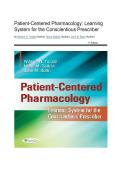
Patient-Centered Pharmacology: Learning
System for the Conscientious Prescriber
by William N. Tindall (Author), Mona Sedrak (Author), John M. Boltri (Author)
1st Edition
,TABLE OF CONTENTS
Part 1: Principles of Patient-Centered Pharmacology
Chapter 1: A Paradigm Shift: Patient-Centered Pharmacology
Chapter 2: The Pharmacology Learning System
Chapter 3: Fundamental Principles of Pharmacology (Pharmacokinetics and Pharmacodynamics)
Chapter 4: The Patient-Centered Prescribing Process
Chapter 5: Patient Education and Health Literacy
Chapter 6: Medication Adherence and the Patient-Provider Relationship
Part 2: Autonomic and Central Nervous System Pharmacology
Chapter 7: Principles of Autonomic Nervous System Pharmacology
Chapter 8: Pharmacology of the Central Nervous System: Depression and Bipolar Disorders
Chapter 9: Pharmacology of Anxiety and Sleep Disorders
Chapter 10: Pharmacology of Psychoses and Attention-Deficit/Hyperactivity Disorder
Chapter 11: Pharmacology of Seizure Disorders
Chapter 12: Pharmacology of Degenerative Diseases of the Central Nervous System
Chapter 13: Pharmacology of Pain Management
Part 3: Cardiovascular and Renal Pharmacology
Chapter 14: Pharmacology of Hypertension
Chapter 15: Pharmacology of Heart Failure
Chapter 16: Pharmacology of Dyslipidemias
Chapter 17: Pharmacology of Coagulation Disorders
Part 4: Endocrine and Metabolic Pharmacology
Chapter 18: Pharmacology of Diabetes Mellitus
Chapter 19: Pharmacology of Thyroid and Adrenal Disorders
Chapter 20: Pharmacology of Reproductive Health and Related Disorders
Part 5: Pulmonary, Gastrointestinal, and Immunological Pharmacology
Chapter 21: Pharmacology of Respiratory Disorders
Chapter 22: Pharmacology of Gastrointestinal Disorders
,Chapter 23: Pharmacology of Nutrition and Complementary Therapies
Part 6: Infectious Disease and Inflammation Pharmacology
Chapter 24: Principles of Antimicrobial Therapy and Treatment of Bacterial Infections
Chapter 25: Pharmacology of Viral, Fungal, and Protozoal Infections
Chapter 26: Pharmacology of Inflammation and Immune Disorders
, Test Bank: Patient-Centered Pharmacology
Learning System for the Conscientious Prescriber, 1st Edition (Tindall,
2014)
Chapters 1–26 Comprehensive Test Bank
CHAPTER 1: THE CONSCIENTIOUS PRESCRIBER
Multiple Choice
1. Which of the following best describes the role of a conscientious prescriber?
A) One who prescribes medications based solely on patient requests
B) One who integrates evidence-based practice, patient values, and clinical expertise in prescribing
decisions
C) One who follows pharmaceutical company recommendations for prescribing
D) One who delegates prescribing decisions to pharmacists
Answer: B
Rationale: A conscientious prescriber integrates evidence-based practice, individual clinical expertise,
and patient values and preferences to make sound prescribing decisions.
2. The term "patient-centered care" in pharmacology refers to:
A) Prescribing the least expensive medication available
B) Placing the patient's values, needs, and preferences at the center of the prescribing decision
C) Prescribing only medications that patients request by name
D) Allowing patients to self-prescribe over-the-counter medications
Answer: B
Rationale: Patient-centered care involves integrating patient preferences, values, and needs into all
clinical and prescribing decisions.
System for the Conscientious Prescriber
by William N. Tindall (Author), Mona Sedrak (Author), John M. Boltri (Author)
1st Edition
,TABLE OF CONTENTS
Part 1: Principles of Patient-Centered Pharmacology
Chapter 1: A Paradigm Shift: Patient-Centered Pharmacology
Chapter 2: The Pharmacology Learning System
Chapter 3: Fundamental Principles of Pharmacology (Pharmacokinetics and Pharmacodynamics)
Chapter 4: The Patient-Centered Prescribing Process
Chapter 5: Patient Education and Health Literacy
Chapter 6: Medication Adherence and the Patient-Provider Relationship
Part 2: Autonomic and Central Nervous System Pharmacology
Chapter 7: Principles of Autonomic Nervous System Pharmacology
Chapter 8: Pharmacology of the Central Nervous System: Depression and Bipolar Disorders
Chapter 9: Pharmacology of Anxiety and Sleep Disorders
Chapter 10: Pharmacology of Psychoses and Attention-Deficit/Hyperactivity Disorder
Chapter 11: Pharmacology of Seizure Disorders
Chapter 12: Pharmacology of Degenerative Diseases of the Central Nervous System
Chapter 13: Pharmacology of Pain Management
Part 3: Cardiovascular and Renal Pharmacology
Chapter 14: Pharmacology of Hypertension
Chapter 15: Pharmacology of Heart Failure
Chapter 16: Pharmacology of Dyslipidemias
Chapter 17: Pharmacology of Coagulation Disorders
Part 4: Endocrine and Metabolic Pharmacology
Chapter 18: Pharmacology of Diabetes Mellitus
Chapter 19: Pharmacology of Thyroid and Adrenal Disorders
Chapter 20: Pharmacology of Reproductive Health and Related Disorders
Part 5: Pulmonary, Gastrointestinal, and Immunological Pharmacology
Chapter 21: Pharmacology of Respiratory Disorders
Chapter 22: Pharmacology of Gastrointestinal Disorders
,Chapter 23: Pharmacology of Nutrition and Complementary Therapies
Part 6: Infectious Disease and Inflammation Pharmacology
Chapter 24: Principles of Antimicrobial Therapy and Treatment of Bacterial Infections
Chapter 25: Pharmacology of Viral, Fungal, and Protozoal Infections
Chapter 26: Pharmacology of Inflammation and Immune Disorders
, Test Bank: Patient-Centered Pharmacology
Learning System for the Conscientious Prescriber, 1st Edition (Tindall,
2014)
Chapters 1–26 Comprehensive Test Bank
CHAPTER 1: THE CONSCIENTIOUS PRESCRIBER
Multiple Choice
1. Which of the following best describes the role of a conscientious prescriber?
A) One who prescribes medications based solely on patient requests
B) One who integrates evidence-based practice, patient values, and clinical expertise in prescribing
decisions
C) One who follows pharmaceutical company recommendations for prescribing
D) One who delegates prescribing decisions to pharmacists
Answer: B
Rationale: A conscientious prescriber integrates evidence-based practice, individual clinical expertise,
and patient values and preferences to make sound prescribing decisions.
2. The term "patient-centered care" in pharmacology refers to:
A) Prescribing the least expensive medication available
B) Placing the patient's values, needs, and preferences at the center of the prescribing decision
C) Prescribing only medications that patients request by name
D) Allowing patients to self-prescribe over-the-counter medications
Answer: B
Rationale: Patient-centered care involves integrating patient preferences, values, and needs into all
clinical and prescribing decisions.


