

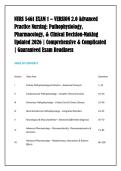
NURS 5461 EXAM 1 – VERSION 2.0 Advanced
Practice Nursing: Pathophysiology,
Pharmacology, & Clinical Decision-Making
Updated 2026 | Comprehensive & Complicated
| Guaranteed Exam Readiness
TABLE OF CONTENTS
Section Topic Area Questions
I Cellular Pathophysiology & Genetics – Advanced Concepts 1–15
II Cardiovascular Pathophysiology – Complex Clinical Scenarios 16–30
III Pulmonary Pathophysiology – Critical Care & Chronic Disease 31–40
IV Renal & Endocrine Pathophysiology – Integrated Disorders 41–55
V Neurological & Musculoskeletal – Advanced Differential Diagnosis 56–70
Advanced Pharmacology – Pharmacokinetics, Pharmacodynamics &
VI 71–85
Genomics
Advanced Pharmacology – Polypharmacy, Interactions & Adverse
VII 86–100
Effects
,Section Topic Area Questions
VIII Advanced Health Assessment – Diagnostic Reasoning & Clinical Skills 101–115
Gerontology & Chronic Disease Management – Complex
IX 116–130
Comorbidities
X Evidence-Based Practice, Clinical Judgment & Health Policy 131–140
XI Integrated Clinical Scenarios – Multi-System Complexity 141–150
SECTION I: CELLULAR PATHOPHYSIOLOGY & GENETICS – ADVANCED CONCEPTS
(Questions 1–15)
Q1. A 62-year-old patient with chronic hepatitis C infection develops hepatocellular
carcinoma. The pathophysiological sequence most likely involves which of the following?
• A. Direct viral oncogene integration into host DNA
• B. Chronic inflammation → cirrhosis → dysplasia → malignant transformation
• C. Epigenetic silencing of tumor suppressor genes without DNA mutation
• D. Activation of telomerase leading to immortalization of hepatocytes
CorreCt answer : B – Hepatitis C causes chronic inflammation leading to cirrhosis,
which creates a microenvironment conducive to dysplastic changes and malignant
transformation. Direct viral integration is more characteristic of hepatitis B.
Q2. A researcher is studying a patient with Li-Fraumeni syndrome, a rare autosomal
dominant disorder. Which gene mutation is most commonly associated with this syndrome?
• A. BRCA1
• B. TP53
, • C. APC
• D. RET
CorreCt answer : B – Li-Fraumeni syndrome is caused by germline mutations in
TP53, leading to increased risk of sarcomas, breast cancer, brain tumors, and adrenocortical
carcinomas.
Q3. A patient presents with chronic inflammation characterized by macrophage infiltration,
multinucleated giant cells, and epithelioid cell aggregation. This histological pattern is most
consistent with:
• A. Acute suppurative inflammation
• B. Chronic granulomatous inflammation
• C. Fibrosing alveolitis
• D. Eosinophilic infiltration
CorreCt answer : B – Granulomatous inflammation is characterized by macrophage
infiltration, multinucleated giant cells, and epithelioid cell aggregation, seen in tuberculosis,
sarcoidosis, and fungal infections.
Q4. A patient with a mutation in the CFTR gene has impaired chloride transport. Which
pathophysiological consequence is most directly related to this defect?
• A. Increased sodium reabsorption leading to thick, viscous secretions
• B. Decreased sodium reabsorption leading to watery secretions
• C. Impaired bicarbonate secretion leading to metabolic acidosis
• D. Enhanced calcium transport leading to hypercalcemia
CorreCt answer : A – CFTR mutation impairs chloride transport, leading to
increased sodium reabsorption and water extraction, resulting in thick, viscous secretions in the
lungs, pancreas, and other organs.
, Q5. A patient with chronic alcohol use develops Wernicke-Korsakoff syndrome. Which
vitamin deficiency is most directly responsible?
• A. Vitamin B12
• B. Thiamine (Vitamin B1)
• C. Folate
• D. Niacin
CorreCt answer : B – Thiamine deficiency causes Wernicke-Korsakoff syndrome,
presenting with confusion, ataxia, ophthalmoplegia, and memory impairment.
Q6. A patient is diagnosed with hereditary hemochromatosis, an autosomal recessive
disorder. Which genetic mutation is most commonly implicated?
• A. HFE gene (C282Y mutation)
• B. TFR2 gene
• C. HAMP gene
• D. SLC40A1 gene
CorreCt answer : A – Hereditary hemochromatosis is most commonly caused by
the C282Y mutation in the HFE gene, leading to increased intestinal iron absorption and tissue
deposition.
Q7. A patient with hemolytic anemia develops jaundice, dark urine, and elevated
unconjugated bilirubin. Which mechanism is most responsible for the jaundice?
• A. Impaired hepatic uptake of bilirubin
• B. Impaired conjugation of bilirubin
• C. Excessive production of bilirubin from hemoglobin breakdown
• D. Biliary obstruction reducing excretion
CorreCt answer : C – In hemolytic anemia, excessive red blood cell breakdown
leads to increased production of unconjugated bilirubin, exceeding the liver's conjugation
capacity.
Practice Nursing: Pathophysiology,
Pharmacology, & Clinical Decision-Making
Updated 2026 | Comprehensive & Complicated
| Guaranteed Exam Readiness
TABLE OF CONTENTS
Section Topic Area Questions
I Cellular Pathophysiology & Genetics – Advanced Concepts 1–15
II Cardiovascular Pathophysiology – Complex Clinical Scenarios 16–30
III Pulmonary Pathophysiology – Critical Care & Chronic Disease 31–40
IV Renal & Endocrine Pathophysiology – Integrated Disorders 41–55
V Neurological & Musculoskeletal – Advanced Differential Diagnosis 56–70
Advanced Pharmacology – Pharmacokinetics, Pharmacodynamics &
VI 71–85
Genomics
Advanced Pharmacology – Polypharmacy, Interactions & Adverse
VII 86–100
Effects
,Section Topic Area Questions
VIII Advanced Health Assessment – Diagnostic Reasoning & Clinical Skills 101–115
Gerontology & Chronic Disease Management – Complex
IX 116–130
Comorbidities
X Evidence-Based Practice, Clinical Judgment & Health Policy 131–140
XI Integrated Clinical Scenarios – Multi-System Complexity 141–150
SECTION I: CELLULAR PATHOPHYSIOLOGY & GENETICS – ADVANCED CONCEPTS
(Questions 1–15)
Q1. A 62-year-old patient with chronic hepatitis C infection develops hepatocellular
carcinoma. The pathophysiological sequence most likely involves which of the following?
• A. Direct viral oncogene integration into host DNA
• B. Chronic inflammation → cirrhosis → dysplasia → malignant transformation
• C. Epigenetic silencing of tumor suppressor genes without DNA mutation
• D. Activation of telomerase leading to immortalization of hepatocytes
CorreCt answer : B – Hepatitis C causes chronic inflammation leading to cirrhosis,
which creates a microenvironment conducive to dysplastic changes and malignant
transformation. Direct viral integration is more characteristic of hepatitis B.
Q2. A researcher is studying a patient with Li-Fraumeni syndrome, a rare autosomal
dominant disorder. Which gene mutation is most commonly associated with this syndrome?
• A. BRCA1
• B. TP53
, • C. APC
• D. RET
CorreCt answer : B – Li-Fraumeni syndrome is caused by germline mutations in
TP53, leading to increased risk of sarcomas, breast cancer, brain tumors, and adrenocortical
carcinomas.
Q3. A patient presents with chronic inflammation characterized by macrophage infiltration,
multinucleated giant cells, and epithelioid cell aggregation. This histological pattern is most
consistent with:
• A. Acute suppurative inflammation
• B. Chronic granulomatous inflammation
• C. Fibrosing alveolitis
• D. Eosinophilic infiltration
CorreCt answer : B – Granulomatous inflammation is characterized by macrophage
infiltration, multinucleated giant cells, and epithelioid cell aggregation, seen in tuberculosis,
sarcoidosis, and fungal infections.
Q4. A patient with a mutation in the CFTR gene has impaired chloride transport. Which
pathophysiological consequence is most directly related to this defect?
• A. Increased sodium reabsorption leading to thick, viscous secretions
• B. Decreased sodium reabsorption leading to watery secretions
• C. Impaired bicarbonate secretion leading to metabolic acidosis
• D. Enhanced calcium transport leading to hypercalcemia
CorreCt answer : A – CFTR mutation impairs chloride transport, leading to
increased sodium reabsorption and water extraction, resulting in thick, viscous secretions in the
lungs, pancreas, and other organs.
, Q5. A patient with chronic alcohol use develops Wernicke-Korsakoff syndrome. Which
vitamin deficiency is most directly responsible?
• A. Vitamin B12
• B. Thiamine (Vitamin B1)
• C. Folate
• D. Niacin
CorreCt answer : B – Thiamine deficiency causes Wernicke-Korsakoff syndrome,
presenting with confusion, ataxia, ophthalmoplegia, and memory impairment.
Q6. A patient is diagnosed with hereditary hemochromatosis, an autosomal recessive
disorder. Which genetic mutation is most commonly implicated?
• A. HFE gene (C282Y mutation)
• B. TFR2 gene
• C. HAMP gene
• D. SLC40A1 gene
CorreCt answer : A – Hereditary hemochromatosis is most commonly caused by
the C282Y mutation in the HFE gene, leading to increased intestinal iron absorption and tissue
deposition.
Q7. A patient with hemolytic anemia develops jaundice, dark urine, and elevated
unconjugated bilirubin. Which mechanism is most responsible for the jaundice?
• A. Impaired hepatic uptake of bilirubin
• B. Impaired conjugation of bilirubin
• C. Excessive production of bilirubin from hemoglobin breakdown
• D. Biliary obstruction reducing excretion
CorreCt answer : C – In hemolytic anemia, excessive red blood cell breakdown
leads to increased production of unconjugated bilirubin, exceeding the liver's conjugation
capacity.


