

Page 1 of 217
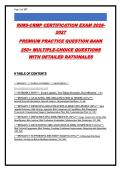
RIMS-CRMP CERTIFICATION EXAM 2026-
2027
PREMIUM PRACTICE QUESTION BANK
250+ MULTIPLE-CHOICE QUESTIONS
WITH DETAILED RATIONALES
# TABLE OF CONTENTS
| **DOMAIN** | **TOPICS COVERED** | **QUESTIONS** |
|------------|---------------------|---------------|
| **INTRODUCTION** | Exam Logistics, Test-Taking Strategies, Recertification | 1–10 |
| **DOMAIN 1: ANALYZING THE ORGANIZATIONAL MODEL (16%)** |
Internal/External Information; Internal Analyses; Organizational Resilience | 11–60 |
| **DOMAIN 2: DESIGNING ORGANIZATIONAL RISK STRATEGIES (26%)** | Risk
Appetite/Tolerance; Risk Strategy Approach; Risk Competency & Capabilities; Risk Management
Framework; Organizational Support; Implementation Plan; Risk Communication Plan | 61–120 |
| **DOMAIN 3: IMPLEMENTING RISK PROCESS (32%)** | Scope, Context & Criteria; Risk
Identification; Risk Analysis; Risk Evaluation; Stakeholder Collaboration; Risk Monitoring | 121–200 |
| **DOMAIN 4: DEVELOPING ORGANIZATIONAL RISK COMPETENCY (16%)** |
Risk Network Engagement; Risk Training; Coaching; Continuous Improvement; Integration into Operations
| 201–240 |
| **DOMAIN 5: SUPPORTING DECISION MAKING (10%)** | Influencing Risk-Based
Decisions; Advising on Risk & Resilience Decisions | 241–260 |
,Page 2 of 217
# INTRODUCTION: EXAM OVERVIEW & TEST-TAKING STRATEGIES
## Questions 1–10: Exam Logistics and Foundational Concepts
**Question 1**
What is the minimum passing score required to achieve the RIMS-CRMP certification?
A) 65%
B) 71%
C) 75%
D) 80%
**Correct Answer: B) 71%**
**Rationale:** Candidates must achieve a score of 71% or higher to pass the RIMS-CRMP
examination. This threshold ensures that certified professionals demonstrate a consistently high
level of competency across all five domains. The exam consists of 120 questions, with 100
scored questions and 20 pretest questions that do not count toward the final score.
**Distractor Analysis:**
- **A) 65%:** While some professional certifications use a 65% passing threshold, the RIMS-
CRMP requires a higher standard of 71% to ensure competency.
- **C) 75%:** This is higher than the actual requirement and may confuse candidates with other
certification programs that have higher thresholds.
- **D) 80%:** This represents an overly stringent standard not required for RIMS-CRMP
certification.
---
,Page 3 of 217
**Question 2**
How much time is allocated for completion of the RIMS-CRMP certification examination?
A) 90 minutes
B) 120 minutes (2 hours)
C) 150 minutes (2.5 hours)
D) 180 minutes (3 hours)
**Correct Answer: B) 120 minutes (2 hours)**
**Rationale:** The RIMS-CRMP exam is a two-hour (120-minute) computer-based
examination. Candidates must manage their time effectively across all 120 questions, averaging
approximately one minute per question. This time constraint tests not only knowledge but also
the ability to apply risk management concepts efficiently under pressure.
**Distractor Analysis:**
- **A) 90 minutes:** This is insufficient time for the 120-question exam and does not reflect the
official time allocation.
- **C) 150 minutes:** While some professional exams allow 2.5 hours, the RIMS-CRMP is
specifically designed as a two-hour assessment.
- **D) 180 minutes:** This extended time frame is not provided for the RIMS-CRMP
examination.
---
**Question 3**
The RIMS-CRMP certification is accredited under which international standard?
A) ISO 9001:2015
, Page 4 of 217
B) ISO/IEC 17024:2012
C) ISO 31000:2018
D) ISO 14001:2015
**Correct Answer: B) ISO/IEC 17024:2012**
**Rationale:** The RIMS-CRMP is the world's only ANSI National Accreditation Board
(ANAB)-accredited, competency-based risk management credential, holding accreditation under
ISO/IEC 17024:2012. This international standard sets requirements for personnel certification
bodies, ensuring that the certification program meets rigorous quality and fairness standards.
**Distractor Analysis:**
- **A) ISO 9001:2015:** This standard pertains to quality management systems, not personnel
certification.
- **C) ISO 31000:2018:** While this is the international risk management standard that informs
the CRMP body of knowledge, it is not the accreditation standard for the certification itself.
- **D) ISO 14001:2015:** This standard addresses environmental management systems, which
is unrelated to personnel certification.
---
**Question 4**
Which of the following correctly describes the composition of the RIMS-CRMP examination?
A) 100 questions, all scored
B) 120 questions, 100 scored and 20 pretest
C) 150 questions, all scored
D) 200 questions, 180 scored and 20 pretest
RIMS-CRMP CERTIFICATION EXAM 2026-
2027
PREMIUM PRACTICE QUESTION BANK
250+ MULTIPLE-CHOICE QUESTIONS
WITH DETAILED RATIONALES
# TABLE OF CONTENTS
| **DOMAIN** | **TOPICS COVERED** | **QUESTIONS** |
|------------|---------------------|---------------|
| **INTRODUCTION** | Exam Logistics, Test-Taking Strategies, Recertification | 1–10 |
| **DOMAIN 1: ANALYZING THE ORGANIZATIONAL MODEL (16%)** |
Internal/External Information; Internal Analyses; Organizational Resilience | 11–60 |
| **DOMAIN 2: DESIGNING ORGANIZATIONAL RISK STRATEGIES (26%)** | Risk
Appetite/Tolerance; Risk Strategy Approach; Risk Competency & Capabilities; Risk Management
Framework; Organizational Support; Implementation Plan; Risk Communication Plan | 61–120 |
| **DOMAIN 3: IMPLEMENTING RISK PROCESS (32%)** | Scope, Context & Criteria; Risk
Identification; Risk Analysis; Risk Evaluation; Stakeholder Collaboration; Risk Monitoring | 121–200 |
| **DOMAIN 4: DEVELOPING ORGANIZATIONAL RISK COMPETENCY (16%)** |
Risk Network Engagement; Risk Training; Coaching; Continuous Improvement; Integration into Operations
| 201–240 |
| **DOMAIN 5: SUPPORTING DECISION MAKING (10%)** | Influencing Risk-Based
Decisions; Advising on Risk & Resilience Decisions | 241–260 |
,Page 2 of 217
# INTRODUCTION: EXAM OVERVIEW & TEST-TAKING STRATEGIES
## Questions 1–10: Exam Logistics and Foundational Concepts
**Question 1**
What is the minimum passing score required to achieve the RIMS-CRMP certification?
A) 65%
B) 71%
C) 75%
D) 80%
**Correct Answer: B) 71%**
**Rationale:** Candidates must achieve a score of 71% or higher to pass the RIMS-CRMP
examination. This threshold ensures that certified professionals demonstrate a consistently high
level of competency across all five domains. The exam consists of 120 questions, with 100
scored questions and 20 pretest questions that do not count toward the final score.
**Distractor Analysis:**
- **A) 65%:** While some professional certifications use a 65% passing threshold, the RIMS-
CRMP requires a higher standard of 71% to ensure competency.
- **C) 75%:** This is higher than the actual requirement and may confuse candidates with other
certification programs that have higher thresholds.
- **D) 80%:** This represents an overly stringent standard not required for RIMS-CRMP
certification.
---
,Page 3 of 217
**Question 2**
How much time is allocated for completion of the RIMS-CRMP certification examination?
A) 90 minutes
B) 120 minutes (2 hours)
C) 150 minutes (2.5 hours)
D) 180 minutes (3 hours)
**Correct Answer: B) 120 minutes (2 hours)**
**Rationale:** The RIMS-CRMP exam is a two-hour (120-minute) computer-based
examination. Candidates must manage their time effectively across all 120 questions, averaging
approximately one minute per question. This time constraint tests not only knowledge but also
the ability to apply risk management concepts efficiently under pressure.
**Distractor Analysis:**
- **A) 90 minutes:** This is insufficient time for the 120-question exam and does not reflect the
official time allocation.
- **C) 150 minutes:** While some professional exams allow 2.5 hours, the RIMS-CRMP is
specifically designed as a two-hour assessment.
- **D) 180 minutes:** This extended time frame is not provided for the RIMS-CRMP
examination.
---
**Question 3**
The RIMS-CRMP certification is accredited under which international standard?
A) ISO 9001:2015
, Page 4 of 217
B) ISO/IEC 17024:2012
C) ISO 31000:2018
D) ISO 14001:2015
**Correct Answer: B) ISO/IEC 17024:2012**
**Rationale:** The RIMS-CRMP is the world's only ANSI National Accreditation Board
(ANAB)-accredited, competency-based risk management credential, holding accreditation under
ISO/IEC 17024:2012. This international standard sets requirements for personnel certification
bodies, ensuring that the certification program meets rigorous quality and fairness standards.
**Distractor Analysis:**
- **A) ISO 9001:2015:** This standard pertains to quality management systems, not personnel
certification.
- **C) ISO 31000:2018:** While this is the international risk management standard that informs
the CRMP body of knowledge, it is not the accreditation standard for the certification itself.
- **D) ISO 14001:2015:** This standard addresses environmental management systems, which
is unrelated to personnel certification.
---
**Question 4**
Which of the following correctly describes the composition of the RIMS-CRMP examination?
A) 100 questions, all scored
B) 120 questions, 100 scored and 20 pretest
C) 150 questions, all scored
D) 200 questions, 180 scored and 20 pretest


