

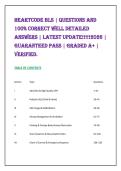
HEARTCODE BLS | QUESTIONS AND
100% CORRECT WELL DETAILED
ANSWERS | LATEST UPDATE!!!!!2026 |
GUARANTEED PASS | GRADED A+ |
VERIFIED.
TABLE OF CONTENTS
Section Topic Questions
I Adult BLS & High-Quality CPR 1–25
II Pediatric BLS (Child & Infant) 26–45
III AED Usage & Defibrillation 46–60
IV Airway Management & Ventilation 61–75
V Choking & Foreign-Body Airway Obstruction 76–90
VI Team Dynamics & Resuscitation Roles 91–105
VII Chain of Survival & Emergency Response 106–120
,Section Topic Questions
VIII Special Considerations & Scenario-Based 121–140
IX Comprehensive Review & Critical Thinking 141–150
SECTION I: ADULT BLS & HIGH-QUALITY CPR
Question 1: What is the recommended compression rate for adult CPR according to the
2025 AHA guidelines?
• A) 80–100 compressions per minute
• B) 100–120 compressions per minute
• C) 120–140 compressions per minute
• D) 60–80 compressions per minute
CORRECT ANSWER: B — The 2025 AHA guidelines recommend a compression rate of
100 to 120 compressions per minute for adults. This rate optimizes coronary perfusion pressure
while allowing adequate time for chest recoil.
Question 2: What is the correct compression depth for adult CPR?
• A) 1 to 1.5 inches (2.5–4 cm)
• B) 1.5 to 2 inches (4–5 cm)
• C) At least 2 inches (5 cm) but no more than 2.4 inches (6 cm)
• D) At least 3 inches (7.5 cm)
CORRECT ANSWER: C — The 2025 AHA guidelines recommend compressing the chest
to a depth of at least 2 inches (5 cm) but not exceeding 2.4 inches (6 cm). Excessive depth (>6
cm) has been associated with reduced survival.
, Question 3: What is the compression-to-ventilation ratio for a single rescuer performing
CPR on an adult?
• A) 15:2
• B) 30:2
• C) 5:1
• D) 15:1
CORRECT ANSWER: B — The compression-to-ventilation ratio for a single rescuer
performing CPR on an adult is 30:2. This ratio is designed to maximize coronary perfusion while
providing adequate ventilation.
Question 4: A 55-year-old male collapses suddenly. You confirm he is unresponsive, not
breathing normally, and has no pulse. What is your first action?
• A) Begin rescue breaths
• B) Activate the emergency response system
• C) Start chest compressions immediately
• D) Check for a pulse for 15 seconds
CORRECT ANSWER: C — The 2025 guidelines recommend starting CPR with chest
compressions (CAB approach) rather than ventilations. After confirming cardiac arrest, begin
chest compressions immediately and activate emergency response as soon as possible.
Question 5: How long should a pulse check take during CPR?
• A) 5 to 10 seconds
• B) 10 to 15 seconds
• C) 15 to 20 seconds
• D) No more than 5 seconds
CORRECT ANSWER: A — A pulse check should take at least 5 seconds but no more
than 10 seconds. Prolonged pulse checks unnecessarily interrupt chest compressions.
, Question 6: Which of the following is NOT a component of high-quality CPR?
• A) Compressing at a rate of 100–120/min
• B) Allowing full chest recoil between compressions
• C) Interrupting compressions for more than 10 seconds
• D) Compressing to a depth of at least 2 inches
CORRECT ANSWER: C — Interruptions in chest compressions should be limited to no
more than 10 seconds. Prolonged interruptions decrease coronary perfusion pressure and
reduce the likelihood of successful resuscitation.
Question 7: What is the recommended action when you are alone and witness an adult
collapse?
• A) Perform 2 minutes of CPR before leaving to get help
• B) Leave immediately to call 911 and get an AED
• C) Activate emergency response first, then start CPR
• D) Perform 5 cycles of CPR, then call for help
CORRECT ANSWER: C — If you are alone and witness an adult collapse, activate the
emergency response system and get an AED before starting CPR. For unwitnessed collapses,
perform 2 minutes of CPR first.
Question 8: What is the maximum interval between compressor switches during CPR?
• A) 1 minute
• B) 2 minutes (5 cycles)
• C) 3 minutes
• D) 5 minutes
100% CORRECT WELL DETAILED
ANSWERS | LATEST UPDATE!!!!!2026 |
GUARANTEED PASS | GRADED A+ |
VERIFIED.
TABLE OF CONTENTS
Section Topic Questions
I Adult BLS & High-Quality CPR 1–25
II Pediatric BLS (Child & Infant) 26–45
III AED Usage & Defibrillation 46–60
IV Airway Management & Ventilation 61–75
V Choking & Foreign-Body Airway Obstruction 76–90
VI Team Dynamics & Resuscitation Roles 91–105
VII Chain of Survival & Emergency Response 106–120
,Section Topic Questions
VIII Special Considerations & Scenario-Based 121–140
IX Comprehensive Review & Critical Thinking 141–150
SECTION I: ADULT BLS & HIGH-QUALITY CPR
Question 1: What is the recommended compression rate for adult CPR according to the
2025 AHA guidelines?
• A) 80–100 compressions per minute
• B) 100–120 compressions per minute
• C) 120–140 compressions per minute
• D) 60–80 compressions per minute
CORRECT ANSWER: B — The 2025 AHA guidelines recommend a compression rate of
100 to 120 compressions per minute for adults. This rate optimizes coronary perfusion pressure
while allowing adequate time for chest recoil.
Question 2: What is the correct compression depth for adult CPR?
• A) 1 to 1.5 inches (2.5–4 cm)
• B) 1.5 to 2 inches (4–5 cm)
• C) At least 2 inches (5 cm) but no more than 2.4 inches (6 cm)
• D) At least 3 inches (7.5 cm)
CORRECT ANSWER: C — The 2025 AHA guidelines recommend compressing the chest
to a depth of at least 2 inches (5 cm) but not exceeding 2.4 inches (6 cm). Excessive depth (>6
cm) has been associated with reduced survival.
, Question 3: What is the compression-to-ventilation ratio for a single rescuer performing
CPR on an adult?
• A) 15:2
• B) 30:2
• C) 5:1
• D) 15:1
CORRECT ANSWER: B — The compression-to-ventilation ratio for a single rescuer
performing CPR on an adult is 30:2. This ratio is designed to maximize coronary perfusion while
providing adequate ventilation.
Question 4: A 55-year-old male collapses suddenly. You confirm he is unresponsive, not
breathing normally, and has no pulse. What is your first action?
• A) Begin rescue breaths
• B) Activate the emergency response system
• C) Start chest compressions immediately
• D) Check for a pulse for 15 seconds
CORRECT ANSWER: C — The 2025 guidelines recommend starting CPR with chest
compressions (CAB approach) rather than ventilations. After confirming cardiac arrest, begin
chest compressions immediately and activate emergency response as soon as possible.
Question 5: How long should a pulse check take during CPR?
• A) 5 to 10 seconds
• B) 10 to 15 seconds
• C) 15 to 20 seconds
• D) No more than 5 seconds
CORRECT ANSWER: A — A pulse check should take at least 5 seconds but no more
than 10 seconds. Prolonged pulse checks unnecessarily interrupt chest compressions.
, Question 6: Which of the following is NOT a component of high-quality CPR?
• A) Compressing at a rate of 100–120/min
• B) Allowing full chest recoil between compressions
• C) Interrupting compressions for more than 10 seconds
• D) Compressing to a depth of at least 2 inches
CORRECT ANSWER: C — Interruptions in chest compressions should be limited to no
more than 10 seconds. Prolonged interruptions decrease coronary perfusion pressure and
reduce the likelihood of successful resuscitation.
Question 7: What is the recommended action when you are alone and witness an adult
collapse?
• A) Perform 2 minutes of CPR before leaving to get help
• B) Leave immediately to call 911 and get an AED
• C) Activate emergency response first, then start CPR
• D) Perform 5 cycles of CPR, then call for help
CORRECT ANSWER: C — If you are alone and witness an adult collapse, activate the
emergency response system and get an AED before starting CPR. For unwitnessed collapses,
perform 2 minutes of CPR first.
Question 8: What is the maximum interval between compressor switches during CPR?
• A) 1 minute
• B) 2 minutes (5 cycles)
• C) 3 minutes
• D) 5 minutes


