

THE EMERGENCY MEDICINE END OF ROTATION EXAM
2025-2026 QUESTIONS AND ANSWERS GRADED A+
GUARANTEED PASS
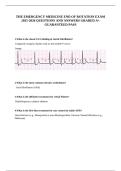
1.What is the classic ECG finding in Atrial Fibrillation?
Irregularly irregular rhythm with no discernible P waves
Image:
2.What is the most common chronic arrhythmia?
Atrial fibrillation (AFib)
3.What is the definitive treatment for Atrial Flutter?
Radiofrequency catheter ablation
4.What is the first-line treatment for rate control in stable AFib?
Beta-blockers (e.g., Metoprolol) or non-dihydropyridine Calcium Channel Blockers (e.g.,
Diltiazem)
, 5.What is the classic ECG appearance of Atrial Flutter?
"Sawtooth" P-wave pattern (F waves), usually in leads II, III, and Avf
Image:
6.What is the first-line medication for stable Paroxysmal Supraventricular Tachycardia
(PSVT)?
Adenosine (6mg rapid IV push, followed by 12mg if needed
7.What defines First-degree AV block?
PR interval >0.20 seconds with a 1:1 P to QRS ratio
Image:
8.What is the definitive treatment for unstable atrial arrhythmias?
Synchronized cardioversion
2025-2026 QUESTIONS AND ANSWERS GRADED A+
GUARANTEED PASS
1.What is the classic ECG finding in Atrial Fibrillation?
Irregularly irregular rhythm with no discernible P waves
Image:
2.What is the most common chronic arrhythmia?
Atrial fibrillation (AFib)
3.What is the definitive treatment for Atrial Flutter?
Radiofrequency catheter ablation
4.What is the first-line treatment for rate control in stable AFib?
Beta-blockers (e.g., Metoprolol) or non-dihydropyridine Calcium Channel Blockers (e.g.,
Diltiazem)
, 5.What is the classic ECG appearance of Atrial Flutter?
"Sawtooth" P-wave pattern (F waves), usually in leads II, III, and Avf
Image:
6.What is the first-line medication for stable Paroxysmal Supraventricular Tachycardia
(PSVT)?
Adenosine (6mg rapid IV push, followed by 12mg if needed
7.What defines First-degree AV block?
PR interval >0.20 seconds with a 1:1 P to QRS ratio
Image:
8.What is the definitive treatment for unstable atrial arrhythmias?
Synchronized cardioversion


