
No.
Date O7 25
o
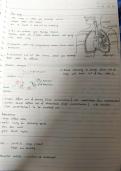
The
lungs
the where
iungs gas exchange OccUYS
a xygen helps cells vespire trachea
air iS foreed in and out by breathinq bronghide
) Air you breathe
goes through trachea
intercostol
Trachea splits into muscles bronchus
2 tobes called byonchi one
mto each lung
beageh aveof
2) 8ronchi splitinto
progresSivelySmallertubes callecd
bronchioles
3) Bronchiolesend at the alveolwhere qas exchangg heart diáphagn
takes place by diffuStòn
Alveolus structure
airin+ out Dlood returnngto avedi fon1est
body will have lot Co2tliHe0z
alveolus
direction
blood
copilary
"Oxygendfscs out alveolus(high.concentatin into bloods tream low concentratön)
.Carbondioxidedifusesout Bloods team (hah .Concentration intoaveolus
(low concentatión to be breathed out.
Adaptatión
s
large surfoce area
moist
lningfor dissolvinggases
very thin walls
good blood Supply
ibs protectsungs /heat
helps you brlathe
tercos
toal muscles -Controlyib movement
, No
Date
INHALATioN EXHALATION
ibcage expands contracts
diaphragm contracts relaxeS
volvmeinlungs inc(eases decreases
pressurein lungs ower than atmosphere higherthan atenosphece
atmosphericpressurehigher than lungs lower than lungs
intercos
tal muscles contracts velaxes
pressure differencein atmosphere and ungs creates pres3ure gradentpulling
dunng nhalaton and forcing air out during fion.
exhala
lung adaptaton
s
alveoli
large surfacearea
short difus
ion pathway
qood blood Supply
many Capillaries
Red Blood Cells
- transports Oxyqen araund body
- biconcave for large SA for oxygen absorphon
- has cariesOxyqen
red pigment taemog lobin
no Ducleus more rOom for SO Can more
ha emoglobin cary OXygen
When
Oxygen
0 en-dfuses
into.
haemoglobin
bloods tueam
ohaeoolcbin.
fom longs i
In tssues, reverse
body happens: Dnyhaemaglobin Okyg en hatnaaglsbin
Date O7 25
o
The
lungs
the where
iungs gas exchange OccUYS
a xygen helps cells vespire trachea
air iS foreed in and out by breathinq bronghide
) Air you breathe
goes through trachea
intercostol
Trachea splits into muscles bronchus
2 tobes called byonchi one
mto each lung
beageh aveof
2) 8ronchi splitinto
progresSivelySmallertubes callecd
bronchioles
3) Bronchiolesend at the alveolwhere qas exchangg heart diáphagn
takes place by diffuStòn
Alveolus structure
airin+ out Dlood returnngto avedi fon1est
body will have lot Co2tliHe0z
alveolus
direction
blood
copilary
"Oxygendfscs out alveolus(high.concentatin into bloods tream low concentratön)
.Carbondioxidedifusesout Bloods team (hah .Concentration intoaveolus
(low concentatión to be breathed out.
Adaptatión
s
large surfoce area
moist
lningfor dissolvinggases
very thin walls
good blood Supply
ibs protectsungs /heat
helps you brlathe
tercos
toal muscles -Controlyib movement
, No
Date
INHALATioN EXHALATION
ibcage expands contracts
diaphragm contracts relaxeS
volvmeinlungs inc(eases decreases
pressurein lungs ower than atmosphere higherthan atenosphece
atmosphericpressurehigher than lungs lower than lungs
intercos
tal muscles contracts velaxes
pressure differencein atmosphere and ungs creates pres3ure gradentpulling
dunng nhalaton and forcing air out during fion.
exhala
lung adaptaton
s
alveoli
large surfacearea
short difus
ion pathway
qood blood Supply
many Capillaries
Red Blood Cells
- transports Oxyqen araund body
- biconcave for large SA for oxygen absorphon
- has cariesOxyqen
red pigment taemog lobin
no Ducleus more rOom for SO Can more
ha emoglobin cary OXygen
When
Oxygen
0 en-dfuses
into.
haemoglobin
bloods tueam
ohaeoolcbin.
fom longs i
In tssues, reverse
body happens: Dnyhaemaglobin Okyg en hatnaaglsbin


