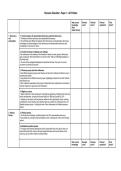
Revision Checklist - Paper 1 - UK Politics
Rate current Revised Revised Planned Final
knowledge once? twice? questions? check?
(Red/
Amber/ Green)
1. Democracy 1.1 Current systems of representative democracy and direct democracy.
and • The features of direct democracy and representative democracy.
participation • The similarities and differences between direct democracy and representative democracy.
Advantages and disadvantages of direct democracy and representative democracy and
consideration of the case for reform.
1.2 A wider franchise and debates over suffrage.
• Key milestones in the widening of the franchise in relation to class, gender, ethnicity and
age, including the 1832 Great Reform Act and the 1918, 1928 and 1969 Representation of
the People Acts.
• The work of the suffragists/suffragettes to extend the franchise. The work of a current
movement to extend the franchise.
1.3 Pressure groups and other influences.
• How different pressure groups exert influence and how their methods and influence vary in
contemporary politics.
• Case studies of two different pressure groups, highlighting examples of how their methods
and influence vary.
• Other collective organisations and groups including think tanks, lobbyists and corporations,
and their influence on government and Parliament.
1.4 Rights in context.
• Major milestones in their development, including the significance of Magna Carta and more
recent developments, including the Human Rights Act 1998 and Equality Act 2010.
• Debates on the extent, limits and tensions within the UK’s rights-based culture, including
consideration of how individual and collective right may conflict, the contributions from civil
liberties pressure groups – including the work of two contemporary civil liberties pressure
groups
2. Political 2.1 Political parties.
Parties • The functions and features of political parties in the UK’s representative democracy.
• How parties are currently funded and debates on the consequences of the current funding
system.
2.2 Established political parties.
• The origins and historical development of the Conservative Party, the Labour Party and
Liberal Democrat Party, and how this has shaped their ideas and current policies on the
economy, law and order, welfare and foreign affairs.
Rate current Revised Revised Planned Final
knowledge once? twice? questions? check?
, 2.3 Emerging and minor UK political parties.
• The importance of other parties in the UK. • The ideas and policies of two other minor
parties.
2.4 UK political parties in context.
• The development of a multi-party system and its implications for government.
• Various factors that affect party success – explanations of why political parties have
succeeded or failed, including debates on the influence of the media.
3. Electoral 3.1 Different electoral systems.
Systems • First-past-the-post (FPTP), Additional Member System (AMS), Single Transferable Vote
(STV), and Supplementary Vote (SV).
• The advantages and disadvantages of these different systems.
• Comparison of first-past-the-post (FPTP) to a different electoral system in a devolved
parliament/assembly.
3.2 Referendums and how they are used.
• How referendums have been used in the UK and their impact on UK political life since
1997.
• The case for and against referendums in a representative democracy.
3.3 Electoral system analysis.
• Debates on why different electoral systems are used in the UK.
• The impact of the electoral system on the government or type of government appointed.
• The impact of different systems on party representation and of electoral systems on voter
choice.
4. Voting 4.1 Case studies of three key general elections.
Behavior and • Case studies of three elections (one from the period 1945– 92, the 1997 election, and one
the Media since 1997), the results and their impact on parties and government.
• The factors that explain the outcomes of these elections, including:
- the reasons for and impact of party policies and manifestos, techniques used in their
election campaigns, and the wider political context of the elections
- class-based voting and other factors influencing voting patterns, such as partisanship and
voting attachment o gender, age, ethnicity and region as factors in influencing voting
behaviour, turnout and trends.
• Analysis of the national voting-behaviour patterns for these elections, revealed by national
data sources and how and why they vary
4.2 The influence of the media.
• The Assessment of the role and impact of the media on politics – both during and between
key general elections, including the importance and relevance of opinion polls, media bias
and persuasion.
Rate current Revised Revised Planned Final
knowledge once? twice? questions? check?
Conservatism Core ideas and principles of conservatism and how they relate to human nature, the
state, society and the economy:
, • pragmatism – flexible approach to society with decisions made on the basis of what works
– to cover links between pragmatism and traditional conservative and one-nation philosophy
• tradition – accumulated wisdom of past societies and a connection between the
generations – to cover how this creates stability, links with organic change, and enhances
humans’ security
• human imperfection – humans are flawed which makes them incapable of making good
decisions for themselves – to cover the three aspects of psychological, moral and intellectual
imperfection
• organic society/state – society/state is more important than any individual parts – to cover
how this links to the underpinning of the beliefs of authority and hierarchy, and a cohesive
society
• paternalism – benign power exerted from above by the state, that governs in the interests
of the people – to cover the different interpretations by traditional (an authoritarian approach,
the state knows what is best so the people must do what they are told) and one-nation
conservatives (there is an obligation on the wealthy to look after those who are unable to
look after themselves)and why it is rejected by New Right Conservatives
• libertarianism (specifically neo-liberalism) – upholds liberty, seeking to maximise autonomy
and free choice, mainly in the economy – to cover the moral and economic values
associated with this idea.
The differing views and tensions within conservatism:
• traditional conservative − commitment to hierarchical and paternalistic values
• one-nation conservative − updating of traditional conservatism in response to the
emergence of capitalism
• New Right − the marriage of neo-liberal and neoconservative ideas and include:
- neo-liberal: principally concerned with free-market economics and atomistic individualism
- neo-conservative: principally concerned with the fear of social fragmentation, tough on law
and order and public morality.
The key ideas of the following thinkers to exemplify the content from areas 1 and 2:
Thomas Hobbes (1588–1679)
• Order – an ordered society should balance the human need to lead a free life.
• Human nature – humans are needy, vulnerable and easily led astray in attempts to
understand the world around them.
Edmund Burke (1729–1797)
• Change – political change should be undertaken with great caution and organically.
• Tradition and empiricism – practices passed down for generations should be respected.
Michael Oakeshott (1901–1990)
• Human imperfection – suggestion that society is unpredictable and humans are imperfect.
• Pragmatism – belief that conservatism is about being pragmatic.
Ayn Rand (1905–1982)
• Objectivism – this advocates the virtues of rational self-interest.
Rate current Revised Revised Planned Final
knowledge once? twice? questions? check?
(Red/
Amber/ Green)
1. Democracy 1.1 Current systems of representative democracy and direct democracy.
and • The features of direct democracy and representative democracy.
participation • The similarities and differences between direct democracy and representative democracy.
Advantages and disadvantages of direct democracy and representative democracy and
consideration of the case for reform.
1.2 A wider franchise and debates over suffrage.
• Key milestones in the widening of the franchise in relation to class, gender, ethnicity and
age, including the 1832 Great Reform Act and the 1918, 1928 and 1969 Representation of
the People Acts.
• The work of the suffragists/suffragettes to extend the franchise. The work of a current
movement to extend the franchise.
1.3 Pressure groups and other influences.
• How different pressure groups exert influence and how their methods and influence vary in
contemporary politics.
• Case studies of two different pressure groups, highlighting examples of how their methods
and influence vary.
• Other collective organisations and groups including think tanks, lobbyists and corporations,
and their influence on government and Parliament.
1.4 Rights in context.
• Major milestones in their development, including the significance of Magna Carta and more
recent developments, including the Human Rights Act 1998 and Equality Act 2010.
• Debates on the extent, limits and tensions within the UK’s rights-based culture, including
consideration of how individual and collective right may conflict, the contributions from civil
liberties pressure groups – including the work of two contemporary civil liberties pressure
groups
2. Political 2.1 Political parties.
Parties • The functions and features of political parties in the UK’s representative democracy.
• How parties are currently funded and debates on the consequences of the current funding
system.
2.2 Established political parties.
• The origins and historical development of the Conservative Party, the Labour Party and
Liberal Democrat Party, and how this has shaped their ideas and current policies on the
economy, law and order, welfare and foreign affairs.
Rate current Revised Revised Planned Final
knowledge once? twice? questions? check?
, 2.3 Emerging and minor UK political parties.
• The importance of other parties in the UK. • The ideas and policies of two other minor
parties.
2.4 UK political parties in context.
• The development of a multi-party system and its implications for government.
• Various factors that affect party success – explanations of why political parties have
succeeded or failed, including debates on the influence of the media.
3. Electoral 3.1 Different electoral systems.
Systems • First-past-the-post (FPTP), Additional Member System (AMS), Single Transferable Vote
(STV), and Supplementary Vote (SV).
• The advantages and disadvantages of these different systems.
• Comparison of first-past-the-post (FPTP) to a different electoral system in a devolved
parliament/assembly.
3.2 Referendums and how they are used.
• How referendums have been used in the UK and their impact on UK political life since
1997.
• The case for and against referendums in a representative democracy.
3.3 Electoral system analysis.
• Debates on why different electoral systems are used in the UK.
• The impact of the electoral system on the government or type of government appointed.
• The impact of different systems on party representation and of electoral systems on voter
choice.
4. Voting 4.1 Case studies of three key general elections.
Behavior and • Case studies of three elections (one from the period 1945– 92, the 1997 election, and one
the Media since 1997), the results and their impact on parties and government.
• The factors that explain the outcomes of these elections, including:
- the reasons for and impact of party policies and manifestos, techniques used in their
election campaigns, and the wider political context of the elections
- class-based voting and other factors influencing voting patterns, such as partisanship and
voting attachment o gender, age, ethnicity and region as factors in influencing voting
behaviour, turnout and trends.
• Analysis of the national voting-behaviour patterns for these elections, revealed by national
data sources and how and why they vary
4.2 The influence of the media.
• The Assessment of the role and impact of the media on politics – both during and between
key general elections, including the importance and relevance of opinion polls, media bias
and persuasion.
Rate current Revised Revised Planned Final
knowledge once? twice? questions? check?
Conservatism Core ideas and principles of conservatism and how they relate to human nature, the
state, society and the economy:
, • pragmatism – flexible approach to society with decisions made on the basis of what works
– to cover links between pragmatism and traditional conservative and one-nation philosophy
• tradition – accumulated wisdom of past societies and a connection between the
generations – to cover how this creates stability, links with organic change, and enhances
humans’ security
• human imperfection – humans are flawed which makes them incapable of making good
decisions for themselves – to cover the three aspects of psychological, moral and intellectual
imperfection
• organic society/state – society/state is more important than any individual parts – to cover
how this links to the underpinning of the beliefs of authority and hierarchy, and a cohesive
society
• paternalism – benign power exerted from above by the state, that governs in the interests
of the people – to cover the different interpretations by traditional (an authoritarian approach,
the state knows what is best so the people must do what they are told) and one-nation
conservatives (there is an obligation on the wealthy to look after those who are unable to
look after themselves)and why it is rejected by New Right Conservatives
• libertarianism (specifically neo-liberalism) – upholds liberty, seeking to maximise autonomy
and free choice, mainly in the economy – to cover the moral and economic values
associated with this idea.
The differing views and tensions within conservatism:
• traditional conservative − commitment to hierarchical and paternalistic values
• one-nation conservative − updating of traditional conservatism in response to the
emergence of capitalism
• New Right − the marriage of neo-liberal and neoconservative ideas and include:
- neo-liberal: principally concerned with free-market economics and atomistic individualism
- neo-conservative: principally concerned with the fear of social fragmentation, tough on law
and order and public morality.
The key ideas of the following thinkers to exemplify the content from areas 1 and 2:
Thomas Hobbes (1588–1679)
• Order – an ordered society should balance the human need to lead a free life.
• Human nature – humans are needy, vulnerable and easily led astray in attempts to
understand the world around them.
Edmund Burke (1729–1797)
• Change – political change should be undertaken with great caution and organically.
• Tradition and empiricism – practices passed down for generations should be respected.
Michael Oakeshott (1901–1990)
• Human imperfection – suggestion that society is unpredictable and humans are imperfect.
• Pragmatism – belief that conservatism is about being pragmatic.
Ayn Rand (1905–1982)
• Objectivism – this advocates the virtues of rational self-interest.