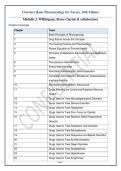
Clayton's Basic Pharmacology for Nurses, 20th Edition
Michelle J. Willihnganz, Bruce Clayton & collaborators
Chapter Coverage
Chapter Topic
1 Basic Principles of Pharmacology
2 Drug Actions Across the Life Span
3 The Nursing Process and Pharmacology
4 Patient Education to Promote Health
5 Principles of Medication Administration and Medication
Safety
6 Percutaneous Administration
7 Enteral Administration
8 Parenteral Administration: Safe Preparation
9 Parenteral Administration: Intradermal, Subcutaneous,
and Intramuscular
10 Parenteral Administration: Intravenous
11 Drugs Affecting the Central and Peripheral Nervous
System
12 Drugs Used to Treat Neurodegenerative Disorders
13 Drugs Used to Treat Seizure Disorders
14 Drugs Used to Treat Headaches
15 Drugs Used to Treat Pain: Focus on Opioids
16 Drugs Used to Treat Attention Deficit Hyperactivity
Disorder
17 Drugs Used to Treat Substance Use Disorders
18 Drugs Used to Treat Schizophrenia
19 Drugs Used to Treat Depressive and Bipolar Disorders
20 Drugs Used to Treat Anxiety Disorders
21 Drugs Used to Treat Sleep Disorders
22 Drugs Used to Treat Dyslipidemias
23 Drugs Used to Treat Hypertension
24 Drugs Used to Treat Arrhythmias
Page 1
,Chapter Topic
25 Drugs Used to Treat Angina Pectoris
26 Drugs Used to Treat Peripheral Vascular Disease
27 Drugs Used to Treat Thromboembolic Disorders
28 Drugs Used to Treat Heart Failure
29 Drugs Used to Treat Upper Respiratory Disease
30 Drugs Used to Treat Lower Respiratory Disease
31 Drugs Used to Treat Gastroesophageal Reflux and
Peptic Ulcer Disease
32 Drugs Used to Treat Nausea and Vomiting
33 Drugs Used to Treat Constipation and Diarrhea
34 Drugs Used to Treat Diabetes Mellitus
35 Drugs Used to Treat Thyroid Disease
36 Drugs Used in Obstetrics
37 Drugs Used in Men's and Women's Health
38 Drugs Used to Treat Urinary System Disorders
39 Drugs Used to Treat Glaucoma and Other Eye
Disorders
40 Drugs Used to Treat Cancer
41 Drugs Used to Treat Musculoskeletal Disorders
42 Drugs Used to Treat Immune and Inflammatory
Disorders
43 Drugs Used to Treat Bacterial Infections
44 Drugs Used to Treat Viral Infections
45 Drugs Used to Treat Fungal Infections
Page 2
,Chapter 1: Basic Principles of Pharmacology | Questions 1-23
1. In the context of this chapter, which statement best describes a drug's therapeutic
effect?
A. The rate of renal excretion
B. The intended beneficial response
C. Any unexpected harmful response
D. The trade name assigned by a manufacturer
Correct Answer: B | Rationale: A therapeutic effect is the intended beneficial clinical response
to a medication. Option B is the best answer because “The intended beneficial response” directly
applies the concept, priority, or action tested in the stem. The other choices either address a
different concept or are less appropriate for this specific situation. Applying this distinction helps
connect pharmacologic knowledge with safe medication administration, monitoring, and patient
education.
2. A medication with a narrow therapeutic index generally requires which approach?
A. Closer monitoring of response and, when indicated, serum levels
B. Automatic doubling of the first dose
C. Administration only by the intravenous route
D. Less monitoring because toxicity is unlikely
Correct Answer: A | Rationale: A narrow therapeutic index means the effective and toxic
concentrations are relatively close, so careful monitoring is important. Option A is the best answer
because “Closer monitoring of response and, when indicated, serum levels” directly applies the
concept, priority, or action tested in the stem. The other choices either address a different concept
or are less appropriate for this specific situation. Applying this distinction helps connect
pharmacologic knowledge with safe medication administration, monitoring, and patient education.
3. Which action most directly reduces preventable medication harm?
A. Using abbreviations whenever possible
B. Administering all medications before assessment
C. Verifying the patient, drug, dose, route, time, and relevant clinical data
D. Relying on memory rather than current references
Correct Answer: C | Rationale: Systematic verification and patient assessment are core
safeguards against medication errors. Option C is the best answer because “Verifying the patient,
drug, dose, route, time, and relevant clinical data” directly applies the concept, priority, or action
tested in the stem. The other choices either address a different concept or are less appropriate for
Page 3
, this specific situation. Applying this distinction helps connect pharmacologic knowledge with safe
medication administration, monitoring, and patient education.
4. In a clinical conference covering Basic Principles of Pharmacology, the staff nurse is
asked to choose the best answer. Select the best-supported response. In the context of this
chapter, which statement best describes a drug's therapeutic effect?
A. Any unexpected harmful response
B. The trade name assigned by a manufacturer
C. The intended beneficial response
D. The rate of renal excretion
Correct Answer: C | Rationale: A therapeutic effect is the intended beneficial clinical response
to a medication. Option C is the best answer because “The intended beneficial response” directly
applies the concept, priority, or action tested in the stem. The other choices either address a
different concept or are less appropriate for this specific situation. Applying this distinction helps
connect pharmacologic knowledge with safe medication administration, monitoring, and patient
education.
5. During an applied-learning exercise on Basic Principles of Pharmacology, the nurse
selects the best response to this item. Identify the most appropriate answer. A medication
with a narrow therapeutic index generally requires which approach?
A. Closer monitoring of response and, when indicated, serum levels
B. Less monitoring because toxicity is unlikely
C. Administration only by the intravenous route
D. Automatic doubling of the first dose
Correct Answer: A | Rationale: A narrow therapeutic index means the effective and toxic
concentrations are relatively close, so careful monitoring is important. Option A is the best answer
because “Closer monitoring of response and, when indicated, serum levels” directly applies the
concept, priority, or action tested in the stem. The other choices either address a different concept
or are less appropriate for this specific situation. Applying this distinction helps connect
pharmacologic knowledge with safe medication administration, monitoring, and patient education.
6. During a teaching session on Basic Principles of Pharmacology, the nursing student is
asked to select the best answer. Choose the single best response. Which action most
directly reduces preventable medication harm?
A. Relying on memory rather than current references
B. Administering all medications before assessment
C. Verifying the patient, drug, dose, route, time, and relevant clinical data
Page 4
Michelle J. Willihnganz, Bruce Clayton & collaborators
Chapter Coverage
Chapter Topic
1 Basic Principles of Pharmacology
2 Drug Actions Across the Life Span
3 The Nursing Process and Pharmacology
4 Patient Education to Promote Health
5 Principles of Medication Administration and Medication
Safety
6 Percutaneous Administration
7 Enteral Administration
8 Parenteral Administration: Safe Preparation
9 Parenteral Administration: Intradermal, Subcutaneous,
and Intramuscular
10 Parenteral Administration: Intravenous
11 Drugs Affecting the Central and Peripheral Nervous
System
12 Drugs Used to Treat Neurodegenerative Disorders
13 Drugs Used to Treat Seizure Disorders
14 Drugs Used to Treat Headaches
15 Drugs Used to Treat Pain: Focus on Opioids
16 Drugs Used to Treat Attention Deficit Hyperactivity
Disorder
17 Drugs Used to Treat Substance Use Disorders
18 Drugs Used to Treat Schizophrenia
19 Drugs Used to Treat Depressive and Bipolar Disorders
20 Drugs Used to Treat Anxiety Disorders
21 Drugs Used to Treat Sleep Disorders
22 Drugs Used to Treat Dyslipidemias
23 Drugs Used to Treat Hypertension
24 Drugs Used to Treat Arrhythmias
Page 1
,Chapter Topic
25 Drugs Used to Treat Angina Pectoris
26 Drugs Used to Treat Peripheral Vascular Disease
27 Drugs Used to Treat Thromboembolic Disorders
28 Drugs Used to Treat Heart Failure
29 Drugs Used to Treat Upper Respiratory Disease
30 Drugs Used to Treat Lower Respiratory Disease
31 Drugs Used to Treat Gastroesophageal Reflux and
Peptic Ulcer Disease
32 Drugs Used to Treat Nausea and Vomiting
33 Drugs Used to Treat Constipation and Diarrhea
34 Drugs Used to Treat Diabetes Mellitus
35 Drugs Used to Treat Thyroid Disease
36 Drugs Used in Obstetrics
37 Drugs Used in Men's and Women's Health
38 Drugs Used to Treat Urinary System Disorders
39 Drugs Used to Treat Glaucoma and Other Eye
Disorders
40 Drugs Used to Treat Cancer
41 Drugs Used to Treat Musculoskeletal Disorders
42 Drugs Used to Treat Immune and Inflammatory
Disorders
43 Drugs Used to Treat Bacterial Infections
44 Drugs Used to Treat Viral Infections
45 Drugs Used to Treat Fungal Infections
Page 2
,Chapter 1: Basic Principles of Pharmacology | Questions 1-23
1. In the context of this chapter, which statement best describes a drug's therapeutic
effect?
A. The rate of renal excretion
B. The intended beneficial response
C. Any unexpected harmful response
D. The trade name assigned by a manufacturer
Correct Answer: B | Rationale: A therapeutic effect is the intended beneficial clinical response
to a medication. Option B is the best answer because “The intended beneficial response” directly
applies the concept, priority, or action tested in the stem. The other choices either address a
different concept or are less appropriate for this specific situation. Applying this distinction helps
connect pharmacologic knowledge with safe medication administration, monitoring, and patient
education.
2. A medication with a narrow therapeutic index generally requires which approach?
A. Closer monitoring of response and, when indicated, serum levels
B. Automatic doubling of the first dose
C. Administration only by the intravenous route
D. Less monitoring because toxicity is unlikely
Correct Answer: A | Rationale: A narrow therapeutic index means the effective and toxic
concentrations are relatively close, so careful monitoring is important. Option A is the best answer
because “Closer monitoring of response and, when indicated, serum levels” directly applies the
concept, priority, or action tested in the stem. The other choices either address a different concept
or are less appropriate for this specific situation. Applying this distinction helps connect
pharmacologic knowledge with safe medication administration, monitoring, and patient education.
3. Which action most directly reduces preventable medication harm?
A. Using abbreviations whenever possible
B. Administering all medications before assessment
C. Verifying the patient, drug, dose, route, time, and relevant clinical data
D. Relying on memory rather than current references
Correct Answer: C | Rationale: Systematic verification and patient assessment are core
safeguards against medication errors. Option C is the best answer because “Verifying the patient,
drug, dose, route, time, and relevant clinical data” directly applies the concept, priority, or action
tested in the stem. The other choices either address a different concept or are less appropriate for
Page 3
, this specific situation. Applying this distinction helps connect pharmacologic knowledge with safe
medication administration, monitoring, and patient education.
4. In a clinical conference covering Basic Principles of Pharmacology, the staff nurse is
asked to choose the best answer. Select the best-supported response. In the context of this
chapter, which statement best describes a drug's therapeutic effect?
A. Any unexpected harmful response
B. The trade name assigned by a manufacturer
C. The intended beneficial response
D. The rate of renal excretion
Correct Answer: C | Rationale: A therapeutic effect is the intended beneficial clinical response
to a medication. Option C is the best answer because “The intended beneficial response” directly
applies the concept, priority, or action tested in the stem. The other choices either address a
different concept or are less appropriate for this specific situation. Applying this distinction helps
connect pharmacologic knowledge with safe medication administration, monitoring, and patient
education.
5. During an applied-learning exercise on Basic Principles of Pharmacology, the nurse
selects the best response to this item. Identify the most appropriate answer. A medication
with a narrow therapeutic index generally requires which approach?
A. Closer monitoring of response and, when indicated, serum levels
B. Less monitoring because toxicity is unlikely
C. Administration only by the intravenous route
D. Automatic doubling of the first dose
Correct Answer: A | Rationale: A narrow therapeutic index means the effective and toxic
concentrations are relatively close, so careful monitoring is important. Option A is the best answer
because “Closer monitoring of response and, when indicated, serum levels” directly applies the
concept, priority, or action tested in the stem. The other choices either address a different concept
or are less appropriate for this specific situation. Applying this distinction helps connect
pharmacologic knowledge with safe medication administration, monitoring, and patient education.
6. During a teaching session on Basic Principles of Pharmacology, the nursing student is
asked to select the best answer. Choose the single best response. Which action most
directly reduces preventable medication harm?
A. Relying on memory rather than current references
B. Administering all medications before assessment
C. Verifying the patient, drug, dose, route, time, and relevant clinical data
Page 4