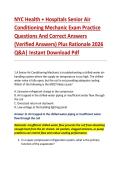
NYC Health + Hospitals Senior Air
Conditioning Mechanic Exam Practice
Questions And Correct Answers
(Verified Answers) Plus Rationale 2026
Q&A| Instant Download Pdf
1.A Senior Air Conditioning Mechanic is troubleshooting a chilled-water air-
handling system where the supply air temperature is too high. The chilled-
water valve is fully open, but the coil is not providing adequate cooling.
Which of the following is the MOST likely cause?
A. Excessive refrigerant charge in the compressor
B. Air trapped in the chilled-water piping or insufficient water flow through
the coil
C. Oversized return-air ductwork
D. Low voltage at the building lighting panel
Answer: B. Air trapped in the chilled-water piping or insufficient water
flow through the coil
Rationale: Insufficient chilled-water flow prevents the coil from absorbing
enough heat from the air stream. Air pockets, clogged strainers, or pump
problems can restrict flow and reduce cooling performance.
2. In a vapor-compression refrigeration system, what is the primary
function of the evaporator?
,A. Reject heat to the outdoor environment
B. Compress refrigerant vapor into a high-pressure gas
C. Absorb heat from the conditioned space by evaporating refrigerant
D. Store liquid refrigerant before expansion
Answer: C. Absorb heat from the conditioned space by evaporating
refrigerant
Rationale: The evaporator absorbs heat from indoor air or chilled water as
liquid refrigerant changes into vapor. This heat transfer produces the
cooling effect.
3. When servicing HVAC equipment in a healthcare facility, the mechanic
should prioritize which safety practice before beginning electrical
repairs?
A. Increasing thermostat settings
B. Lockout/tagout procedures
C. Opening refrigerant valves
D. Removing all system filters
Answer: B. Lockout/tagout procedures
Rationale: Lockout/tagout prevents accidental energization of equipment
while maintenance is being performed, protecting workers from electrical
and mechanical hazards.
4. A refrigeration compressor is designed primarily to:
A. Reduce refrigerant pressure before entering the evaporator
B. Increase refrigerant pressure and circulate refrigerant through the system
C. Remove moisture from conditioned air
D. Measure refrigerant temperature
Answer: B. Increase refrigerant pressure and circulate refrigerant through
the system
,Rationale: The compressor raises refrigerant vapor pressure and
temperature while driving refrigerant movement through the refrigeration
cycle.
5. A dirty air filter in an air-handling unit will most likely cause:
A. Increased airflow and lower energy use
B. Reduced airflow and increased system strain
C. Higher refrigerant pressure only
D. Improved indoor air quality without maintenance
Answer: B. Reduced airflow and increased system strain
Rationale: Dirty filters restrict airflow, reducing system efficiency,
increasing fan workload, and potentially causing coil freezing or poor
comfort conditions.
6. The purpose of a thermostatic expansion valve (TXV) in a refrigeration
system is to:
A. Control refrigerant flow into the evaporator
B. Increase compressor horsepower
C. Remove oil from refrigerant
D. Cool condenser water
Answer: A. Control refrigerant flow into the evaporator
Rationale: A TXV meters refrigerant entering the evaporator and
maintains proper superheat to protect compressor operation.
7. In an HVAC system, superheat refers to:
A. The temperature of liquid refrigerant below saturation
B. The temperature increase of refrigerant vapor above its boiling point
C. The pressure difference across a filter
D. The temperature of condenser water
, Answer: B. The temperature increase of refrigerant vapor above its boiling
point
Rationale: Superheat ensures that refrigerant entering the compressor is
vapor rather than liquid, preventing compressor damage.
8. A condenser in an air-conditioning system performs which function?
A. Absorbs indoor heat
B. Removes heat from refrigerant and rejects it to the surroundings
C. Expands refrigerant into a low-pressure mixture
D. Controls indoor humidity directly
Answer: B. Removes heat from refrigerant and rejects it to the
surroundings
Rationale: The condenser releases absorbed heat as refrigerant changes
from vapor to liquid under high pressure.
9. A compressor that repeatedly starts and stops rapidly is experiencing:
A. Short cycling
B. Normal operation
C. Proper superheat adjustment
D. Refrigerant recovery
Answer: A. Short cycling
Rationale: Short cycling occurs when equipment cycles too frequently,
often due to control issues, improper refrigerant charge, airflow problems,
or oversized equipment.
10. What instrument is commonly used to measure refrigerant
pressures?
A. Ammeter
B. Manifold gauge set
Conditioning Mechanic Exam Practice
Questions And Correct Answers
(Verified Answers) Plus Rationale 2026
Q&A| Instant Download Pdf
1.A Senior Air Conditioning Mechanic is troubleshooting a chilled-water air-
handling system where the supply air temperature is too high. The chilled-
water valve is fully open, but the coil is not providing adequate cooling.
Which of the following is the MOST likely cause?
A. Excessive refrigerant charge in the compressor
B. Air trapped in the chilled-water piping or insufficient water flow through
the coil
C. Oversized return-air ductwork
D. Low voltage at the building lighting panel
Answer: B. Air trapped in the chilled-water piping or insufficient water
flow through the coil
Rationale: Insufficient chilled-water flow prevents the coil from absorbing
enough heat from the air stream. Air pockets, clogged strainers, or pump
problems can restrict flow and reduce cooling performance.
2. In a vapor-compression refrigeration system, what is the primary
function of the evaporator?
,A. Reject heat to the outdoor environment
B. Compress refrigerant vapor into a high-pressure gas
C. Absorb heat from the conditioned space by evaporating refrigerant
D. Store liquid refrigerant before expansion
Answer: C. Absorb heat from the conditioned space by evaporating
refrigerant
Rationale: The evaporator absorbs heat from indoor air or chilled water as
liquid refrigerant changes into vapor. This heat transfer produces the
cooling effect.
3. When servicing HVAC equipment in a healthcare facility, the mechanic
should prioritize which safety practice before beginning electrical
repairs?
A. Increasing thermostat settings
B. Lockout/tagout procedures
C. Opening refrigerant valves
D. Removing all system filters
Answer: B. Lockout/tagout procedures
Rationale: Lockout/tagout prevents accidental energization of equipment
while maintenance is being performed, protecting workers from electrical
and mechanical hazards.
4. A refrigeration compressor is designed primarily to:
A. Reduce refrigerant pressure before entering the evaporator
B. Increase refrigerant pressure and circulate refrigerant through the system
C. Remove moisture from conditioned air
D. Measure refrigerant temperature
Answer: B. Increase refrigerant pressure and circulate refrigerant through
the system
,Rationale: The compressor raises refrigerant vapor pressure and
temperature while driving refrigerant movement through the refrigeration
cycle.
5. A dirty air filter in an air-handling unit will most likely cause:
A. Increased airflow and lower energy use
B. Reduced airflow and increased system strain
C. Higher refrigerant pressure only
D. Improved indoor air quality without maintenance
Answer: B. Reduced airflow and increased system strain
Rationale: Dirty filters restrict airflow, reducing system efficiency,
increasing fan workload, and potentially causing coil freezing or poor
comfort conditions.
6. The purpose of a thermostatic expansion valve (TXV) in a refrigeration
system is to:
A. Control refrigerant flow into the evaporator
B. Increase compressor horsepower
C. Remove oil from refrigerant
D. Cool condenser water
Answer: A. Control refrigerant flow into the evaporator
Rationale: A TXV meters refrigerant entering the evaporator and
maintains proper superheat to protect compressor operation.
7. In an HVAC system, superheat refers to:
A. The temperature of liquid refrigerant below saturation
B. The temperature increase of refrigerant vapor above its boiling point
C. The pressure difference across a filter
D. The temperature of condenser water
, Answer: B. The temperature increase of refrigerant vapor above its boiling
point
Rationale: Superheat ensures that refrigerant entering the compressor is
vapor rather than liquid, preventing compressor damage.
8. A condenser in an air-conditioning system performs which function?
A. Absorbs indoor heat
B. Removes heat from refrigerant and rejects it to the surroundings
C. Expands refrigerant into a low-pressure mixture
D. Controls indoor humidity directly
Answer: B. Removes heat from refrigerant and rejects it to the
surroundings
Rationale: The condenser releases absorbed heat as refrigerant changes
from vapor to liquid under high pressure.
9. A compressor that repeatedly starts and stops rapidly is experiencing:
A. Short cycling
B. Normal operation
C. Proper superheat adjustment
D. Refrigerant recovery
Answer: A. Short cycling
Rationale: Short cycling occurs when equipment cycles too frequently,
often due to control issues, improper refrigerant charge, airflow problems,
or oversized equipment.
10. What instrument is commonly used to measure refrigerant
pressures?
A. Ammeter
B. Manifold gauge set