

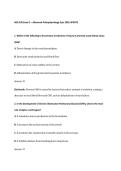
NSG 530 Exam 2 – Advanced Pathophysiology Quiz 2026 UPDATE
1. Which of the following is the primary mechanism of injury in prerenal acute kidney injury
(AKI)?
A. Direct damage to the renal parenchyma
B. Decreased renal perfusion and blood flow
C. Obstruction of urine outflow in the ureters
D. Inflammation of the glomerular basement membrane
Answer: B
Rationale: Prerenal AKI is caused by factors that reduce systemic circulation, causing a
decrease in renal blood flow and GFR, such as dehydration or heart failure.
2. In the development of Chronic Obstructive Pulmonary Disease (COPD), what is the main
role of alpha-1 antitrypsin?
A. It stimulates mucus production in the bronchioles
B. It increases the surface tension of the alveoli
C. It promotes the constriction of smooth muscle in the airways
D. It inhibits elastase from breaking down lung tissue
Answer: D
,Rationale: Alpha-1 antitrypsin is a protective enzyme that inhibits elastase; a deficiency
leads to the destruction of elastic fibers in the lung, causing emphysema.
3. Which clinical manifestation is most characteristic of right-sided heart failure?
A. Pulmonary edema and crackles
B. Orthopnea and paroxysmal nocturnal dyspnea
C. Peripheral edema and jugular venous distention
D. Pink frothy sputum
Answer: C
Rationale: Right-sided heart failure causes blood to back up into the systemic circulation,
leading to peripheral edema, hepatomegaly, and jugular venous distention.
4. A patient with Syndrome of Inappropriate Antidiuretic Hormone (SIADH) is most likely to
exhibit which electrolyte abnormality?
A. Hypernatremia
B. Hyperkalemia
C. Hyponatremia
D. Hypocalcemia
Answer: C
Rationale: SIADH involves excessive ADH, leading to water retention and dilutional
hyponatremia.
, 5. What is the primary pathophysiology behind Type 1 Diabetes Mellitus?
A. Insulin resistance in peripheral tissues
B. Overproduction of glucagon by alpha cells
C. Autoimmune destruction of pancreatic beta cells
D. Excessive glucose absorption in the small intestine
Answer: C
Rationale: Type 1 Diabetes is characterized by an absolute insulin deficiency due to the T-
cell mediated autoimmune destruction of beta cells.
6. Which acid-base imbalance is expected in a patient with severe, prolonged vomiting?
A. Respiratory Acidosis
B. Metabolic Acidosis
C. Respiratory Alkalosis
D. Metabolic Alkalosis
Answer: D
Rationale: Vomiting results in the loss of hydrochloric acid (HCl) from the stomach,
leading to an increase in serum bicarbonate and metabolic alkalosis.
7. What is the Hallmark sign of Nephrotic Syndrome?
A. Gross hematuria
1. Which of the following is the primary mechanism of injury in prerenal acute kidney injury
(AKI)?
A. Direct damage to the renal parenchyma
B. Decreased renal perfusion and blood flow
C. Obstruction of urine outflow in the ureters
D. Inflammation of the glomerular basement membrane
Answer: B
Rationale: Prerenal AKI is caused by factors that reduce systemic circulation, causing a
decrease in renal blood flow and GFR, such as dehydration or heart failure.
2. In the development of Chronic Obstructive Pulmonary Disease (COPD), what is the main
role of alpha-1 antitrypsin?
A. It stimulates mucus production in the bronchioles
B. It increases the surface tension of the alveoli
C. It promotes the constriction of smooth muscle in the airways
D. It inhibits elastase from breaking down lung tissue
Answer: D
,Rationale: Alpha-1 antitrypsin is a protective enzyme that inhibits elastase; a deficiency
leads to the destruction of elastic fibers in the lung, causing emphysema.
3. Which clinical manifestation is most characteristic of right-sided heart failure?
A. Pulmonary edema and crackles
B. Orthopnea and paroxysmal nocturnal dyspnea
C. Peripheral edema and jugular venous distention
D. Pink frothy sputum
Answer: C
Rationale: Right-sided heart failure causes blood to back up into the systemic circulation,
leading to peripheral edema, hepatomegaly, and jugular venous distention.
4. A patient with Syndrome of Inappropriate Antidiuretic Hormone (SIADH) is most likely to
exhibit which electrolyte abnormality?
A. Hypernatremia
B. Hyperkalemia
C. Hyponatremia
D. Hypocalcemia
Answer: C
Rationale: SIADH involves excessive ADH, leading to water retention and dilutional
hyponatremia.
, 5. What is the primary pathophysiology behind Type 1 Diabetes Mellitus?
A. Insulin resistance in peripheral tissues
B. Overproduction of glucagon by alpha cells
C. Autoimmune destruction of pancreatic beta cells
D. Excessive glucose absorption in the small intestine
Answer: C
Rationale: Type 1 Diabetes is characterized by an absolute insulin deficiency due to the T-
cell mediated autoimmune destruction of beta cells.
6. Which acid-base imbalance is expected in a patient with severe, prolonged vomiting?
A. Respiratory Acidosis
B. Metabolic Acidosis
C. Respiratory Alkalosis
D. Metabolic Alkalosis
Answer: D
Rationale: Vomiting results in the loss of hydrochloric acid (HCl) from the stomach,
leading to an increase in serum bicarbonate and metabolic alkalosis.
7. What is the Hallmark sign of Nephrotic Syndrome?
A. Gross hematuria


