CHAPTER 10
Emotional Development
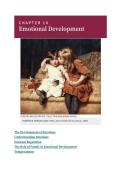
FREDERICK MORGAN (1856–1927), Never Mind! (oil on canvas, 1884)
The Development of Emotions
Understanding Emotions
Emotion Regulation
The Role of Family in Emotional Development
Temperament
,Mental Health, Stress, and Internalizing Mental Disorders
THEMES
NATURE AND NURTURE
THE ACTIVE CHILD
CONTINUITY/DISCONTINUITY
THE SOCIOCULTURAL CONTEXT
INDIVIDUAL DIFFERENCES
Imagine the following situation: a young girl is taken to a room in her
preschool where an experimenter shows her some tasty treats, such
as Smarties, marshmallows, or pretzels. The experimenter tells the
girl that he is going to leave the room “for a while” and that she has
two choices: if she waits until he returns to the room, she can have
two of the treats; or, if she wishes, she can ring a bell, and the
experimenter will return immediately — but she will get only one
treat. The child is then left alone for a considerable period, say 15 to
20 minutes, or until she rings the bell.
You may have heard of this famous experiment, commonly known as
“the marshmallow test” (Mischel, 2015). Walter Mischel and his
colleagues first used this procedure with a group of preschoolers in
the 1960s to study their ability to delay immediate gratification in
order to obtain larger rewards. The researchers were interested in
whether or not the children would wait for the second treat, but they
also wanted to observe the children’s strategies for coping with the
,long wait. Videos showed them using a variety of strategies: some
distracted themselves by talking, singing, trying to sleep, or making
up games to play; others stared at the treats or at the bell; and some,
of course, just rang the bell and ate the single treat right away,
preferring one immediate but guaranteed treat to the possibility of
more treats later.
The marshmallow test was designed to determine how well children can delay gratification—in
other words, how well they manage the frustration of waiting to eat one treat in order to get
two treats in the future.
Description
The first photo shows the girl trying to grab the marshmallow with one hand.
The next photo shows the girl standing and holding her fists up while looking
at the marshmallow from a distance. The final photo shows the girl looking at
the marshmallow with an open mouth and her palms placed beside the plate.
, Mischel believed that a child’s ability to delay eating one
marshmallow for the reward of eating two marshmallows later was
an indicator of that child’s self-control or willpower in the face of
immediate pleasure or happiness (however fleeting). The ability to
exhibit self-control early in life, he reasoned, predicted success later
in life. After all, much of success in adulthood depends on working
toward long-term goals, whether in matters related to higher
education, professional career, or exercise and physical health.
Success also entails resisting temptation and exercising self-restraint.
Emotional Development
FREDERICK MORGAN (1856–1927), Never Mind! (oil on canvas, 1884)
The Development of Emotions
Understanding Emotions
Emotion Regulation
The Role of Family in Emotional Development
Temperament
,Mental Health, Stress, and Internalizing Mental Disorders
THEMES
NATURE AND NURTURE
THE ACTIVE CHILD
CONTINUITY/DISCONTINUITY
THE SOCIOCULTURAL CONTEXT
INDIVIDUAL DIFFERENCES
Imagine the following situation: a young girl is taken to a room in her
preschool where an experimenter shows her some tasty treats, such
as Smarties, marshmallows, or pretzels. The experimenter tells the
girl that he is going to leave the room “for a while” and that she has
two choices: if she waits until he returns to the room, she can have
two of the treats; or, if she wishes, she can ring a bell, and the
experimenter will return immediately — but she will get only one
treat. The child is then left alone for a considerable period, say 15 to
20 minutes, or until she rings the bell.
You may have heard of this famous experiment, commonly known as
“the marshmallow test” (Mischel, 2015). Walter Mischel and his
colleagues first used this procedure with a group of preschoolers in
the 1960s to study their ability to delay immediate gratification in
order to obtain larger rewards. The researchers were interested in
whether or not the children would wait for the second treat, but they
also wanted to observe the children’s strategies for coping with the
,long wait. Videos showed them using a variety of strategies: some
distracted themselves by talking, singing, trying to sleep, or making
up games to play; others stared at the treats or at the bell; and some,
of course, just rang the bell and ate the single treat right away,
preferring one immediate but guaranteed treat to the possibility of
more treats later.
The marshmallow test was designed to determine how well children can delay gratification—in
other words, how well they manage the frustration of waiting to eat one treat in order to get
two treats in the future.
Description
The first photo shows the girl trying to grab the marshmallow with one hand.
The next photo shows the girl standing and holding her fists up while looking
at the marshmallow from a distance. The final photo shows the girl looking at
the marshmallow with an open mouth and her palms placed beside the plate.
, Mischel believed that a child’s ability to delay eating one
marshmallow for the reward of eating two marshmallows later was
an indicator of that child’s self-control or willpower in the face of
immediate pleasure or happiness (however fleeting). The ability to
exhibit self-control early in life, he reasoned, predicted success later
in life. After all, much of success in adulthood depends on working
toward long-term goals, whether in matters related to higher
education, professional career, or exercise and physical health.
Success also entails resisting temptation and exercising self-restraint.