
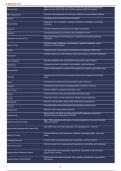
Endocrine Test
Known as the "master gland"; secretes hormones that regulate other endocrine
Pituitary Gland glands such as ACTH, TSH, GH, LH, FSH, prolactin, ADH, and oxytocin.
ADH (Vasopressin) Promotes water reabsorption in the kidneys; deficiency causes diabetes insipidus.
Oxytocin Stimulates uterine contractions and milk ejection.
Secretes T3, T4, and calcitonin; regulates metabolism, temperature, and energy
Thyroid Gland production.
T3 and T4 Increase metabolic rate, heart rate, and oxygen consumption.
Calcitonin Lowers blood calcium by promoting calcium deposition in bone.
Raises blood calcium by stimulating bone resorption and increasing intestinal
Parathyroid Hormone (PTH) absorption.
Produces cortisol, aldosterone, and androgens; regulates metabolism, stress
Adrenal Cortex response, and fluid balance.
Cortisol "Stress hormone" that increases blood glucose and suppresses inflammation.
Increases sodium and water retention, raises blood pressure, and lowers potassium.
Aldosterone
Adrenal Medulla Secretes epinephrine and norepinephrine during stress ("fight or flight").
Epinephrine Increases heart rate, contractility, bronchodilation, and blood glucose.
Causes vasoconstriction, increases blood pressure, and supports sympathetic tone.
Norepinephrine
Secretes insulin (beta cells) and glucagon (alpha cells) to regulate blood glucose
Pancreas levels.
Insulin Decreases blood glucose by allowing cellular uptake of glucose.
Glucagon Increases blood glucose by promoting glycogen breakdown in the liver.
Pineal Gland Secretes melatonin, regulating sleep-wake cycles.
Thymus Produces thymosin, aiding T-cell maturation (immune function).
Gonads Testes and ovaries; secrete testosterone, estrogen, and progesterone.
Testosterone Promotes male secondary sexual characteristics and muscle growth.
Estrogen Promotes female sexual characteristics and regulates menstrual cycle.
Progesterone Maintains uterine lining during pregnancy.
Blood glucose < 70 mg/dL; symptoms include AMS, diaphoresis, tachycardia,
Hypoglycemia tremors; treat with oral glucose or D10/D50.
Type 1 DM complication with ketones, Kussmaul respirations, fruity odor; treat with
Diabetic Ketoacidosis (DKA) fluids and transport.
Type 2 DM crisis with severe dehydration and hyperglycemia; no ketones.
Hyperosmolar Hyperglycemic State (HHS)
Adrenal insufficiency with hypotension, weakness, hyperpigmentation; may mimic
Addison's Disease shock.
Cushing's Syndrome Excess cortisol causing hyperglycemia, hypertension, and fluid retention.
Adrenal medulla tumor causing episodic hypertension, tachycardia, and diaphoresis.
Pheochromocytoma
Low thyroid hormones; bradycardia, hypothermia, hypotension; treat with airway
Hypothyroidism (Myxedema Coma) support, fluids, warming.
Excess thyroid hormone; tachycardia, fever, agitation, hypertension; support ABCs
Hyperthyroidism (Thyroid Storm) and cooling.
1
Known as the "master gland"; secretes hormones that regulate other endocrine
Pituitary Gland glands such as ACTH, TSH, GH, LH, FSH, prolactin, ADH, and oxytocin.
ADH (Vasopressin) Promotes water reabsorption in the kidneys; deficiency causes diabetes insipidus.
Oxytocin Stimulates uterine contractions and milk ejection.
Secretes T3, T4, and calcitonin; regulates metabolism, temperature, and energy
Thyroid Gland production.
T3 and T4 Increase metabolic rate, heart rate, and oxygen consumption.
Calcitonin Lowers blood calcium by promoting calcium deposition in bone.
Raises blood calcium by stimulating bone resorption and increasing intestinal
Parathyroid Hormone (PTH) absorption.
Produces cortisol, aldosterone, and androgens; regulates metabolism, stress
Adrenal Cortex response, and fluid balance.
Cortisol "Stress hormone" that increases blood glucose and suppresses inflammation.
Increases sodium and water retention, raises blood pressure, and lowers potassium.
Aldosterone
Adrenal Medulla Secretes epinephrine and norepinephrine during stress ("fight or flight").
Epinephrine Increases heart rate, contractility, bronchodilation, and blood glucose.
Causes vasoconstriction, increases blood pressure, and supports sympathetic tone.
Norepinephrine
Secretes insulin (beta cells) and glucagon (alpha cells) to regulate blood glucose
Pancreas levels.
Insulin Decreases blood glucose by allowing cellular uptake of glucose.
Glucagon Increases blood glucose by promoting glycogen breakdown in the liver.
Pineal Gland Secretes melatonin, regulating sleep-wake cycles.
Thymus Produces thymosin, aiding T-cell maturation (immune function).
Gonads Testes and ovaries; secrete testosterone, estrogen, and progesterone.
Testosterone Promotes male secondary sexual characteristics and muscle growth.
Estrogen Promotes female sexual characteristics and regulates menstrual cycle.
Progesterone Maintains uterine lining during pregnancy.
Blood glucose < 70 mg/dL; symptoms include AMS, diaphoresis, tachycardia,
Hypoglycemia tremors; treat with oral glucose or D10/D50.
Type 1 DM complication with ketones, Kussmaul respirations, fruity odor; treat with
Diabetic Ketoacidosis (DKA) fluids and transport.
Type 2 DM crisis with severe dehydration and hyperglycemia; no ketones.
Hyperosmolar Hyperglycemic State (HHS)
Adrenal insufficiency with hypotension, weakness, hyperpigmentation; may mimic
Addison's Disease shock.
Cushing's Syndrome Excess cortisol causing hyperglycemia, hypertension, and fluid retention.
Adrenal medulla tumor causing episodic hypertension, tachycardia, and diaphoresis.
Pheochromocytoma
Low thyroid hormones; bradycardia, hypothermia, hypotension; treat with airway
Hypothyroidism (Myxedema Coma) support, fluids, warming.
Excess thyroid hormone; tachycardia, fever, agitation, hypertension; support ABCs
Hyperthyroidism (Thyroid Storm) and cooling.
1


