NEW GENERATION NCLEX RN
452 NCLEX-RN® Excel
eRESOURCE
To review the monitoring required for this medication, refer to Epocrates Online.
[Pathway: http:// online.epocrates.com ➔ under the “Drugs” tab, enter
“Gentamicin” in the search field ➔ select “Gentamicin” ➔ select
“Safety/Monitoring” and review content.]
Joyce reports feeling nauseous. The health care provider prescribes
prochlorperazine 10 mg IV, one dose now.
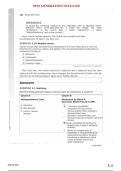
EXERCISE 6.99 Multiple-choice:
Twenty minutes after administering prochlorperazine, the nurse enters Joyce’s room and
finds that she is anxious, restless, and agitated. The nurse should prepare to administer an
intravenous (IV) dose of:
A. Naloxone
B. Flumazenil
C. Diphenhydramine
D. Protamine sulfate
The answer can be found on page 476
One week later, the wound infection is improved and a euthyroid state has been
achieved with the levothyroxine. Joyce manages her thyroid levels at home with the
effective use of pharmacological agents and a healthy lifestyle.
Answers
EXERCISE 6.1 Matching:
Match the antihypertensive classes in Column A with the mechanisms in Column B:
Column A Column B
Antihypertensive Class Mechanism by Which It
Decreases Blood Pressure (BP)
Copyright © 2016. Springer Publishing Company. All rights
A. Diuretics
G Decreases sympathetic
B. Beta blockers stimulation from the central
C. Calcium channel nervous system (CNS), resulting in
blockers decreased heart rate,
decreased vasoconstriction, and
decreased vascular resistance within the
kidneys.
D Causes vasodilation by blocking the
receptor sites of alpha-1 adrenergic
reserved.
receptors.
I Blocks the receptor sites of
angiotensin II, thus preventing the
vasoconstricting effects. Prevents
the release of aldosterone, which
causes increased sodium and
water reabsorption.
(continued )
about:bla 1/25
nk
, NEW GENERATION NCLEX RN
CHAPTER 6 | Pharmacology 453
Column A Column B
D. Angiotensin-converting enzyme
F Decreases heart rate, resulting in
inhibitors (ACE inhibitors)
decreased cardiac output.
E. Angiotensin II receptor antagonists
C Causes direct relaxation to arterioles,
F. Centrally acting alpha-2 stimulators resulting in decreased peripheral
G. Peripherally acting alpha-1 blockers resistance.
H. Alpha-1 beta blockers A Inhibits the conversion of
angiotensin I to angiotensin II,
I. Direct vasodilators
thereby preventing the
vasoconstrictive actions of
angiotensin
II. Prevents the release of aldosterone,
which causes increased sodium and
water reabsorption.
B Decreases reabsorption of water in
the kidneys, resulting in decreased
circulating volume and decreased
peripheral resistance.
H Decreases heart rate, resulting in
decreased cardiac output, and
causes dilation of peripheral
vessels resulting in decreased
vascular resistance.
E Decreases the mechanical
contraction of the heart by
inhibiting the movement of calcium
across cell membranes. Also dilates
coronary vessels and peripheral
arteries.
EXERCISE 6.2 List:
The health care provider prescribes labetalol 10 mg intravenous (IV) push as a stat, one-time
Copyright © 2016. Springer Publishing Company. All rights
prescription.
After preparing the medication using aseptic technique, the nurse enters Robert’s room
and prepares to administer the medication. On entering the room the nurse first pauses
to check the “six rights” of
medication administration. List these rights, which the nurse must check before medication
administration.
1. Right patient
2. Right medication
3. Right dose
4. Right time
reserved.
5. Right route
6. Right documentation
Wittmann-Price, R. A., Cornelius, F. H., & Reap, T. B. (Eds.). (2016). Nclex-rn® excel, second edition : Test success through unfolding case study review. Retrieved from
http://ebookcentral.proquest.com Created from jmu on 2020-03-23 19:12:59.
about:bla 2/25
nk
, NEW GENERATION NCLEX RN
454 NCLEX-RN® Excel
EXERCISE 6.3 Multiple-choice:
After identifying the six rights, the nurse notes Robert’s blood pressure (BP), heart rate (HR),
and cardiac rhythm. Robert’s BP is 218/108 mmHg, and his cardiac rhythm is sinus
bradycardia at a rate of 50 beats per minute (bpm). What action should the nurse take?
A. Administer the medication as prescribed—NO; labetalol blocks beta-1 adrenergic
receptors, causing a decrease in heart rate, and should not be administered to a patient
with bradycardia.
B. Ask the physician to change the prescription to PO (oral) labetalol—NO; PO labetalol
also blocks beta-1 adrenergic receptors, causing a decrease in heart rate and should
not be administered to a patient with bradycardia.
C. Obtain a 12-lead electrocardiogram (EKG) before administering the medication—NO; a
12-lead EKG is not required to administer intravenous (IV) labetalol.
D. Hold the medication and request a different antihypertension medication—YES;
labetalol should be held because of the bradycardia and an alternate
antihypertensive medication should be prescribed.
EXERCISE 6.4 Select all that apply:
The nurse understands that labetalol was discontinued for this patient because of the adverse
effect of:
A. Agranulocytosis—NO; the medication decreases white blood cells, but this is not a
concern for this patient.
B. Heart block—YES; the patient’s heart rate is 50 beats per minute (bpm)
and decreasing the heart rate could cause atrioventricular (AV) block.
C. Bradycardia—YES; bradycardia is an adverse effect and the patient’s heart
rate is 50 bpm.
D. Hypotension—NO; hypotension can occur, but this is not the concern with this patient.
EXERCISE 6.5 Calculation:
Hydralazine is available in a concentration of 20 mg/mL. How many milliliters of
medication must be withdrawn from the vial to administer 10 mg?
0.5 mL
Copyright © 2016. Springer Publishing Company. All rights
10 mg/20 mg × 1 mL = 0.5 mL
EXERCISE 6.6 Ordering:
In what order should the following be done? Place a number next to each.
4 Administer the medication over a 1-minute period
2 Clean the hub of the intravenous (IV) port using an alcohol pad
3 Flush the IV with 3 mL of normal saline to assess its patency
1 Identify the patient per hospital policy
reserved.
5 Flush the IV with 3 mL of normal saline to clear site of medication
Wittmann-Price, R. A., Cornelius, F. H., & Reap, T. B. (Eds.). (2016). Nclex-rn® excel, second edition : Test success through unfolding case study review. Retrieved from
http://ebookcentral.proquest.com Created from jmu on 2020-03-23 19:12:59.
about:bla 3/25
nk
452 NCLEX-RN® Excel
eRESOURCE
To review the monitoring required for this medication, refer to Epocrates Online.
[Pathway: http:// online.epocrates.com ➔ under the “Drugs” tab, enter
“Gentamicin” in the search field ➔ select “Gentamicin” ➔ select
“Safety/Monitoring” and review content.]
Joyce reports feeling nauseous. The health care provider prescribes
prochlorperazine 10 mg IV, one dose now.
EXERCISE 6.99 Multiple-choice:
Twenty minutes after administering prochlorperazine, the nurse enters Joyce’s room and
finds that she is anxious, restless, and agitated. The nurse should prepare to administer an
intravenous (IV) dose of:
A. Naloxone
B. Flumazenil
C. Diphenhydramine
D. Protamine sulfate
The answer can be found on page 476
One week later, the wound infection is improved and a euthyroid state has been
achieved with the levothyroxine. Joyce manages her thyroid levels at home with the
effective use of pharmacological agents and a healthy lifestyle.
Answers
EXERCISE 6.1 Matching:
Match the antihypertensive classes in Column A with the mechanisms in Column B:
Column A Column B
Antihypertensive Class Mechanism by Which It
Decreases Blood Pressure (BP)
Copyright © 2016. Springer Publishing Company. All rights
A. Diuretics
G Decreases sympathetic
B. Beta blockers stimulation from the central
C. Calcium channel nervous system (CNS), resulting in
blockers decreased heart rate,
decreased vasoconstriction, and
decreased vascular resistance within the
kidneys.
D Causes vasodilation by blocking the
receptor sites of alpha-1 adrenergic
reserved.
receptors.
I Blocks the receptor sites of
angiotensin II, thus preventing the
vasoconstricting effects. Prevents
the release of aldosterone, which
causes increased sodium and
water reabsorption.
(continued )
about:bla 1/25
nk
, NEW GENERATION NCLEX RN
CHAPTER 6 | Pharmacology 453
Column A Column B
D. Angiotensin-converting enzyme
F Decreases heart rate, resulting in
inhibitors (ACE inhibitors)
decreased cardiac output.
E. Angiotensin II receptor antagonists
C Causes direct relaxation to arterioles,
F. Centrally acting alpha-2 stimulators resulting in decreased peripheral
G. Peripherally acting alpha-1 blockers resistance.
H. Alpha-1 beta blockers A Inhibits the conversion of
angiotensin I to angiotensin II,
I. Direct vasodilators
thereby preventing the
vasoconstrictive actions of
angiotensin
II. Prevents the release of aldosterone,
which causes increased sodium and
water reabsorption.
B Decreases reabsorption of water in
the kidneys, resulting in decreased
circulating volume and decreased
peripheral resistance.
H Decreases heart rate, resulting in
decreased cardiac output, and
causes dilation of peripheral
vessels resulting in decreased
vascular resistance.
E Decreases the mechanical
contraction of the heart by
inhibiting the movement of calcium
across cell membranes. Also dilates
coronary vessels and peripheral
arteries.
EXERCISE 6.2 List:
The health care provider prescribes labetalol 10 mg intravenous (IV) push as a stat, one-time
Copyright © 2016. Springer Publishing Company. All rights
prescription.
After preparing the medication using aseptic technique, the nurse enters Robert’s room
and prepares to administer the medication. On entering the room the nurse first pauses
to check the “six rights” of
medication administration. List these rights, which the nurse must check before medication
administration.
1. Right patient
2. Right medication
3. Right dose
4. Right time
reserved.
5. Right route
6. Right documentation
Wittmann-Price, R. A., Cornelius, F. H., & Reap, T. B. (Eds.). (2016). Nclex-rn® excel, second edition : Test success through unfolding case study review. Retrieved from
http://ebookcentral.proquest.com Created from jmu on 2020-03-23 19:12:59.
about:bla 2/25
nk
, NEW GENERATION NCLEX RN
454 NCLEX-RN® Excel
EXERCISE 6.3 Multiple-choice:
After identifying the six rights, the nurse notes Robert’s blood pressure (BP), heart rate (HR),
and cardiac rhythm. Robert’s BP is 218/108 mmHg, and his cardiac rhythm is sinus
bradycardia at a rate of 50 beats per minute (bpm). What action should the nurse take?
A. Administer the medication as prescribed—NO; labetalol blocks beta-1 adrenergic
receptors, causing a decrease in heart rate, and should not be administered to a patient
with bradycardia.
B. Ask the physician to change the prescription to PO (oral) labetalol—NO; PO labetalol
also blocks beta-1 adrenergic receptors, causing a decrease in heart rate and should
not be administered to a patient with bradycardia.
C. Obtain a 12-lead electrocardiogram (EKG) before administering the medication—NO; a
12-lead EKG is not required to administer intravenous (IV) labetalol.
D. Hold the medication and request a different antihypertension medication—YES;
labetalol should be held because of the bradycardia and an alternate
antihypertensive medication should be prescribed.
EXERCISE 6.4 Select all that apply:
The nurse understands that labetalol was discontinued for this patient because of the adverse
effect of:
A. Agranulocytosis—NO; the medication decreases white blood cells, but this is not a
concern for this patient.
B. Heart block—YES; the patient’s heart rate is 50 beats per minute (bpm)
and decreasing the heart rate could cause atrioventricular (AV) block.
C. Bradycardia—YES; bradycardia is an adverse effect and the patient’s heart
rate is 50 bpm.
D. Hypotension—NO; hypotension can occur, but this is not the concern with this patient.
EXERCISE 6.5 Calculation:
Hydralazine is available in a concentration of 20 mg/mL. How many milliliters of
medication must be withdrawn from the vial to administer 10 mg?
0.5 mL
Copyright © 2016. Springer Publishing Company. All rights
10 mg/20 mg × 1 mL = 0.5 mL
EXERCISE 6.6 Ordering:
In what order should the following be done? Place a number next to each.
4 Administer the medication over a 1-minute period
2 Clean the hub of the intravenous (IV) port using an alcohol pad
3 Flush the IV with 3 mL of normal saline to assess its patency
1 Identify the patient per hospital policy
reserved.
5 Flush the IV with 3 mL of normal saline to clear site of medication
Wittmann-Price, R. A., Cornelius, F. H., & Reap, T. B. (Eds.). (2016). Nclex-rn® excel, second edition : Test success through unfolding case study review. Retrieved from
http://ebookcentral.proquest.com Created from jmu on 2020-03-23 19:12:59.
about:bla 3/25
nk