

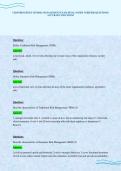
CRM PRINCIPLES OF RISK MANAGEMENT EXAM FINAL PAPER VERIFIED QUESTIONS
ACCURATE SOLUTIONS
Question:
Define Traditional Risk Management (TRM).
Answer:
a functional, siloed, view of risk affecting one or more areas of the organization (focuses on pure
risk)
Question:
Define Enterprise Risk Management (ERM).
Answer:
across functional view of risks affecting all areas of the entire organization (embraces speculative
risk)
Question:
Describe characteristics of Traditional Risk Management (TRM) (5)
Answer:
1. manages downside risks 2. oriented to cause-of-loss, tied to minimizing risk impact 3. functional
siloed treatement of risk 4. risk ID and ownership with individual employee or department 5.
Reactive
Question:
Describe characteristics of Enterprise Risk Management (ERM) (5)
Answer:
1) risk has potential upside and downside 2) tied to strategic objectives 3) cross functional treatment
of risk 4) uses subject matter experts and risk committees to identify risk and spreads accountability
, of risk 5) proactive/opportunistic
Question:
List the ERM broad categories of risk and give examples of each (4).
Answer:
1.Operational Risk: related to management activities (speculative) 2) Financial Risk: related to
financial activities (speculative) 3) Hazard Risk: covered by insurance (pure) 4) Strategic Risk:
related to an organization's strategic plan (speculative)
Question:
Define Organizational Risk Culture (ORC).
Answer:
a set of understandings, knowledge, beliefs, values and habits toward risk, that characterize a human
group (organization) in search of a common purpose
Question:
Explain the four characteristics of an effective ORC(4).
Answer:
1. Tone at the top - leadership clarity of direction and a positive corporate attitude toward risk 2.
Corporate Governance - clear responsibility for risk management; transparency and timeliness of
risk information 3. Decision Making - well informed decisions regarding risk; performance
evaluations encourage good risk management decisions 4. Authority and Accountability -
embedding risk management abilities and responsibilities within the organization.
Question:
List the benefits of implementing an ERM program(7).
Answer:
1. Identifies threats and opportunities related to an organization's strategic plan, objectives and total
cost of risk 2. Closely links an organization's business, operational, and strategic objectives to the
practice of managing risk 3. Uses performance metrics to drive improvement in decision making 4.
ACCURATE SOLUTIONS
Question:
Define Traditional Risk Management (TRM).
Answer:
a functional, siloed, view of risk affecting one or more areas of the organization (focuses on pure
risk)
Question:
Define Enterprise Risk Management (ERM).
Answer:
across functional view of risks affecting all areas of the entire organization (embraces speculative
risk)
Question:
Describe characteristics of Traditional Risk Management (TRM) (5)
Answer:
1. manages downside risks 2. oriented to cause-of-loss, tied to minimizing risk impact 3. functional
siloed treatement of risk 4. risk ID and ownership with individual employee or department 5.
Reactive
Question:
Describe characteristics of Enterprise Risk Management (ERM) (5)
Answer:
1) risk has potential upside and downside 2) tied to strategic objectives 3) cross functional treatment
of risk 4) uses subject matter experts and risk committees to identify risk and spreads accountability
, of risk 5) proactive/opportunistic
Question:
List the ERM broad categories of risk and give examples of each (4).
Answer:
1.Operational Risk: related to management activities (speculative) 2) Financial Risk: related to
financial activities (speculative) 3) Hazard Risk: covered by insurance (pure) 4) Strategic Risk:
related to an organization's strategic plan (speculative)
Question:
Define Organizational Risk Culture (ORC).
Answer:
a set of understandings, knowledge, beliefs, values and habits toward risk, that characterize a human
group (organization) in search of a common purpose
Question:
Explain the four characteristics of an effective ORC(4).
Answer:
1. Tone at the top - leadership clarity of direction and a positive corporate attitude toward risk 2.
Corporate Governance - clear responsibility for risk management; transparency and timeliness of
risk information 3. Decision Making - well informed decisions regarding risk; performance
evaluations encourage good risk management decisions 4. Authority and Accountability -
embedding risk management abilities and responsibilities within the organization.
Question:
List the benefits of implementing an ERM program(7).
Answer:
1. Identifies threats and opportunities related to an organization's strategic plan, objectives and total
cost of risk 2. Closely links an organization's business, operational, and strategic objectives to the
practice of managing risk 3. Uses performance metrics to drive improvement in decision making 4.


