

NSG-300 Exam 1 Qs & As [Success]
NSG-300 Exam 1
Study online at https://quizlet.com/_9av7t7
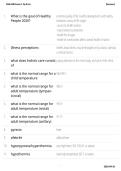
1. What is the goal of Healthy promote quality of life, healthy development, and healthy
People 2020? behaviors across all life stages
-access to health services
-injury/violence prevention
-health for all ages
-health of communities affects overall health of nation
2. Illness perceptions beliefs about illness; may be brought on by cultural, spiritual,
or ethical factors
3. what does holistic care consist paying attention to the mind, body, and spirit of the client
of
4. what is the normal range for a 96.8-99 F.
child temperature
5. what is the normal range for 98.6 F.
adult temperature (tympan-
ic/oral)
6. what is the normal range for 99.5 F.
adult temperature (rectal)
7. what is the normal range for 97.7 F.
adult temperature (axillary)
8. pyrexia fever
9. afebrile without fever
10. hyperpyrexia/hyperthermia very high fever (103-105.8 F. or above)
11. hypothermia low body temperature (95 F. or lower)
2026-04-16
, NSG-300 Exam 1 Qs & As [Success]
NSG-300 Exam 1
Study online at https://quizlet.com/_9av7t7
12. factors affecting temperature developmental level, environment, sex, exercise, emo-
tions/stress/hormones, circadian rhythm
13. when should you not use the if the patient has a problem with their mouth or if their mouth
oral method of obtaining a is in use by medical equipment
client's temperature
14. what is the normal range for 60-100 bpm; strong, regular
adult pulse
15. systole peak of the wave; contraction of the heart
16. diastole trough of the wave; resting phase of heart
17. stroke volume the amount of blood ejected from the heart in one contraction.
18. Cardiac Output (CO) total quantity of blood pumped per minute
19. factors affecting pulse exercise, temperature, acute pain, emotions, meds, hemor-
rhage, postural changes, pulmonary conditions
20. what is something to consider it may take longer for the HR to rise. heart sounds may also
about older adult's pulse? sometimes be muffled due to an increase in air space in the
lungs
21. what is something to consid- it runs low
er about older adult's temper-
ature?
22. when should you take the api- when the radial pulse is irregular, if a patient is taking cardiac
cal pulse meds, or in assessment of infants to children up to 3 years old
23. what is the normal range for 120/80
adult blood pressure
2026-04-16
, NSG-300 Exam 1 Qs & As [Success]
NSG-300 Exam 1
Study online at https://quizlet.com/_9av7t7
24. peripheral resistance arterial and capillary resistance to blood flow as a result of
friction between blood and the vessel walls
25. hypotension systolic pressure less than 100mmHg
26. prehypertension BP of 120-139 systolic or 80-89 diastolic, obtained with 2
readings, 6 minutes apart with patient sitting
27. hypertension BP above 140 systolic or 90 diasolic
28. primary hypertension high BP where the cause is unknown
29. secondary hypertension high blood pressure caused by the effects of another disease
30. what is the normal range for 12-20
adult respirations
31. apnea absence of breathing
32. dyspnea difficulty breathing
33. orthopnea difficulty breathing when lying down
34. rhonchi low-pitched gurgling caused by secretions in large airways;
can often clear with coughing
35. crackles discontinuous popping sounds heard over inspiration;
high-pitched popping or low-pitched bubbling sounds
caused by fluid in alveoli
36. stridor strained, high-pitched sound heard on inspiration when an
individual experiences respiratory distress or has an obstruct-
ed airway
37. stertor Labored breathing that produces a snoring sound
2026-04-16
NSG-300 Exam 1
Study online at https://quizlet.com/_9av7t7
1. What is the goal of Healthy promote quality of life, healthy development, and healthy
People 2020? behaviors across all life stages
-access to health services
-injury/violence prevention
-health for all ages
-health of communities affects overall health of nation
2. Illness perceptions beliefs about illness; may be brought on by cultural, spiritual,
or ethical factors
3. what does holistic care consist paying attention to the mind, body, and spirit of the client
of
4. what is the normal range for a 96.8-99 F.
child temperature
5. what is the normal range for 98.6 F.
adult temperature (tympan-
ic/oral)
6. what is the normal range for 99.5 F.
adult temperature (rectal)
7. what is the normal range for 97.7 F.
adult temperature (axillary)
8. pyrexia fever
9. afebrile without fever
10. hyperpyrexia/hyperthermia very high fever (103-105.8 F. or above)
11. hypothermia low body temperature (95 F. or lower)
2026-04-16
, NSG-300 Exam 1 Qs & As [Success]
NSG-300 Exam 1
Study online at https://quizlet.com/_9av7t7
12. factors affecting temperature developmental level, environment, sex, exercise, emo-
tions/stress/hormones, circadian rhythm
13. when should you not use the if the patient has a problem with their mouth or if their mouth
oral method of obtaining a is in use by medical equipment
client's temperature
14. what is the normal range for 60-100 bpm; strong, regular
adult pulse
15. systole peak of the wave; contraction of the heart
16. diastole trough of the wave; resting phase of heart
17. stroke volume the amount of blood ejected from the heart in one contraction.
18. Cardiac Output (CO) total quantity of blood pumped per minute
19. factors affecting pulse exercise, temperature, acute pain, emotions, meds, hemor-
rhage, postural changes, pulmonary conditions
20. what is something to consider it may take longer for the HR to rise. heart sounds may also
about older adult's pulse? sometimes be muffled due to an increase in air space in the
lungs
21. what is something to consid- it runs low
er about older adult's temper-
ature?
22. when should you take the api- when the radial pulse is irregular, if a patient is taking cardiac
cal pulse meds, or in assessment of infants to children up to 3 years old
23. what is the normal range for 120/80
adult blood pressure
2026-04-16
, NSG-300 Exam 1 Qs & As [Success]
NSG-300 Exam 1
Study online at https://quizlet.com/_9av7t7
24. peripheral resistance arterial and capillary resistance to blood flow as a result of
friction between blood and the vessel walls
25. hypotension systolic pressure less than 100mmHg
26. prehypertension BP of 120-139 systolic or 80-89 diastolic, obtained with 2
readings, 6 minutes apart with patient sitting
27. hypertension BP above 140 systolic or 90 diasolic
28. primary hypertension high BP where the cause is unknown
29. secondary hypertension high blood pressure caused by the effects of another disease
30. what is the normal range for 12-20
adult respirations
31. apnea absence of breathing
32. dyspnea difficulty breathing
33. orthopnea difficulty breathing when lying down
34. rhonchi low-pitched gurgling caused by secretions in large airways;
can often clear with coughing
35. crackles discontinuous popping sounds heard over inspiration;
high-pitched popping or low-pitched bubbling sounds
caused by fluid in alveoli
36. stridor strained, high-pitched sound heard on inspiration when an
individual experiences respiratory distress or has an obstruct-
ed airway
37. stertor Labored breathing that produces a snoring sound
2026-04-16


