

[NSG-300 Exam 4]
NSG-300 Exam 4
Study online at https://quizlet.com/_9meimg
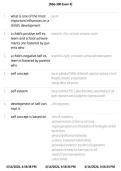
1. what is one of the most parents
important influences on a
child's development
2. a child's positive self es- respond in a firm, consistent and warm manner
teem and school achieve-
ments are fostered by par-
ents who
3. a child's negative self es- respond in a harsh, inconsistent, and low-self esteem parents
teem is fostered by parents
who
4. self concept how an individual THINKS of themself; subjective involving a mix of
thoughts, attitudes, and perceptions
-directly affects self-esteem
5. self esteem how an individual FEELS about themselves; overall feeling of self
worth; represents overall judgement of personal worth
6. development of self con- a life long process
cept is
7. self concept is based on -sense of competency
-perceived reactions of others to one's body
-ongoing perceptions and interpretations of the thoughts and feel-
ings of others
-personal/professional relationships
-academic/ employment related identity
-personality characteristics that affect self-expectations
-perceptions of events that have impact on self
-mastery of prior/new experiences
-cultural identity
4/16/2026, 4:58:38 PM 4/16/2026,:58:36 PM 4/16/2026, 4:58:34 PM
, [NSG-300 Exam 4]
NSG-300 Exam 4
Study online at https://quizlet.com/_9meimg
8. factors influencing self -real/perceived change that threatens ID, body image, or role per-
concept formance
-changes that occur in physical, spiritual, emotional, sexual, familial,
and sociocultural health
-other crises
9. Erikson's Psychosocial The- each stage builds on tasks of the previous stage, successful mastery
ory leads to sense of self
10. Infancy (Erikson stage) trust vs mistrust
11. early childhood (Erikson autonomy vs shame and doubt
stage)
12. preschool (Erikson stage) Initiative vs. guilt; Show independence...line leader!
13. school age (Erikson stage) industry vs inferiority
14. adolescence (Erikson identity vs role confusion
stage)
15. young adulthood (Erikson intimacy vs isolation
stage)
16. middle adulthood (Erikson generativity vs stagnation
stage)
17. maturity (Erikson stage) ego integrity vs despair
18. Nurse's Effect on Patient's -remain aware of own feelings, ideas, values, expectations, and
Self-Concept judgments
-use pos. and matter of fact approach
4/16/2026, 4:58:38 PM 4/16/2026,:58:36 PM 4/16/2026, 4:58:34 PM
, [NSG-300 Exam 4]
NSG-300 Exam 4
Study online at https://quizlet.com/_9meimg
-build trusting relationship
-be aware of facial/body expression
19. components of self con- -identity
cept -body image
-role performance
20. identity confusion occurs there is an inability to adapt to identity stressors
when
21. role performance stres- -role conflict
sors -role ambiguity
-role strain
-role overload
22. identity internal sense of individuality, wholeness, and consistency of a
person over time
23. body image involves attitudes related to physical appearance, structure, or func-
tion
24. role performance role conflict, role ambiguity, role strain, role overload
25. nursing process with self patient-centered care, direct questioning, observe non-verbal be-
concept (assessment) havior (content of convo), use your own knowledge of develop-
mental stages, through patient's eyes, coping behaviors (previous
coping strategies as well), significant others (have insights into pt's
way of dealing with stressors)
26. nursing process with self -Healthy lifestyle behaviors: nutrition, exercise, sleep/rest
concept (implementation) -Acute care: address stressors
-Restorative care: acts to solve problems and cope with stressors;
allow patient to explore thoughts/feelings; help patient identify
problems and identify coping mechanisms
4/16/2026, 4:58:38 PM 4/16/2026,:58:36 PM 4/16/2026, 4:58:34 PM
NSG-300 Exam 4
Study online at https://quizlet.com/_9meimg
1. what is one of the most parents
important influences on a
child's development
2. a child's positive self es- respond in a firm, consistent and warm manner
teem and school achieve-
ments are fostered by par-
ents who
3. a child's negative self es- respond in a harsh, inconsistent, and low-self esteem parents
teem is fostered by parents
who
4. self concept how an individual THINKS of themself; subjective involving a mix of
thoughts, attitudes, and perceptions
-directly affects self-esteem
5. self esteem how an individual FEELS about themselves; overall feeling of self
worth; represents overall judgement of personal worth
6. development of self con- a life long process
cept is
7. self concept is based on -sense of competency
-perceived reactions of others to one's body
-ongoing perceptions and interpretations of the thoughts and feel-
ings of others
-personal/professional relationships
-academic/ employment related identity
-personality characteristics that affect self-expectations
-perceptions of events that have impact on self
-mastery of prior/new experiences
-cultural identity
4/16/2026, 4:58:38 PM 4/16/2026,:58:36 PM 4/16/2026, 4:58:34 PM
, [NSG-300 Exam 4]
NSG-300 Exam 4
Study online at https://quizlet.com/_9meimg
8. factors influencing self -real/perceived change that threatens ID, body image, or role per-
concept formance
-changes that occur in physical, spiritual, emotional, sexual, familial,
and sociocultural health
-other crises
9. Erikson's Psychosocial The- each stage builds on tasks of the previous stage, successful mastery
ory leads to sense of self
10. Infancy (Erikson stage) trust vs mistrust
11. early childhood (Erikson autonomy vs shame and doubt
stage)
12. preschool (Erikson stage) Initiative vs. guilt; Show independence...line leader!
13. school age (Erikson stage) industry vs inferiority
14. adolescence (Erikson identity vs role confusion
stage)
15. young adulthood (Erikson intimacy vs isolation
stage)
16. middle adulthood (Erikson generativity vs stagnation
stage)
17. maturity (Erikson stage) ego integrity vs despair
18. Nurse's Effect on Patient's -remain aware of own feelings, ideas, values, expectations, and
Self-Concept judgments
-use pos. and matter of fact approach
4/16/2026, 4:58:38 PM 4/16/2026,:58:36 PM 4/16/2026, 4:58:34 PM
, [NSG-300 Exam 4]
NSG-300 Exam 4
Study online at https://quizlet.com/_9meimg
-build trusting relationship
-be aware of facial/body expression
19. components of self con- -identity
cept -body image
-role performance
20. identity confusion occurs there is an inability to adapt to identity stressors
when
21. role performance stres- -role conflict
sors -role ambiguity
-role strain
-role overload
22. identity internal sense of individuality, wholeness, and consistency of a
person over time
23. body image involves attitudes related to physical appearance, structure, or func-
tion
24. role performance role conflict, role ambiguity, role strain, role overload
25. nursing process with self patient-centered care, direct questioning, observe non-verbal be-
concept (assessment) havior (content of convo), use your own knowledge of develop-
mental stages, through patient's eyes, coping behaviors (previous
coping strategies as well), significant others (have insights into pt's
way of dealing with stressors)
26. nursing process with self -Healthy lifestyle behaviors: nutrition, exercise, sleep/rest
concept (implementation) -Acute care: address stressors
-Restorative care: acts to solve problems and cope with stressors;
allow patient to explore thoughts/feelings; help patient identify
problems and identify coping mechanisms
4/16/2026, 4:58:38 PM 4/16/2026,:58:36 PM 4/16/2026, 4:58:34 PM


