

[Test 1 NSG 200]
Test 1 NSG 200
Study online at https://quizlet.com/_59i5cr
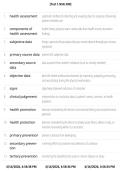
1. health assessment systematic method of collecting and analyzing data for purpose of planning
patient centered care
2. components of health history, physical exam, review data from health record, document
health assessment findings
3. subjective data things a person tells you about that you cannot observe through your senses;
symptoms
4. primary source data patient tells subjective data
5. secondary source data acquired from another individual (such as a family member)
data
6. objective data what the health professional observes by inspecting, palpating, percussing,
and auscultating during the physical examination
7. signs objectively observed indicators of a disorder
8. clinical judgement interpretation or conclusion about a patient's needs, concerns, or health
problems
9. health promotion behavior motivated by the desire to increase well being and actualize human
potential
10. health protection behavior motivated by the desire to actively avoid illness, detect it early, or
maintain functioning within its constraints
11. primary prevention prevent a disease from developing
12. secondary preven- screening efforts to promote early detection of a disease
tion
13. tertiary prevention minimizing the disability from acute or chronic disease or injury
4/16/2026, 4:58:38 PM 4/16/2026,1 /4:58:36
5
PM 4/16/2026, 4:58:34 PM
, [Test 1 NSG 200]
Test 1 NSG 200
Study online at https://quizlet.com/_59i5cr
14. linguistic communi- verbal exchange of messages through spoken words and written symbols
cation
15. paralinguistics non verbal exchange of symbols - eye contact, facial expressions
16. metacommunication consists of the factors that compose the context of the message
17. standard precau- measures to reduce the risk of transmitting infection from body fluids and
tions non intact skin
18. transmission based designed for control of infections among patients with known or suspected
precautions infections
19. inspection visual examination of the body including body movement and posture - also
smell
20. palpation using hands to feel texture, size, shape, consistency, pulsation, and location
of certain parts of the body
21. percussion evaluate size, borders, and consistency of internal organs; detect tenderness,
and determine extent of fluid in a body cavity
22. direct percussion striking a finger or hand directly against the patients body
23. indirect percussion use of both hands and is performed by different methods depending on
what part of the body is being assessed
24. auscultation listening to sounds within the body
25. tympanic thermome- infrared radiation device that measures temperature of blood flowing near
ter the tympanic membrane - inserted into patient ear
26. temporal artery ther- infrared radiation device that provides temp measurement from the temporal
mometer artery
4/16/2026, 4:58:38 PM 4/16/2026,2 /4:58:36
5
PM 4/16/2026, 4:58:34 PM
Test 1 NSG 200
Study online at https://quizlet.com/_59i5cr
1. health assessment systematic method of collecting and analyzing data for purpose of planning
patient centered care
2. components of health history, physical exam, review data from health record, document
health assessment findings
3. subjective data things a person tells you about that you cannot observe through your senses;
symptoms
4. primary source data patient tells subjective data
5. secondary source data acquired from another individual (such as a family member)
data
6. objective data what the health professional observes by inspecting, palpating, percussing,
and auscultating during the physical examination
7. signs objectively observed indicators of a disorder
8. clinical judgement interpretation or conclusion about a patient's needs, concerns, or health
problems
9. health promotion behavior motivated by the desire to increase well being and actualize human
potential
10. health protection behavior motivated by the desire to actively avoid illness, detect it early, or
maintain functioning within its constraints
11. primary prevention prevent a disease from developing
12. secondary preven- screening efforts to promote early detection of a disease
tion
13. tertiary prevention minimizing the disability from acute or chronic disease or injury
4/16/2026, 4:58:38 PM 4/16/2026,1 /4:58:36
5
PM 4/16/2026, 4:58:34 PM
, [Test 1 NSG 200]
Test 1 NSG 200
Study online at https://quizlet.com/_59i5cr
14. linguistic communi- verbal exchange of messages through spoken words and written symbols
cation
15. paralinguistics non verbal exchange of symbols - eye contact, facial expressions
16. metacommunication consists of the factors that compose the context of the message
17. standard precau- measures to reduce the risk of transmitting infection from body fluids and
tions non intact skin
18. transmission based designed for control of infections among patients with known or suspected
precautions infections
19. inspection visual examination of the body including body movement and posture - also
smell
20. palpation using hands to feel texture, size, shape, consistency, pulsation, and location
of certain parts of the body
21. percussion evaluate size, borders, and consistency of internal organs; detect tenderness,
and determine extent of fluid in a body cavity
22. direct percussion striking a finger or hand directly against the patients body
23. indirect percussion use of both hands and is performed by different methods depending on
what part of the body is being assessed
24. auscultation listening to sounds within the body
25. tympanic thermome- infrared radiation device that measures temperature of blood flowing near
ter the tympanic membrane - inserted into patient ear
26. temporal artery ther- infrared radiation device that provides temp measurement from the temporal
mometer artery
4/16/2026, 4:58:38 PM 4/16/2026,2 /4:58:36
5
PM 4/16/2026, 4:58:34 PM


