

[NSG 100 Nutrition]
NSG 100 Nutrition
Study online at https://quizlet.com/_5ro27s
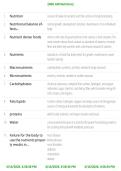
1. Nutrition science of intake of nutrients and their actions in body functioning
2. Nutritional balance ef- normal growth, development, function, maintenance of an individual's
fects... body
3. Nutrient dense foods refers to the ratio of good nutrient to the calories a food contains; The
most nutrient dense foods contain an abundant of vitamins, minerals
fiber and other key nutrients with a decreased amount of calories.
4. Nutrients substances in food that body needs for growth, maintenance, repair
Nutrient density
5. Macronutrients carbohydrates, proteins, and fats; needed in large amounts
6. Micronutrients vitamins, minerals; needed in smaller amounts
7. Carbohydrates chemical substances compiled from carbon, hydrogen, and oxygen
molecules; sugar, starches, and dietary fiber, which provide energy for
cells, tissues, and organs;
8. Fats/Lipids Contain carbon, hydrogen, oxygen; secondary source of energy;major
sources of energy and promote the absorption of vitamins;
9. proteins which build, maintain, and repair muscles and tissue
10. Water a macronutrient because it is essential for proper functioning as well as
for assisting the body with metabolic processes
11. Failure for the body to heart disease
use the nutrients proper- kidney disease
ly results in... renal disorders
diabetes
malnutrition
obesity
4/16/2026, 4:58:38 PM 4/16/2026,:58:36 PM 4/16/2026, 4:58:34 PM
, [NSG 100 Nutrition]
NSG 100 Nutrition
Study online at https://quizlet.com/_5ro27s
12. How many calories does 4 calories
1 g of carbs provide?
13. How many calories does 4 calories
1 g of protein provide?
14. How many calories does 9 calories
1 g of fat provide?
15. Kilocalorie The amount of heat necessary to raise the temperature of one kilogram
of water one Celsius degree
16. What is the body's main carbohydrates
source of energy?
17. simple carbohydrates monosaccharides and disaccharides; fruits, vegetables, and milk prod-
ucts, as well as in sweeteners like sugar, honey, and syrup and foods
like candy, soft drinks, and frosting or icing.
18. complex carbohydrates polysaccharides; found in breads, cereals, pasta, rice, beans and peas,
and starchy vegetables such as potatoes, green peas, and corn
19. Fiber is a type of complex carbohydrate found in foods that come from
plants—fruits, vegetables, nuts, seeds, beans, and whole grains. Eat-
ing food with fiber can prevent stomach or intestinal problems, such as
constipation. It might also help lower cholesterol and blood sugar.
20. Soluble Fiber does not retain water, allows formation of bulk, accelerated passage of
the end products of food, slowing of starch absorption. Promotes bowel
function
(Found in: oat bran, beans, apples, carrots, blueberries and other
vegetables).
4/16/2026, 4:58:38 PM 4/16/2026,:58:36 PM 4/16/2026, 4:58:34 PM
NSG 100 Nutrition
Study online at https://quizlet.com/_5ro27s
1. Nutrition science of intake of nutrients and their actions in body functioning
2. Nutritional balance ef- normal growth, development, function, maintenance of an individual's
fects... body
3. Nutrient dense foods refers to the ratio of good nutrient to the calories a food contains; The
most nutrient dense foods contain an abundant of vitamins, minerals
fiber and other key nutrients with a decreased amount of calories.
4. Nutrients substances in food that body needs for growth, maintenance, repair
Nutrient density
5. Macronutrients carbohydrates, proteins, and fats; needed in large amounts
6. Micronutrients vitamins, minerals; needed in smaller amounts
7. Carbohydrates chemical substances compiled from carbon, hydrogen, and oxygen
molecules; sugar, starches, and dietary fiber, which provide energy for
cells, tissues, and organs;
8. Fats/Lipids Contain carbon, hydrogen, oxygen; secondary source of energy;major
sources of energy and promote the absorption of vitamins;
9. proteins which build, maintain, and repair muscles and tissue
10. Water a macronutrient because it is essential for proper functioning as well as
for assisting the body with metabolic processes
11. Failure for the body to heart disease
use the nutrients proper- kidney disease
ly results in... renal disorders
diabetes
malnutrition
obesity
4/16/2026, 4:58:38 PM 4/16/2026,:58:36 PM 4/16/2026, 4:58:34 PM
, [NSG 100 Nutrition]
NSG 100 Nutrition
Study online at https://quizlet.com/_5ro27s
12. How many calories does 4 calories
1 g of carbs provide?
13. How many calories does 4 calories
1 g of protein provide?
14. How many calories does 9 calories
1 g of fat provide?
15. Kilocalorie The amount of heat necessary to raise the temperature of one kilogram
of water one Celsius degree
16. What is the body's main carbohydrates
source of energy?
17. simple carbohydrates monosaccharides and disaccharides; fruits, vegetables, and milk prod-
ucts, as well as in sweeteners like sugar, honey, and syrup and foods
like candy, soft drinks, and frosting or icing.
18. complex carbohydrates polysaccharides; found in breads, cereals, pasta, rice, beans and peas,
and starchy vegetables such as potatoes, green peas, and corn
19. Fiber is a type of complex carbohydrate found in foods that come from
plants—fruits, vegetables, nuts, seeds, beans, and whole grains. Eat-
ing food with fiber can prevent stomach or intestinal problems, such as
constipation. It might also help lower cholesterol and blood sugar.
20. Soluble Fiber does not retain water, allows formation of bulk, accelerated passage of
the end products of food, slowing of starch absorption. Promotes bowel
function
(Found in: oat bran, beans, apples, carrots, blueberries and other
vegetables).
4/16/2026, 4:58:38 PM 4/16/2026,:58:36 PM 4/16/2026, 4:58:34 PM


