1|Page
WGU D363 OBJECTIVE ASSESSMENT 2 NEWEST 2026 ACTUAL
EXAM| D363 PERSONAL FINANCE OA FINAL EXAM WITH
COMPLETE 250 REAL EXAM QUESTIONS AND CORRECT
VERIFIED ANSWERS/ ALREADY GRADED A+ (MOST RECENT!!)
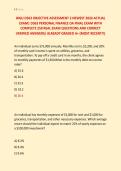
An individual earns $75,000 annually. Monthly rent is $2,200, and 20%
of monthly cash income is spent on utilities, groceries, and
transportation. To pay off a credit card in six months, the client agrees
to monthly payments of $1,650.What is the monthly debt-to-income
ratio?
A) 25.6
B) 26.4
C) 32.5
D) 33.2
B) 26.4
An individual has monthly expenses of $1,800 for rent and $1,000 for
groceries, transportation, and other necessary expenses. Which average
return should the individual expect to match 25% of yearly expenses on
a $100,000 investment?
A) 8.2%
B) 8.4%
C) 9.6%
,2|Page
D) 9.8%
B) 8.4%
A student is working part-time while going to university. The student is
making $18,000 per year and saves $3,000 per year, as $15,000 of the
student's yearly living expenses are currently subsidized by grants.
Grant funding will run out when the student has one year left of
schooling.
How much of a deficit will the student have to finance if the student
saves each year for three years?
A) $3,000
B) $6,000
C) $9,000
D) $12,000
B) $6,000
An individual's financial goal is to pay off debt, including $15,000 with
an APR of 12%, $20,000 with an APR of 8%, and $15,000 with an APR of
6%.
,3|Page
How should the individual distribute debt payments?
A) Make at least minimum payments to all, with extra funds towards
$15,000 with an APR of 12%
B) Pay off the highest amount of debt of $20,000 with an APR of 8%
first, then other debts
C) Satisfy the lowest interest debt of $15,000 with an APR of 6% first
before paying other debts
D) Proportionally distribute payments to all debts, paying off $7,500 for
average APR of 10% earliest
A) Make at least minimum payments to all, with extra funds towards
$15,000 with an APR of 12%
An individual wants to allocate $600 per month into an emergency
savings account. The individual plans on not using the funds and wants
to accumulate a return to offset the effects of inflation, but the
individual also prioritizes liquidity and price stability, as the individual
has low risk tolerance.
Which option will be appropriate for this goal?
A) A ladder of short-term certificates of deposit at a bank
B) A diversified municipal bond fund in class C shares
, 4|Page
C) A money market account with yields close to the 10-year treasury
note
D) A variable annuity with 10% yearly permitted disbursements
C) A money market account with yields close to the 10-year treasury
note
A family wants to create a budget to fund two goals of paying a new
mortgage and saving for a one-year-old child's future education costs.
The mortgage rate is 4.8% for a 30-year loan, and the family wants to
utilize a target-date fund in a state-sponsored 529 plan. Interest rates
are projected to rise, as they are currently at 0.25%, and the economy
has reached the peak of the cycle two months ago and is now starting a
decline.
How should funding be distributed towards both goals to minimize
overall interest payments?
A) Make minimum mortgage payments and fund the 529 as much as
possible
B) Fund both the 529 and the mortgage equally with surplus income
C) Delay funding the 529 until the economy reaches a trough, and
increase mortgage payments
D) Delay making larger mortgage payments until the 529 is fully funded
and being distributed for expenses
WGU D363 OBJECTIVE ASSESSMENT 2 NEWEST 2026 ACTUAL
EXAM| D363 PERSONAL FINANCE OA FINAL EXAM WITH
COMPLETE 250 REAL EXAM QUESTIONS AND CORRECT
VERIFIED ANSWERS/ ALREADY GRADED A+ (MOST RECENT!!)
An individual earns $75,000 annually. Monthly rent is $2,200, and 20%
of monthly cash income is spent on utilities, groceries, and
transportation. To pay off a credit card in six months, the client agrees
to monthly payments of $1,650.What is the monthly debt-to-income
ratio?
A) 25.6
B) 26.4
C) 32.5
D) 33.2
B) 26.4
An individual has monthly expenses of $1,800 for rent and $1,000 for
groceries, transportation, and other necessary expenses. Which average
return should the individual expect to match 25% of yearly expenses on
a $100,000 investment?
A) 8.2%
B) 8.4%
C) 9.6%
,2|Page
D) 9.8%
B) 8.4%
A student is working part-time while going to university. The student is
making $18,000 per year and saves $3,000 per year, as $15,000 of the
student's yearly living expenses are currently subsidized by grants.
Grant funding will run out when the student has one year left of
schooling.
How much of a deficit will the student have to finance if the student
saves each year for three years?
A) $3,000
B) $6,000
C) $9,000
D) $12,000
B) $6,000
An individual's financial goal is to pay off debt, including $15,000 with
an APR of 12%, $20,000 with an APR of 8%, and $15,000 with an APR of
6%.
,3|Page
How should the individual distribute debt payments?
A) Make at least minimum payments to all, with extra funds towards
$15,000 with an APR of 12%
B) Pay off the highest amount of debt of $20,000 with an APR of 8%
first, then other debts
C) Satisfy the lowest interest debt of $15,000 with an APR of 6% first
before paying other debts
D) Proportionally distribute payments to all debts, paying off $7,500 for
average APR of 10% earliest
A) Make at least minimum payments to all, with extra funds towards
$15,000 with an APR of 12%
An individual wants to allocate $600 per month into an emergency
savings account. The individual plans on not using the funds and wants
to accumulate a return to offset the effects of inflation, but the
individual also prioritizes liquidity and price stability, as the individual
has low risk tolerance.
Which option will be appropriate for this goal?
A) A ladder of short-term certificates of deposit at a bank
B) A diversified municipal bond fund in class C shares
, 4|Page
C) A money market account with yields close to the 10-year treasury
note
D) A variable annuity with 10% yearly permitted disbursements
C) A money market account with yields close to the 10-year treasury
note
A family wants to create a budget to fund two goals of paying a new
mortgage and saving for a one-year-old child's future education costs.
The mortgage rate is 4.8% for a 30-year loan, and the family wants to
utilize a target-date fund in a state-sponsored 529 plan. Interest rates
are projected to rise, as they are currently at 0.25%, and the economy
has reached the peak of the cycle two months ago and is now starting a
decline.
How should funding be distributed towards both goals to minimize
overall interest payments?
A) Make minimum mortgage payments and fund the 529 as much as
possible
B) Fund both the 529 and the mortgage equally with surplus income
C) Delay funding the 529 until the economy reaches a trough, and
increase mortgage payments
D) Delay making larger mortgage payments until the 529 is fully funded
and being distributed for expenses