
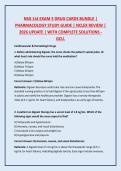
NSG 318 EXAM 3 DRUG CARDS BUNDLE |
PHARMACOLOGY STUDY GUIDE | NCLEX REVIEW |
2026 UPDATE | WITH COMPLETE SOLUTIONS -
GCU.
Cardiovascular & Hematologic Drugs
1. Before administering digoxin, the nurse checks the patient's apical pulse. At
what heart rate should the nurse hold the medication?
A) Below 80 bpm
B) Below 70 bpm
C) Below 60 bpm
D) Below 50 bpm
Correct Answer: C) Below 60 bpm
Rationale: Digoxin decreases ventricular rate and can cause bradycardia. The
standard nursing practice is to hold digoxin if the apical pulse is less than 60 bpm
in adults and notify the healthcare provider. Digoxin has a narrow therapeutic
index (0.5-1 ng/mL for heart failure), and bradycardia is an early sign of toxicity .
2. A patient on digoxin therapy has a serum level of 1.8 ng/mL. Which of the
following signs would the nurse expect to find?
A) Tachycardia and hypertension
B) Anorexia, nausea, and visual disturbances
C) Increased urine output and weight loss
D) Hyperglycemia and polyuria
Correct Answer: B) Anorexia, nausea, and visual disturbances
Rationale: A digoxin level of 1.8 ng/mL is above the therapeutic range (0.5-1
ng/mL for heart failure), indicating digitalis toxicity. Early signs include anorexia,
,nausea, vomiting, and visual disturbances such as blurred vision or seeing
green/yellow halos around objects .
3. Which electrolyte imbalance most predisposes a patient to digoxin toxicity?
A) Hyperkalemia
B) Hypokalemia
C) Hypernatremia
D) Hypocalcemia
Correct Answer: B) Hypokalemia
Rationale: Digoxin inhibits Na+/K+-ATPase. Hypokalemia enhances digoxin's
binding to this enzyme, significantly increasing the risk of toxicity and cardiac
arrhythmias. Loop diuretics can cause hypokalemia, which potentiates digoxin
effects .
4. What is the antidote for digoxin toxicity?
A) Protamine sulfate
B) Vitamin K
C) Digoxin-immune Fab
D) Naloxone
Correct Answer: C) Digoxin-immune Fab
Rationale: Digoxin-immune Fab (Digibind) binds to digoxin molecules, allowing
them to be excreted in urine. This is the specific antidote for severe digitalis
toxicity. Vitamin K is the antidote for warfarin, and protamine sulfate is for
heparin .
5. A patient is prescribed digoxin and furosemide (Lasix). Which assessment
finding is most concerning?
,A) Weight loss of 1 kg in 3 days
B) Serum potassium of 3.2 mEq/L
C) Blood pressure of 130/85 mmHg
D) Heart rate of 72 bpm
Correct Answer: B) Serum potassium of 3.2 mEq/L
Rationale: Furosemide (a loop diuretic) causes potassium loss. Low potassium
(hypokalemia) significantly increases the risk of digoxin toxicity. This combination
requires close electrolyte monitoring .
6. A patient using a nitroglycerin patch complains of a headache. What action
should the nurse take?
A) Remove the patch immediately
B) Offer an over-the-counter analgesic
C) Call the healthcare provider immediately
D) Apply a cold compress to the forehead
Correct Answer: B) Offer an over-the-counter analgesic
Rationale: Headache is a common side effect of nitroglycerin due to vasodilation.
This often diminishes with continued use. Over-the-counter analgesics such as
acetaminophen can be offered for pain relief. The patch should NOT be removed
for this expected side effect .
7. Which action should the nurse take first when administering sublingual
nitroglycerin for chest pain?
A) Have the patient swallow the tablet with water
B) Check the patient's blood pressure
C) Instruct the patient to chew the tablet
D) Place the tablet under the patient's tongue
Correct Answer: D) Place the tablet under the patient's tongue
, Rationale: Sublingual nitroglycerin must be placed under the tongue for rapid
absorption through the oral mucosa. It should not be swallowed or chewed. Blood
pressure should be checked, but administration is the priority for acute chest
pain .
8. A patient with angina should be taught to sit down before taking sublingual
nitroglycerin to prevent:
A) Tachycardia
B) Orthostatic hypotension
C) Headache
D) Respiratory depression
Correct Answer: B) Orthostatic hypotension
Rationale: Nitroglycerin is a potent vasodilator that can cause significant
orthostatic hypotension. Sitting or lying down before administration prevents falls
from dizziness or syncope .
9. The nurse should hold metoprolol (Tenormin) if the patient has which of the
following?
A) Blood pressure of 110/70 mmHg
B) Heart rate of 55 bpm
C) Respiratory rate of 16/min
D) Temperature of 99.0°F
Correct Answer: B) Heart rate of 55 bpm
Rationale: Metoprolol is a beta-blocker that decreases heart rate. The nurse
should hold the medication if the heart rate is below 60 bpm and notify the
healthcare provider. Bradycardia can progress to heart block or heart failure .
PHARMACOLOGY STUDY GUIDE | NCLEX REVIEW |
2026 UPDATE | WITH COMPLETE SOLUTIONS -
GCU.
Cardiovascular & Hematologic Drugs
1. Before administering digoxin, the nurse checks the patient's apical pulse. At
what heart rate should the nurse hold the medication?
A) Below 80 bpm
B) Below 70 bpm
C) Below 60 bpm
D) Below 50 bpm
Correct Answer: C) Below 60 bpm
Rationale: Digoxin decreases ventricular rate and can cause bradycardia. The
standard nursing practice is to hold digoxin if the apical pulse is less than 60 bpm
in adults and notify the healthcare provider. Digoxin has a narrow therapeutic
index (0.5-1 ng/mL for heart failure), and bradycardia is an early sign of toxicity .
2. A patient on digoxin therapy has a serum level of 1.8 ng/mL. Which of the
following signs would the nurse expect to find?
A) Tachycardia and hypertension
B) Anorexia, nausea, and visual disturbances
C) Increased urine output and weight loss
D) Hyperglycemia and polyuria
Correct Answer: B) Anorexia, nausea, and visual disturbances
Rationale: A digoxin level of 1.8 ng/mL is above the therapeutic range (0.5-1
ng/mL for heart failure), indicating digitalis toxicity. Early signs include anorexia,
,nausea, vomiting, and visual disturbances such as blurred vision or seeing
green/yellow halos around objects .
3. Which electrolyte imbalance most predisposes a patient to digoxin toxicity?
A) Hyperkalemia
B) Hypokalemia
C) Hypernatremia
D) Hypocalcemia
Correct Answer: B) Hypokalemia
Rationale: Digoxin inhibits Na+/K+-ATPase. Hypokalemia enhances digoxin's
binding to this enzyme, significantly increasing the risk of toxicity and cardiac
arrhythmias. Loop diuretics can cause hypokalemia, which potentiates digoxin
effects .
4. What is the antidote for digoxin toxicity?
A) Protamine sulfate
B) Vitamin K
C) Digoxin-immune Fab
D) Naloxone
Correct Answer: C) Digoxin-immune Fab
Rationale: Digoxin-immune Fab (Digibind) binds to digoxin molecules, allowing
them to be excreted in urine. This is the specific antidote for severe digitalis
toxicity. Vitamin K is the antidote for warfarin, and protamine sulfate is for
heparin .
5. A patient is prescribed digoxin and furosemide (Lasix). Which assessment
finding is most concerning?
,A) Weight loss of 1 kg in 3 days
B) Serum potassium of 3.2 mEq/L
C) Blood pressure of 130/85 mmHg
D) Heart rate of 72 bpm
Correct Answer: B) Serum potassium of 3.2 mEq/L
Rationale: Furosemide (a loop diuretic) causes potassium loss. Low potassium
(hypokalemia) significantly increases the risk of digoxin toxicity. This combination
requires close electrolyte monitoring .
6. A patient using a nitroglycerin patch complains of a headache. What action
should the nurse take?
A) Remove the patch immediately
B) Offer an over-the-counter analgesic
C) Call the healthcare provider immediately
D) Apply a cold compress to the forehead
Correct Answer: B) Offer an over-the-counter analgesic
Rationale: Headache is a common side effect of nitroglycerin due to vasodilation.
This often diminishes with continued use. Over-the-counter analgesics such as
acetaminophen can be offered for pain relief. The patch should NOT be removed
for this expected side effect .
7. Which action should the nurse take first when administering sublingual
nitroglycerin for chest pain?
A) Have the patient swallow the tablet with water
B) Check the patient's blood pressure
C) Instruct the patient to chew the tablet
D) Place the tablet under the patient's tongue
Correct Answer: D) Place the tablet under the patient's tongue
, Rationale: Sublingual nitroglycerin must be placed under the tongue for rapid
absorption through the oral mucosa. It should not be swallowed or chewed. Blood
pressure should be checked, but administration is the priority for acute chest
pain .
8. A patient with angina should be taught to sit down before taking sublingual
nitroglycerin to prevent:
A) Tachycardia
B) Orthostatic hypotension
C) Headache
D) Respiratory depression
Correct Answer: B) Orthostatic hypotension
Rationale: Nitroglycerin is a potent vasodilator that can cause significant
orthostatic hypotension. Sitting or lying down before administration prevents falls
from dizziness or syncope .
9. The nurse should hold metoprolol (Tenormin) if the patient has which of the
following?
A) Blood pressure of 110/70 mmHg
B) Heart rate of 55 bpm
C) Respiratory rate of 16/min
D) Temperature of 99.0°F
Correct Answer: B) Heart rate of 55 bpm
Rationale: Metoprolol is a beta-blocker that decreases heart rate. The nurse
should hold the medication if the heart rate is below 60 bpm and notify the
healthcare provider. Bradycardia can progress to heart block or heart failure .


