

LAW MAKING
JUDICIAL
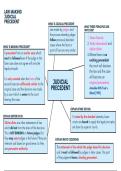
PRECEDENT WHAT IS JUDICIAL PRECEDENT
WHAT THREE PRINCIPLES ARE
Law made by judges, and INVOLVED?
the process whereby judges
1. Stare Decisis
follow previously decided
cases where the facts or 2. Ratio decedendi and
WHAT IS BINDING PRECEDENT?
point of law are very similar. obiter dicta
A precedent from an earlier case which 3. Where there is no
must be followed even if the judge in the
existing precedent
later case does not agree with only the
the court will declare
legal principle.
the law and the case
It is only created when the facts of the will become an
second case are sufficiently similar to the JUDICIAL original precedent.
original case and the decision was made PRECEDENT Airedale NHS Trust v
by a court which is senior to the court Bland (1993)
hearing the case.
EXPLAIN STARE DECISIS.
EXPLAIN OBITER DICTA. To stand by the decided whereby lower
Obiter dicta are other statements of law courts are bound to apply the legal principles
which did not form the basis of the decision. set down by superior courts.
This is NOT BINDING on future judges. But
they may assist judges in the future if they are EXPLAIN RATIO DECEDENDI.
relevant and based on good sense. So they
are persuasive authority. The statement of law which the judge based his decision
and it must be followed by judges in later cases. This part
of the judgment forms a binding precedent.
JUDICIAL
PRECEDENT WHAT IS JUDICIAL PRECEDENT
WHAT THREE PRINCIPLES ARE
Law made by judges, and INVOLVED?
the process whereby judges
1. Stare Decisis
follow previously decided
cases where the facts or 2. Ratio decedendi and
WHAT IS BINDING PRECEDENT?
point of law are very similar. obiter dicta
A precedent from an earlier case which 3. Where there is no
must be followed even if the judge in the
existing precedent
later case does not agree with only the
the court will declare
legal principle.
the law and the case
It is only created when the facts of the will become an
second case are sufficiently similar to the JUDICIAL original precedent.
original case and the decision was made PRECEDENT Airedale NHS Trust v
by a court which is senior to the court Bland (1993)
hearing the case.
EXPLAIN STARE DECISIS.
EXPLAIN OBITER DICTA. To stand by the decided whereby lower
Obiter dicta are other statements of law courts are bound to apply the legal principles
which did not form the basis of the decision. set down by superior courts.
This is NOT BINDING on future judges. But
they may assist judges in the future if they are EXPLAIN RATIO DECEDENDI.
relevant and based on good sense. So they
are persuasive authority. The statement of law which the judge based his decision
and it must be followed by judges in later cases. This part
of the judgment forms a binding precedent.


