
• Wrong document? Swap it for free
  • Written by students who passed
  • Immediately available after payment
  • Read online or as PDF
Sell
Where do you study
Your language
Document preview thumbnail
Preview 4 out of 131 pages
Exam (elaborations)

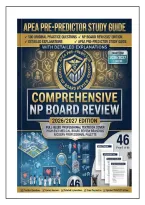
APEA Pre-Predictor Study Guide | 500 Original Practice Questions with Detailed Explanations | Comprehensive NP Board Review | 2026/2027 Edition

Document preview thumbnail
Preview 4 out of 131 pages

Prepare for advanced practice success with this comprehensive APEA Pre-Predictor Study Guide, developed for Family Nurse Practitioner (FNP), Adult-Gerontology Primary Care Nurse Practitioner (AGPCNP), Adult-Gerontology Acute Care Nurse Practitioner (AGACNP), Emergency Nurse Practitioner (ENP), and graduate APRN students preparing for predictor assessments, comprehensive program evaluations, clinical competency testing, and national certification examinations. This 2026/2027 Edition features 850+ original, graduate-level practice questions with correct answers and detailed explanations, designed to strengthen diagnostic reasoning, evidence-based clinical decision-making, and advanced patient management across the lifespan. Every practice question is followed by an in-depth explanation that discusses disease pathophysiology, patient assessment, differential diagnosis, diagnostic testing, evidence-based treatment planning, pharmacologic and non-pharmacologic management, preventive care recommendations, patient education, and follow-up strategies. Rather than emphasizing memorization alone, this guide develops the advanced clinical judgment and independent decision-making skills expected of nurse practitioners in primary care and specialty practice. Organized into comprehensive system-based sections, this review integrates current clinical guidelines, health promotion strategies, diagnostic interpretation, and patient-centered management principles to prepare learners for graduate nursing examinations, predictor assessments, clinical practicums, and national NP certification. Comprehensive coverage includes: Advanced Health Assessment & Clinical Reasoning: Comprehensive history taking, focused physical examinations, symptom analysis, differential diagnosis development, diagnostic reasoning, interpretation of clinical findings, red flag identification, evidence-based assessment, and patient-centered evaluation. Cardiovascular Disorders: Hypertension, dyslipidemia, coronary artery disease, heart failure, atrial fibrillation, valvular disorders, peripheral arterial disease, venous disorders, anticoagulation management, cardiovascular risk reduction, ECG interpretation, and evidence-based treatment planning. Respiratory Disorders: Asthma, COPD, pneumonia, upper respiratory infections, pulmonary embolism, tuberculosis, obstructive sleep apnea, respiratory failure, chronic cough evaluation, pulmonary diagnostics, inhaled therapies, and patient education. Endocrine & Metabolic Disorders: Type 1 and Type 2 diabetes mellitus, thyroid disorders, adrenal disorders, obesity management, metabolic syndrome, osteoporosis, pituitary disorders, calcium abnormalities, insulin management, and endocrine pharmacotherapy. Gastrointestinal & Hepatic Disorders: Gastroesophageal reflux disease, peptic ulcer disease, inflammatory bowel disease, irritable bowel syndrome, hepatitis, cirrhosis, pancreatitis, gallbladder disease, colorectal disorders, liver function interpretation, and nutritional management. Renal & Genitourinary Disorders: Chronic kidney disease, acute kidney injury, urinary tract infections, benign prostatic hyperplasia, urinary incontinence, nephrolithiasis, renal laboratory interpretation, electrolyte disorders, and evidence-based renal management. Neurological Disorders: Stroke, transient ischemic attack, seizure disorders, migraine, tension headache, dementia, Parkinson disease, multiple sclerosis, neuropathies, dizziness, altered mental status, and neurological assessment. Musculoskeletal & Rheumatologic Disorders: Osteoarthritis, rheumatoid arthritis, gout, osteoporosis, back pain, connective tissue diseases, sports injuries, fractures, inflammatory disorders, chronic pain management, and rehabilitation principles. Dermatology: Skin cancer recognition, eczema, psoriasis, cellulitis, fungal infections, acne, contact dermatitis, bacterial and viral skin disorders, wound assessment, lesion identification, and dermatologic pharmacology. Women's Health: Preventive gynecologic care, contraception, menopause, menstrual disorders, pregnancy-related conditions, cervical cancer screening, breast disorders, sexually transmitted infections, prenatal counseling, and women's preventive health guidelines. Men's Health: Prostate disorders, erectile dysfunction, hypogonadism, testicular disorders, infertility evaluation, prostate cancer screening, male preventive care, and age-related health concerns. Pediatric & Adolescent Care: Growth and development, immunizations, common pediatric illnesses, developmental screening, pediatric infectious diseases, asthma management, adolescent health promotion, behavioral concerns, and age-appropriate preventive care. Geriatric Care: Healthy aging, frailty, dementia, delirium, polypharmacy, fall prevention, Beers Criteria, chronic disease management, functional assessment, cognitive screening, and geriatric pharmacology. Mental Health & Behavioral Medicine: Depression, anxiety disorders, bipolar disorder, ADHD, substance use disorders, sleep disorders, psychopharmacology, crisis intervention, suicide risk assessment, and behavioral health management. Infectious Diseases: Upper and lower respiratory infections, sexually transmitted infections, HIV, hepatitis, skin infections, tick-borne diseases, travel medicine, antimicrobial stewardship, vaccination guidelines, and infection prevention. Pharmacology & Prescribing: Evidence-based prescribing, pharmacokinetics, pharmacodynamics, medication selection, contraindications, adverse drug reactions, drug interactions, controlled substances, antibiotic stewardship, and medication safety across the lifespan. Diagnostic Testing & Laboratory Interpretation: Complete blood count, comprehensive metabolic panel, lipid profiles, thyroid studies, endocrine testing, urinalysis, cardiac biomarkers, inflammatory markers, imaging selection, ECG interpretation, and evidence-based diagnostic evaluation. Health Promotion & Preventive Care: USPSTF recommendations, adult immunization schedules, cancer screening guidelines, cardiovascular risk reduction, smoking cessation, nutrition counseling, weight management, exercise recommendations, and preventive health strategies. Clinical Judgment & Case-Based Scenarios: Complex patient cases emphasizing symptom evaluation, differential diagnosis, evidence-based management, pharmacologic decision-making, follow-up care, patient education, prioritization, referral decisions, and interdisciplinary collaboration. Exam Readiness & Advanced Practice Competency: This comprehensive study guide emphasizes realistic graduate-level clinical scenarios that strengthen diagnostic reasoning, patient management, evidence-based practice, and advanced clinical judgment. Detailed explanations reinforce essential nurse practitioner competencies while preparing learners for predictor examinations, comprehensive program assessments, and national certification success. Whether you are preparing for an APEA Pre-Predictor Assessment, reviewing for comprehensive graduate nursing examinations, strengthening your readiness for AANP® or ANCC® certification, or building confidence for independent advanced practice, this comprehensive resource provides structured practice, detailed explanations, and evidence-based clinical knowledge to help you succeed throughout your nurse practitioner journey.

Content preview

,APEA Pre-Predictor Study Guide | 500 Original Practice
Questions with Detailed Explanations | Comprehensive
NP Board Review | 2026/2027 Edition
. The exam spans five testing domains and 15+ knowledge areas. This document provides 500 practice
questions drawn from the full spectrum of content tested on the APEA Pre-Predictor, including Physical
Assessment, Pathophysiology, Pharmacotherapeutics, Planning & Intervention, and Evaluation.

Section 1: Physical Assessment Core Concepts (Questions 1–50)

1. What term describes listening to internal body sounds during a physical exam?

A. Inspection
B. Palpation
C. Percussion
D. Auscultation

Correct Answer: D

Rationale: Auscultation is the act of listening to sounds produced by the body, typically using a
stethoscope .


2. Inspection refers to ______ of the body using the eyes.

A. Visual examination
B. Tactile examination
C. Auditory examination
D. Olfactory examination

Correct Answer: A

Rationale: Inspection is the visual examination of the body to detect abnormalities .

3. Palpation is best defined as examination using the ______.

A. Eyes
B. Hands
C. Ears
D. Stethoscope

Correct Answer: B

Rationale: Palpation involves using the hands to feel body structures and detect abnormalities .


4. What is the normal adult body temperature range in °C?

,A. 35.0–36.0°C
B. 36.5–37.5°C
C. 38.0–39.0°C
D. 34.0–35.0°C

Correct Answer: B

Rationale: The normal adult body temperature range is approximately 36.5–37.5°C .


5. A patient's pulse is 110 bpm at rest. What term describes this finding?

A. Bradycardia
B. Tachycardia
C. Normal sinus rhythm
D. Arrhythmia

Correct Answer: B

Rationale: A resting heart rate greater than 100 bpm is termed tachycardia .


6. A heart rate less than 60 bpm is called ______.

A. Tachycardia
B. Bradycardia
C. Palpitation
D. Murmur

Correct Answer: B

Rationale: A heart rate below 60 bpm is defined as bradycardia .


7. What percussion sound is heard over normal lung tissue?

A. Dullness
B. Tympany
C. Resonance
D. Flatness

Correct Answer: C

Rationale: Resonance is the normal percussion sound heard over air-filled lung tissue .


8. Dullness to percussion is normally heard over which organ?

, A. Stomach
B. Liver
C. Lungs
D. Intestines

Correct Answer: B

Rationale: Dullness is normally heard over solid organs such as the liver .


9. A provider presses the abdomen to detect tenderness. What technique is used?

A. Inspection
B. Palpation
C. Percussion
D. Auscultation

Correct Answer: B

Rationale: Palpation involves pressing on the body to detect tenderness, masses, or organ size .


10. What is the medical term for high blood pressure?

A. Hypotension
B. Hypertension
C. Tachycardia
D. Bradycardia

Correct Answer: B

Rationale: Hypertension is the medical term for elevated blood pressure .


11. The normal adult respiratory rate is ______ breaths per minute.

A. 8–12
B. 12–20
C. 20–30
D. 30–40

Correct Answer: B

Rationale: The normal adult respiratory rate is 12–20 breaths per minute .


12. What term describes bluish discoloration of the skin due to low oxygen?

Document information

Uploaded on
August 7, 2026
File latest updated on
October 22, 2026
Number of pages
131
Written in
2026/2027
Type
Exam (elaborations)
Contains
Questions & answers
$21.99

Wrong document? Swap it for free Within 14 days of purchase and before downloading, you can choose a different document. You can simply spend the amount again.
Written by students who passed
Immediately available after payment
Read online or as PDF

Seller avatar
Reputation scores are based on the amount of documents a seller has sold for a fee and the reviews they have received for those documents. There are three levels: Bronze, Silver and Gold. The better the reputation, the more your can rely on the quality of the sellers work.
itsjustel
3.2
(5)
Sold
47
Followers
1
Items
858
Last sold
1 day ago

Reviews from verified buyers

1 day ago

This is not 800 plus questions. This is the 3p's not what I was asking for.

I sincerely apologize for the confusion and for the fact that this resource did not meet your expectations. Thank you for bringing this to my attention. I understand that you were looking for the APEA Pre-Predictor study questions, not just a general 3P practice resource. I will review the document and correct the listing description and question content to ensure they accurately reflect what is included. I appreciate your feedback and apologize for the inconvenience.


Why students choose Stuvia

Created by fellow students, verified by reviews

Quality you can trust: written by students who passed their tests and reviewed by others who've used these notes.

Didn't get what you expected? Choose another document

No worries! You can instantly pick a different document that better fits what you're looking for.

Pay as you like, start learning right away

No subscription, no commitments. Pay the way you're used to via credit card and download your PDF document instantly.

Student with book image

“Bought, downloaded, and aced it. It really can be that simple.”

Alisha Student

Working on your references?

Create accurate citations in APA, MLA and Harvard with our free citation generator.

Working on your references?

Frequently asked questions


