1
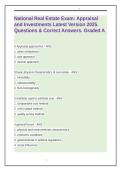
National Real Estate Exam: Appraisal
and Investments Latest Version 2025.
Questions & Correct Answers. Graded A
3 Appraisal approaches - ANS
1. sales comparison
2. cost approach
3. income approach
3 basic physical characteristics of real estate - ANS
1. Immobility
2. Indestructibility
3. Non-homogeneity
3 methods used to estimate cost - ANS
1. comparative cost method
2. unit-in-place method
3. quality survey method
4 general forces - ANS
1. physical and environmental characteristics
2. economic conditions
3. governmental or political regulations
4. social influences
1
, 2
4 stage life cycle of change - ANS1. integration (development or growth)
2. equilibrium ( stability or maturity)
3. disintegration (deterioration, decline, or old age)
4. revitalization or rehabilitation
accrued depreciation - ANSdifference between the value of the building at
the time of the appraisal and the current replacement cost of the structure
in new condition.
actual age - ANSlength of time improvements have been standing
anticipation - ANSvalue is created by the expectation of future benefits
derived from ownership and use of property.
Appraisal - ANSopinion of value resulting from analysis and facts. Is not a
determination of value, only an opinion.
assemblage - ANSputting several parcels of land under one owner
comparative cost method - ANSfast, inexpensive, and easy to understand
involving comparing subject property with similar buildings who costs are
known.
competition - ANSprofits will encourage competition, and excess profits
tend to create excessive competition, which can destroy profits
2
National Real Estate Exam: Appraisal
and Investments Latest Version 2025.
Questions & Correct Answers. Graded A
3 Appraisal approaches - ANS
1. sales comparison
2. cost approach
3. income approach
3 basic physical characteristics of real estate - ANS
1. Immobility
2. Indestructibility
3. Non-homogeneity
3 methods used to estimate cost - ANS
1. comparative cost method
2. unit-in-place method
3. quality survey method
4 general forces - ANS
1. physical and environmental characteristics
2. economic conditions
3. governmental or political regulations
4. social influences
1
, 2
4 stage life cycle of change - ANS1. integration (development or growth)
2. equilibrium ( stability or maturity)
3. disintegration (deterioration, decline, or old age)
4. revitalization or rehabilitation
accrued depreciation - ANSdifference between the value of the building at
the time of the appraisal and the current replacement cost of the structure
in new condition.
actual age - ANSlength of time improvements have been standing
anticipation - ANSvalue is created by the expectation of future benefits
derived from ownership and use of property.
Appraisal - ANSopinion of value resulting from analysis and facts. Is not a
determination of value, only an opinion.
assemblage - ANSputting several parcels of land under one owner
comparative cost method - ANSfast, inexpensive, and easy to understand
involving comparing subject property with similar buildings who costs are
known.
competition - ANSprofits will encourage competition, and excess profits
tend to create excessive competition, which can destroy profits
2