
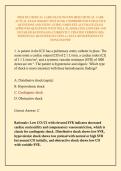
HESI RN CRITICAL CARE EXAM /NGN RN HESI CRITICAL CARE
ACTUAL EXAM 2026/2027 TEST BANK COMPREHENSIVE PRACTICE
QUESTIONS AND STUDY GUIDE COMPLETE ACCURATE EXAM
APPROVED QUESTIONS WITH WELL ELABORATED ANSWERS AND
DETAILED RATIONALES (CURRENTLY UPDATED VERSION 2026
EDITION |GUARANTEED SUCCESS A+ |FULL REVISED |INSTANT
DONLOAD PDF
1. A patient in the ICU has a pulmonary artery catheter in place. The
nurse notes a cardiac output (CO) of 2.1 L/min, a cardiac index (CI)
of 1.1 L/min/m², and a systemic vascular resistance (SVR) of 1800
dynes·sec·cm⁻⁵. The patient is hypotensive and oliguric. Which type
of shock is most consistent with these hemodynamic findings?
A. Distributive shock (septic)
B. Hypovolemic shock
C. Cardiogenic shock
D. Obstructive shock
Correct Answer: C
Rationale: Low CO/CI with elevated SVR indicates decreased
cardiac contractility and compensatory vasoconstriction, which is
classic for cardiogenic shock. Distributive shock shows low SVR,
hypovolemic shock shows low preload with normal or high SVR
but normal CO initially, and obstructive shock shows low CO
with variable SVR.
,2. A patient with septic shock has a central venous pressure (CVP) of
4 mm Hg, a mean arterial pressure (MAP) of 55 mm Hg, and a
lactate of 6.5 mmol/L. The nurse anticipates which initial
intervention?
A. Administer norepinephrine before fluids
B. Administer a 500 mL IV fluid bolus
C. Obtain blood cultures before antibiotics
D. Administer broad-spectrum antibiotics immediately
Correct Answer: B
Rationale: In septic shock, initial fluid resuscitation (30 mL/kg
crystalloid) should be administered before vasopressors unless
severe cardiac dysfunction is present. The MAP of 55 mmHg is
below the target of ≥65 mmHg, and the elevated lactate indicates
tissue hypoperfusion.
3. A patient in hypovolemic shock has a pulmonary artery occlusion
pressure (PAOP) of 3 mmHg (normal 6–12). Which finding is
expected?
A. Increased CVP
B. Decreased CVP, decreased urine output
C. Increased urine output
D. Decreased heart rate
,Correct Answer: B
Rationale: In hypovolemic shock, decreased preload results in low
CVP and PAOP. The decreased circulating volume leads to
decreased renal perfusion and oliguria. Compensatory tachycardia
would be expected, not bradycardia.
4. A patient in the ICU with septic shock has a MAP of 52 mmHg
despite adequate fluid resuscitation. Which intervention should the
nurse anticipate?
A. Administer packed red blood cells
B. Start a vasopressor infusion
C. Decrease vasopressor dose
D. Administer diuretics
Correct Answer: B
Rationale: In septic shock, if MAP remains <65 mmHg after
adequate fluid resuscitation, vasopressor therapy is indicated.
Norepinephrine is the first-line vasopressor. The goal MAP is ≥65
mmHg to ensure adequate organ perfusion.
, 5. A patient with cardiogenic shock has a pulmonary artery catheter.
Which hemodynamic profile would the nurse expect?
A. Low CO, low SVR, high PAOP
B. Low CO, high SVR, high PAOP
C. High CO, low SVR, low PAOP
D. High CO, high SVR, low PAOP
Correct Answer: B
Rationale: Cardiogenic shock is characterized by decreased cardiac
output (CO) due to pump failure, compensatory vasoconstriction
(high SVR), and increased pulmonary artery occlusion pressure
(PAOP) due to left ventricular failure and fluid backup.
6. The nurse is caring for a patient with distributive shock from
sepsis. Which medication is most appropriate to maintain MAP?
A. Dobutamine
B. Norepinephrine
C. Nitroprusside
D. Furosemide
Correct Answer: B
ACTUAL EXAM 2026/2027 TEST BANK COMPREHENSIVE PRACTICE
QUESTIONS AND STUDY GUIDE COMPLETE ACCURATE EXAM
APPROVED QUESTIONS WITH WELL ELABORATED ANSWERS AND
DETAILED RATIONALES (CURRENTLY UPDATED VERSION 2026
EDITION |GUARANTEED SUCCESS A+ |FULL REVISED |INSTANT
DONLOAD PDF
1. A patient in the ICU has a pulmonary artery catheter in place. The
nurse notes a cardiac output (CO) of 2.1 L/min, a cardiac index (CI)
of 1.1 L/min/m², and a systemic vascular resistance (SVR) of 1800
dynes·sec·cm⁻⁵. The patient is hypotensive and oliguric. Which type
of shock is most consistent with these hemodynamic findings?
A. Distributive shock (septic)
B. Hypovolemic shock
C. Cardiogenic shock
D. Obstructive shock
Correct Answer: C
Rationale: Low CO/CI with elevated SVR indicates decreased
cardiac contractility and compensatory vasoconstriction, which is
classic for cardiogenic shock. Distributive shock shows low SVR,
hypovolemic shock shows low preload with normal or high SVR
but normal CO initially, and obstructive shock shows low CO
with variable SVR.
,2. A patient with septic shock has a central venous pressure (CVP) of
4 mm Hg, a mean arterial pressure (MAP) of 55 mm Hg, and a
lactate of 6.5 mmol/L. The nurse anticipates which initial
intervention?
A. Administer norepinephrine before fluids
B. Administer a 500 mL IV fluid bolus
C. Obtain blood cultures before antibiotics
D. Administer broad-spectrum antibiotics immediately
Correct Answer: B
Rationale: In septic shock, initial fluid resuscitation (30 mL/kg
crystalloid) should be administered before vasopressors unless
severe cardiac dysfunction is present. The MAP of 55 mmHg is
below the target of ≥65 mmHg, and the elevated lactate indicates
tissue hypoperfusion.
3. A patient in hypovolemic shock has a pulmonary artery occlusion
pressure (PAOP) of 3 mmHg (normal 6–12). Which finding is
expected?
A. Increased CVP
B. Decreased CVP, decreased urine output
C. Increased urine output
D. Decreased heart rate
,Correct Answer: B
Rationale: In hypovolemic shock, decreased preload results in low
CVP and PAOP. The decreased circulating volume leads to
decreased renal perfusion and oliguria. Compensatory tachycardia
would be expected, not bradycardia.
4. A patient in the ICU with septic shock has a MAP of 52 mmHg
despite adequate fluid resuscitation. Which intervention should the
nurse anticipate?
A. Administer packed red blood cells
B. Start a vasopressor infusion
C. Decrease vasopressor dose
D. Administer diuretics
Correct Answer: B
Rationale: In septic shock, if MAP remains <65 mmHg after
adequate fluid resuscitation, vasopressor therapy is indicated.
Norepinephrine is the first-line vasopressor. The goal MAP is ≥65
mmHg to ensure adequate organ perfusion.
, 5. A patient with cardiogenic shock has a pulmonary artery catheter.
Which hemodynamic profile would the nurse expect?
A. Low CO, low SVR, high PAOP
B. Low CO, high SVR, high PAOP
C. High CO, low SVR, low PAOP
D. High CO, high SVR, low PAOP
Correct Answer: B
Rationale: Cardiogenic shock is characterized by decreased cardiac
output (CO) due to pump failure, compensatory vasoconstriction
(high SVR), and increased pulmonary artery occlusion pressure
(PAOP) due to left ventricular failure and fluid backup.
6. The nurse is caring for a patient with distributive shock from
sepsis. Which medication is most appropriate to maintain MAP?
A. Dobutamine
B. Norepinephrine
C. Nitroprusside
D. Furosemide
Correct Answer: B


