

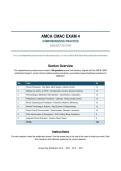
AMCA CMAC EXAM 4
COMPREHENSIVE PRACTICE
2026/2027 EDITION
This is an independent practice exam for educational study; it is not an official Wall Street Prep certification examination.
Section Overview
This comprehensive practice exam contains 100 questions across nine sections, aligned with the AMCA CMAC
certification blueprint, current clinical medical assisting standards, and evidence-based healthcare practices for
2026/2027.
Sec Topic Qs
1 Clinical Procedures - Vital Signs, Minor Surgery, Infection Control 15
2 Medical Law, Ethics, & HIPAA - Confidentiality, Consent, Advance Directives 12
3 Pharmacology & Medication Administration - Classifications, Calculations 15
4 Phlebotomy & Laboratory Procedures - Collection, Testing, Quality Control 12
5 EKG & Cardiovascular Procedures - Placement, Rhythms, Monitoring 10
6 Medical Terminology & Anatomy - Body Systems, Pathophysiology 12
7 Patient Care & Communication - Documentation, Education, Interaction 10
8 Office Administration & Management - EHR, Coding, Billing, Scheduling 8
9 Integrated Clinical Scenarios - Complex Patient Cases 6
TOTAL 100
Instructions
For each question, select the single best answer. Use the answer key at the end of the exam to check your work. Each
item includes a brief rationale explaining the correct response.
Answer Key Distribution: 25 A · 25 B · 25 C · 25 D
, Section 1: Clinical Procedures - Vital Signs, Patient Preparation, Minor Surgery
Assistance, and Infection Control
Q1: The correct order for donning (putting on) PPE is:
A. Gloves first, then gown
B. Gown, mask, eye protection, then gloves [CORRECT]
C. Mask last
D. Any order
Correct Answer: B
Rationale: PPE is donned in the order gown, mask, eye protection, then gloves. The other options are incorrect.
Q2: The correct order for removing PPE is:
A. Mask first
B. Gown first
C. Any order
D. Gloves, eye protection, gown, then mask [CORRECT]
Correct Answer: D
Rationale: PPE is removed gloves, eye protection, gown, then mask, with hand hygiene after. This minimizes contamination.
Q3: When assisting with suture removal, the medical assistant should:
A. Use unsterile instruments
B. Skip cleaning
C. Rush
D. Use sterile technique and clean the site before and after [CORRECT]
Correct Answer: D
Rationale: Sterile technique and cleaning are essential for suture removal. The other options are unsafe.
Q4: A normal adult blood pressure is generally considered:
A. Less than 120/80 mmHg [CORRECT]
B. 140/90 mmHg or higher
C. 160/100 mmHg
D. 180/120 mmHg
Correct Answer: A
Rationale: Normal blood pressure is below 120/80. The other readings are hypertensive.
Q5: Which position is used to prepare a patient for a vaginal or pelvic examination?
A. Supine flat
B. Prone
C. Fowler's
D. Lithotomy [CORRECT]
Correct Answer: D
Rationale: The lithotomy position is used for pelvic exams. The other positions are not typical.
Q6: When assisting with a minor surgical procedure, the medical assistant should:
A. Reach over the sterile field
B. Maintain the sterile field and avoid reaching over it [CORRECT]
C. Leave it open
D. Skip hand hygiene
Correct Answer: B
Rationale: Maintaining the sterile field and not reaching over it prevent contamination. The other options are unsafe.
Q7: Which of the following is a sign of shock?
A. Warm, flushed skin
AMCA CMAC Exam 4 - 2026/2027 Page 2
, B. Stable vital signs
C. Increased energy
D. Pale, cool, clammy skin with a rapid pulse [CORRECT]
Correct Answer: D
Rationale: Shock causes pale, cool, clammy skin and tachycardia. The other options are not signs of shock.
Q8: Hand hygiene should be performed:
A. Only before meals
B. Before and after each patient contact [CORRECT]
C. Once a day
D. Only after the restroom
Correct Answer: B
Rationale: Hand hygiene is required before and after each patient contact. The other options are insufficient.
Q9: Which is an appropriate method to measure a patient's temperature in an unconscious patient?
A. Oral temperature
B. Rectal (or tympanic) temperature [CORRECT]
C. Axillary only in all cases
D. Skin touch
Correct Answer: B
Rationale: Rectal or tympanic temperature is appropriate for an unconscious patient. Oral temperature is unsafe in an
unconscious patient.
Q10: The medical assistant should document vital signs:
A. Hours later
B. With guesses
C. Promptly and accurately [CORRECT]
D. Only if asked
Correct Answer: C
Rationale: Vital signs are documented promptly and accurately. The other options are incorrect.
Q11: Which of the following requires the medical assistant to use standard precautions?
A. Potential contact with blood or body fluids [CORRECT]
B. Only contact with intact skin
C. Never
D. Only with known infections
Correct Answer: A
Rationale: Standard precautions apply to potential blood/body-fluid contact. The other options are incorrect.
Q12: A patient who is unsteady on their feet should be:
A. Assisted and supervised to prevent falls [CORRECT]
B. Left to walk alone
C. Rushed
D. Ignored
Correct Answer: A
Rationale: Assisting and supervising unsteady patients prevent falls. The other options are unsafe.
Q13: Which is an appropriate action when a patient experiences a vasovagal reaction (faint) during a procedure?
A. Continue the procedure
B. Walk the patient
C. Stop the procedure, position the patient lying down, and monitor [CORRECT]
D. Ignore it
Correct Answer: C
AMCA CMAC Exam 4 - 2026/2027 Page 3
COMPREHENSIVE PRACTICE
2026/2027 EDITION
This is an independent practice exam for educational study; it is not an official Wall Street Prep certification examination.
Section Overview
This comprehensive practice exam contains 100 questions across nine sections, aligned with the AMCA CMAC
certification blueprint, current clinical medical assisting standards, and evidence-based healthcare practices for
2026/2027.
Sec Topic Qs
1 Clinical Procedures - Vital Signs, Minor Surgery, Infection Control 15
2 Medical Law, Ethics, & HIPAA - Confidentiality, Consent, Advance Directives 12
3 Pharmacology & Medication Administration - Classifications, Calculations 15
4 Phlebotomy & Laboratory Procedures - Collection, Testing, Quality Control 12
5 EKG & Cardiovascular Procedures - Placement, Rhythms, Monitoring 10
6 Medical Terminology & Anatomy - Body Systems, Pathophysiology 12
7 Patient Care & Communication - Documentation, Education, Interaction 10
8 Office Administration & Management - EHR, Coding, Billing, Scheduling 8
9 Integrated Clinical Scenarios - Complex Patient Cases 6
TOTAL 100
Instructions
For each question, select the single best answer. Use the answer key at the end of the exam to check your work. Each
item includes a brief rationale explaining the correct response.
Answer Key Distribution: 25 A · 25 B · 25 C · 25 D
, Section 1: Clinical Procedures - Vital Signs, Patient Preparation, Minor Surgery
Assistance, and Infection Control
Q1: The correct order for donning (putting on) PPE is:
A. Gloves first, then gown
B. Gown, mask, eye protection, then gloves [CORRECT]
C. Mask last
D. Any order
Correct Answer: B
Rationale: PPE is donned in the order gown, mask, eye protection, then gloves. The other options are incorrect.
Q2: The correct order for removing PPE is:
A. Mask first
B. Gown first
C. Any order
D. Gloves, eye protection, gown, then mask [CORRECT]
Correct Answer: D
Rationale: PPE is removed gloves, eye protection, gown, then mask, with hand hygiene after. This minimizes contamination.
Q3: When assisting with suture removal, the medical assistant should:
A. Use unsterile instruments
B. Skip cleaning
C. Rush
D. Use sterile technique and clean the site before and after [CORRECT]
Correct Answer: D
Rationale: Sterile technique and cleaning are essential for suture removal. The other options are unsafe.
Q4: A normal adult blood pressure is generally considered:
A. Less than 120/80 mmHg [CORRECT]
B. 140/90 mmHg or higher
C. 160/100 mmHg
D. 180/120 mmHg
Correct Answer: A
Rationale: Normal blood pressure is below 120/80. The other readings are hypertensive.
Q5: Which position is used to prepare a patient for a vaginal or pelvic examination?
A. Supine flat
B. Prone
C. Fowler's
D. Lithotomy [CORRECT]
Correct Answer: D
Rationale: The lithotomy position is used for pelvic exams. The other positions are not typical.
Q6: When assisting with a minor surgical procedure, the medical assistant should:
A. Reach over the sterile field
B. Maintain the sterile field and avoid reaching over it [CORRECT]
C. Leave it open
D. Skip hand hygiene
Correct Answer: B
Rationale: Maintaining the sterile field and not reaching over it prevent contamination. The other options are unsafe.
Q7: Which of the following is a sign of shock?
A. Warm, flushed skin
AMCA CMAC Exam 4 - 2026/2027 Page 2
, B. Stable vital signs
C. Increased energy
D. Pale, cool, clammy skin with a rapid pulse [CORRECT]
Correct Answer: D
Rationale: Shock causes pale, cool, clammy skin and tachycardia. The other options are not signs of shock.
Q8: Hand hygiene should be performed:
A. Only before meals
B. Before and after each patient contact [CORRECT]
C. Once a day
D. Only after the restroom
Correct Answer: B
Rationale: Hand hygiene is required before and after each patient contact. The other options are insufficient.
Q9: Which is an appropriate method to measure a patient's temperature in an unconscious patient?
A. Oral temperature
B. Rectal (or tympanic) temperature [CORRECT]
C. Axillary only in all cases
D. Skin touch
Correct Answer: B
Rationale: Rectal or tympanic temperature is appropriate for an unconscious patient. Oral temperature is unsafe in an
unconscious patient.
Q10: The medical assistant should document vital signs:
A. Hours later
B. With guesses
C. Promptly and accurately [CORRECT]
D. Only if asked
Correct Answer: C
Rationale: Vital signs are documented promptly and accurately. The other options are incorrect.
Q11: Which of the following requires the medical assistant to use standard precautions?
A. Potential contact with blood or body fluids [CORRECT]
B. Only contact with intact skin
C. Never
D. Only with known infections
Correct Answer: A
Rationale: Standard precautions apply to potential blood/body-fluid contact. The other options are incorrect.
Q12: A patient who is unsteady on their feet should be:
A. Assisted and supervised to prevent falls [CORRECT]
B. Left to walk alone
C. Rushed
D. Ignored
Correct Answer: A
Rationale: Assisting and supervising unsteady patients prevent falls. The other options are unsafe.
Q13: Which is an appropriate action when a patient experiences a vasovagal reaction (faint) during a procedure?
A. Continue the procedure
B. Walk the patient
C. Stop the procedure, position the patient lying down, and monitor [CORRECT]
D. Ignore it
Correct Answer: C
AMCA CMAC Exam 4 - 2026/2027 Page 3


