

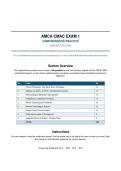
AMCA CMAC EXAM 1
COMPREHENSIVE PRACTICE
2026/2027 EDITION
This is an independent practice exam for educational study; it is not an official Wall Street Prep certification examination.
Section Overview
This comprehensive practice exam contains 100 questions across nine sections, aligned with the AMCA CMAC
certification blueprint, current clinical medical assisting standards, and evidence-based healthcare practices for
2026/2027.
Sec Topic Qs
1 Clinical Procedures - Vital Signs, Exam Techniques 15
2 Medical Law, Ethics, & HIPAA - Confidentiality, Consent 10
3 Pharmacology & Medication Administration 15
4 Phlebotomy & Laboratory Procedures 12
5 EKG & Cardiovascular Procedures 10
6 Medical Terminology & Anatomy 12
7 Patient Care & Communication 10
8 Office Administration & Management 8
9 Integrated Clinical Scenarios - Complex Cases 8
TOTAL 100
Instructions
For each question, select the single best answer. Use the answer key at the end of the exam to check your work. Each
item includes a brief rationale explaining the correct response.
Answer Key Distribution: 25 A · 25 B · 25 C · 25 D
, Section 1: Clinical Procedures - Vital Signs, Patient Preparation, and Examination
Techniques
Q1: The normal adult oral temperature range is approximately:
A. 95-97°F
B. 97-99°F (36.1-37.2°C) [CORRECT]
C. 100-102°F
D. 90-95°F
Correct Answer: B
Rationale: Normal adult oral temperature is about 97-99°F. The other ranges are abnormal.
Q2: A normal adult resting heart rate is approximately:
A. 60-100 beats per minute [CORRECT]
B. 40-60 beats per minute
C. 100-140 beats per minute
D. 20-40 beats per minute
Correct Answer: A
Rationale: Normal adult resting heart rate is 60-100 bpm. The other ranges are abnormal.
Q3: A normal adult respiratory rate is approximately:
A. 30-40 breaths per minute
B. 2-4 breaths per minute
C. 50-60 breaths per minute
D. 12-20 breaths per minute [CORRECT]
Correct Answer: D
Rationale: Normal adult respiratory rate is 12-20 breaths/min. The other ranges are abnormal.
Q4: A normal adult blood pressure reading is approximately:
A. 140/90 mmHg or higher
B. 160/100 mmHg
C. Less than 120/80 mmHg [CORRECT]
D. 180/120 mmHg
Correct Answer: C
Rationale: Normal blood pressure is generally below 120/80. The other readings indicate hypertension.
Q5: Which position is used for a rectal temperature measurement?
A. Sims' (side-lying) [CORRECT]
B. Supine
C. Prone
D. Standing
Correct Answer: A
Rationale: Sims' position (side-lying) is used for rectal temperatures. The other positions are not typical.
Q6: Which vital sign is most likely to be elevated first in a patient with an infection?
A. Height
B. Temperature [CORRECT]
C. Weight
D. Pulse oximetry only
Correct Answer: B
Rationale: Temperature rises with infection. The other options are not primary indicators of infection.
Q7: Standard precautions should be used when:
A. Only when the patient is visibly ill
AMCA CMAC Exam 1 - 2026/2027 Page 2
, B. Never
C. Only with surgical patients
D. There is potential contact with blood or body fluids [CORRECT]
Correct Answer: D
Rationale: Standard precautions apply to potential blood/body-fluid contact. The other options are incorrect.
Q8: The single most effective way to prevent the spread of infection is:
A. Hand hygiene [CORRECT]
B. Wearing gloves at all times
C. Wearing a mask always
D. Avoiding all contact
Correct Answer: A
Rationale: Hand hygiene is the most effective infection-prevention measure. The other options are not as effective.
Q9: Which position is appropriate for a patient who feels faint (syncope)?
A. Lying flat or supine with feet elevated [CORRECT]
B. Standing
C. Sitting upright unsupported
D. Prone
Correct Answer: A
Rationale: A faint patient is positioned lying down with feet elevated. The other positions may worsen symptoms.
Q10: When measuring a patient's blood pressure, the cuff should be:
A. Placed over clothing
B. Oversized
C. The correct size, placed on the bare upper arm at heart level [CORRECT]
D. Placed on the wrist
Correct Answer: C
Rationale: The BP cuff is correctly sized and placed on the bare upper arm at heart level. The other options are incorrect.
Q11: Which of the following is a sign of respiratory distress?
A. Normal breathing
B. Decreased rate with relaxation
C. Clear lungs
D. Increased respiratory rate and use of accessory muscles [CORRECT]
Correct Answer: D
Rationale: Increased rate and accessory muscle use indicate respiratory distress. The other options suggest normal status.
Q12: A patient's pulse is most commonly assessed at which site?
A. The brachial artery only
B. The carotid only
C. The pedal only
D. The radial artery (wrist) [CORRECT]
Correct Answer: D
Rationale: The radial pulse at the wrist is the most common site for routine assessment. The other sites are used in specific
situations.
Q13: Before a physical examination, the medical assistant should:
A. Prepare the room, equipment, and ensure patient privacy [CORRECT]
B. Skip preparation
C. Leave the room dirty
D. Ignore privacy
Correct Answer: A
Rationale: Preparation and privacy are essential before an exam. The other options are inappropriate.
AMCA CMAC Exam 1 - 2026/2027 Page 3
COMPREHENSIVE PRACTICE
2026/2027 EDITION
This is an independent practice exam for educational study; it is not an official Wall Street Prep certification examination.
Section Overview
This comprehensive practice exam contains 100 questions across nine sections, aligned with the AMCA CMAC
certification blueprint, current clinical medical assisting standards, and evidence-based healthcare practices for
2026/2027.
Sec Topic Qs
1 Clinical Procedures - Vital Signs, Exam Techniques 15
2 Medical Law, Ethics, & HIPAA - Confidentiality, Consent 10
3 Pharmacology & Medication Administration 15
4 Phlebotomy & Laboratory Procedures 12
5 EKG & Cardiovascular Procedures 10
6 Medical Terminology & Anatomy 12
7 Patient Care & Communication 10
8 Office Administration & Management 8
9 Integrated Clinical Scenarios - Complex Cases 8
TOTAL 100
Instructions
For each question, select the single best answer. Use the answer key at the end of the exam to check your work. Each
item includes a brief rationale explaining the correct response.
Answer Key Distribution: 25 A · 25 B · 25 C · 25 D
, Section 1: Clinical Procedures - Vital Signs, Patient Preparation, and Examination
Techniques
Q1: The normal adult oral temperature range is approximately:
A. 95-97°F
B. 97-99°F (36.1-37.2°C) [CORRECT]
C. 100-102°F
D. 90-95°F
Correct Answer: B
Rationale: Normal adult oral temperature is about 97-99°F. The other ranges are abnormal.
Q2: A normal adult resting heart rate is approximately:
A. 60-100 beats per minute [CORRECT]
B. 40-60 beats per minute
C. 100-140 beats per minute
D. 20-40 beats per minute
Correct Answer: A
Rationale: Normal adult resting heart rate is 60-100 bpm. The other ranges are abnormal.
Q3: A normal adult respiratory rate is approximately:
A. 30-40 breaths per minute
B. 2-4 breaths per minute
C. 50-60 breaths per minute
D. 12-20 breaths per minute [CORRECT]
Correct Answer: D
Rationale: Normal adult respiratory rate is 12-20 breaths/min. The other ranges are abnormal.
Q4: A normal adult blood pressure reading is approximately:
A. 140/90 mmHg or higher
B. 160/100 mmHg
C. Less than 120/80 mmHg [CORRECT]
D. 180/120 mmHg
Correct Answer: C
Rationale: Normal blood pressure is generally below 120/80. The other readings indicate hypertension.
Q5: Which position is used for a rectal temperature measurement?
A. Sims' (side-lying) [CORRECT]
B. Supine
C. Prone
D. Standing
Correct Answer: A
Rationale: Sims' position (side-lying) is used for rectal temperatures. The other positions are not typical.
Q6: Which vital sign is most likely to be elevated first in a patient with an infection?
A. Height
B. Temperature [CORRECT]
C. Weight
D. Pulse oximetry only
Correct Answer: B
Rationale: Temperature rises with infection. The other options are not primary indicators of infection.
Q7: Standard precautions should be used when:
A. Only when the patient is visibly ill
AMCA CMAC Exam 1 - 2026/2027 Page 2
, B. Never
C. Only with surgical patients
D. There is potential contact with blood or body fluids [CORRECT]
Correct Answer: D
Rationale: Standard precautions apply to potential blood/body-fluid contact. The other options are incorrect.
Q8: The single most effective way to prevent the spread of infection is:
A. Hand hygiene [CORRECT]
B. Wearing gloves at all times
C. Wearing a mask always
D. Avoiding all contact
Correct Answer: A
Rationale: Hand hygiene is the most effective infection-prevention measure. The other options are not as effective.
Q9: Which position is appropriate for a patient who feels faint (syncope)?
A. Lying flat or supine with feet elevated [CORRECT]
B. Standing
C. Sitting upright unsupported
D. Prone
Correct Answer: A
Rationale: A faint patient is positioned lying down with feet elevated. The other positions may worsen symptoms.
Q10: When measuring a patient's blood pressure, the cuff should be:
A. Placed over clothing
B. Oversized
C. The correct size, placed on the bare upper arm at heart level [CORRECT]
D. Placed on the wrist
Correct Answer: C
Rationale: The BP cuff is correctly sized and placed on the bare upper arm at heart level. The other options are incorrect.
Q11: Which of the following is a sign of respiratory distress?
A. Normal breathing
B. Decreased rate with relaxation
C. Clear lungs
D. Increased respiratory rate and use of accessory muscles [CORRECT]
Correct Answer: D
Rationale: Increased rate and accessory muscle use indicate respiratory distress. The other options suggest normal status.
Q12: A patient's pulse is most commonly assessed at which site?
A. The brachial artery only
B. The carotid only
C. The pedal only
D. The radial artery (wrist) [CORRECT]
Correct Answer: D
Rationale: The radial pulse at the wrist is the most common site for routine assessment. The other sites are used in specific
situations.
Q13: Before a physical examination, the medical assistant should:
A. Prepare the room, equipment, and ensure patient privacy [CORRECT]
B. Skip preparation
C. Leave the room dirty
D. Ignore privacy
Correct Answer: A
Rationale: Preparation and privacy are essential before an exam. The other options are inappropriate.
AMCA CMAC Exam 1 - 2026/2027 Page 3


