
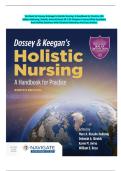
Test Bank for Dossey & Keegan's Holistic Nursing: A Handbook for Practice, 8th
Edition (Helming, Shields, Avino & Rosa) All 1-35 Chapters Covered With Questions
And Verified Solutions With Detailed Rationales And Case Studies.
, TABLE OF CONTENT
Chapter 1 Nursing History and the Evolution of Holistic Nursing
Chapter 2 Holistic Nursing: Scope and Standards of Practice
Chapter 3 The Theory of Integral Nursing
Chapter 4 Current Trends and Issues in Holistic Nursing
Chapter 5 Transpersonal Human Caring and Healing
Chapter 6 Holistic Ethics
Chapter 7 Spirituality and Health
Chapter 8 Nursing Theory in Holistic Nursing Practice
Chapter 9 Holistic Leadership
Chapter 10 Self-Development: The Foundation of Holistic Self-Care
Chapter 11 Self-Assessments
Chapter 12 Nutrition
Chapter 13 Exercise and Mindful Movement
Chapter 14 The Holistic Caring Process
Chapter 15 Energetic Interconnectedness
Chapter 16 Psychoneuroimmunology
Chapter 17 Interprofessional Practice
and Meditation
Chapter 18 Aesthetics in Holistic Nursing
Chapter 19 Peaceful Transitions at the End of Life
Chapter 20 Evolving From Therapeutic to Holistic Communication
Chapter 21 Relationships
Chapter 22 Nurse Coaching
Chapter 23 Facilitating Lifestyle Change: Motivational Interviewing and Appreciative
Inquiry
Chapter 24 Transcultural Engagement
,Chapter 25 Environmental Health
Chapter 26 Holistic Nursing Education: Self-Reflection, Growth, Development, and Lifelong
Learning
Chapter 27 Creating, Appraising, and Applying Evidence to Enhance Holistic Nursing
Practice
Chapter 28 Opportunities and Challenges in Advanced Holistic Nursing
Chapter 29 Narrative Reflections of Advanced Holistic Nurses
Chapter 30 Advanced Pharmacotherapeutics
Chapter 31 Role of Advanced Holistic Nurses While Working With Patients With Chronic
Noncommunicable Disease Health Challenges
Chapter 32 Cognitive-Affective Strategies to Promote Resilience and Well-Being
Chapter 33 Holistic Approaches in Substance Use Recovery and Smoking Cessation
Chapter 34 Current Trends in Sacred Medicine
Chapter 35 Global Holistic Nursing
, Chapter 1: Nursing History and the Evolution of Holistic
Nursing
Multiple-Choice Questions
1. Which foundational figure in nursing history is credited with establishing the
philosophical link between the environment, the patient’s spirit, and the healing process,
forming the basis for modern holistic nursing?
A. Dorothea Dix
B. Florence Nightingale
C. Clara Barton
D. Linda Richards
Answer: B
Rationale: Florence Nightingale is regarded as the first holistic nurse because she viewed
the patient as a spiritual being and emphasized the “laws of health” which involved
manipulating the environment (light, air, cleanliness) to allow nature to act upon the
patient. Her writings, such as Notes on Nursing, highlight the interconnectedness of the
mind, body, and environment.
Why the other options are incorrect:
• A. Dorothea Dix was primarily an advocate for the mentally ill and social reform,
rather than a developer of holistic nursing theory.
• C. Clara Barton is best known for her work on the battlefield and founding the
American Red Cross, focusing on emergency care and disaster relief.
• D. Linda Richards was the first professionally trained American nurse, known
primarily for improving nursing education and record-keeping.
2. During the mid-20th century, the medical model became dominant in hospitals. How did
this shift affect the evolution of holistic nursing?
A. It enhanced the spiritual focus of nursing care.
B. It led to a fragmentation of care as the focus shifted to pathophysiology and technology.
C. It integrated traditional healing rituals into standard surgical procedures.
D. It reduced the need for specialized nursing roles.
Answer: B
Rationale: As the biomedical model ascended in the 1940s and 50s, healthcare became
increasingly focused on curing disease rather than healing the whole person. This resulted in
fragmented care where the patient was often viewed as a set of symptoms or a
malfunctioning biological system rather than a unified being.
Why the other options are incorrect:
• A. The biomedical model generally marginalized spiritual and emotional aspects of
care in favor of objective science.
• C. Traditional healing rituals were largely dismissed as unscientific during this period
of medical dominance.
Edition (Helming, Shields, Avino & Rosa) All 1-35 Chapters Covered With Questions
And Verified Solutions With Detailed Rationales And Case Studies.
, TABLE OF CONTENT
Chapter 1 Nursing History and the Evolution of Holistic Nursing
Chapter 2 Holistic Nursing: Scope and Standards of Practice
Chapter 3 The Theory of Integral Nursing
Chapter 4 Current Trends and Issues in Holistic Nursing
Chapter 5 Transpersonal Human Caring and Healing
Chapter 6 Holistic Ethics
Chapter 7 Spirituality and Health
Chapter 8 Nursing Theory in Holistic Nursing Practice
Chapter 9 Holistic Leadership
Chapter 10 Self-Development: The Foundation of Holistic Self-Care
Chapter 11 Self-Assessments
Chapter 12 Nutrition
Chapter 13 Exercise and Mindful Movement
Chapter 14 The Holistic Caring Process
Chapter 15 Energetic Interconnectedness
Chapter 16 Psychoneuroimmunology
Chapter 17 Interprofessional Practice
and Meditation
Chapter 18 Aesthetics in Holistic Nursing
Chapter 19 Peaceful Transitions at the End of Life
Chapter 20 Evolving From Therapeutic to Holistic Communication
Chapter 21 Relationships
Chapter 22 Nurse Coaching
Chapter 23 Facilitating Lifestyle Change: Motivational Interviewing and Appreciative
Inquiry
Chapter 24 Transcultural Engagement
,Chapter 25 Environmental Health
Chapter 26 Holistic Nursing Education: Self-Reflection, Growth, Development, and Lifelong
Learning
Chapter 27 Creating, Appraising, and Applying Evidence to Enhance Holistic Nursing
Practice
Chapter 28 Opportunities and Challenges in Advanced Holistic Nursing
Chapter 29 Narrative Reflections of Advanced Holistic Nurses
Chapter 30 Advanced Pharmacotherapeutics
Chapter 31 Role of Advanced Holistic Nurses While Working With Patients With Chronic
Noncommunicable Disease Health Challenges
Chapter 32 Cognitive-Affective Strategies to Promote Resilience and Well-Being
Chapter 33 Holistic Approaches in Substance Use Recovery and Smoking Cessation
Chapter 34 Current Trends in Sacred Medicine
Chapter 35 Global Holistic Nursing
, Chapter 1: Nursing History and the Evolution of Holistic
Nursing
Multiple-Choice Questions
1. Which foundational figure in nursing history is credited with establishing the
philosophical link between the environment, the patient’s spirit, and the healing process,
forming the basis for modern holistic nursing?
A. Dorothea Dix
B. Florence Nightingale
C. Clara Barton
D. Linda Richards
Answer: B
Rationale: Florence Nightingale is regarded as the first holistic nurse because she viewed
the patient as a spiritual being and emphasized the “laws of health” which involved
manipulating the environment (light, air, cleanliness) to allow nature to act upon the
patient. Her writings, such as Notes on Nursing, highlight the interconnectedness of the
mind, body, and environment.
Why the other options are incorrect:
• A. Dorothea Dix was primarily an advocate for the mentally ill and social reform,
rather than a developer of holistic nursing theory.
• C. Clara Barton is best known for her work on the battlefield and founding the
American Red Cross, focusing on emergency care and disaster relief.
• D. Linda Richards was the first professionally trained American nurse, known
primarily for improving nursing education and record-keeping.
2. During the mid-20th century, the medical model became dominant in hospitals. How did
this shift affect the evolution of holistic nursing?
A. It enhanced the spiritual focus of nursing care.
B. It led to a fragmentation of care as the focus shifted to pathophysiology and technology.
C. It integrated traditional healing rituals into standard surgical procedures.
D. It reduced the need for specialized nursing roles.
Answer: B
Rationale: As the biomedical model ascended in the 1940s and 50s, healthcare became
increasingly focused on curing disease rather than healing the whole person. This resulted in
fragmented care where the patient was often viewed as a set of symptoms or a
malfunctioning biological system rather than a unified being.
Why the other options are incorrect:
• A. The biomedical model generally marginalized spiritual and emotional aspects of
care in favor of objective science.
• C. Traditional healing rituals were largely dismissed as unscientific during this period
of medical dominance.


