

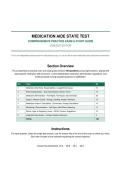
MEDICATION AIDE STATE TEST
COMPREHENSIVE PRACTICE EXAM & STUDY GUIDE
2026/2027 EDITION
This is an independent practice exam for educational study; it is not an official state medication aide certification examination.
Section Overview
This comprehensive practice exam and study guide contains 100 questions across eight sections, aligned with
state-specific medication aide curriculum, current federal/state medication administration regulations, and
evidence-based nursing assistant practices for 2026/2027.
Sec Topic Qs
1 Medication Aide Roles, Responsibilities, & Legal/Ethical Issues 15
2 Pharmacology Basics - Drug Classifications, Routes, Forms 15
3 Medication Administration - Five Rights, Techniques, Documentation 20
4 Safety & Infection Control - Storage, Handling, Aseptic Technique 15
5 Medication Orders & Calculations - Conversions, Dosage Calculations 10
6 Monitoring & Documentation - Vital Signs, Side Effects, Reporting 10
7 Ethical, Legal, & Regulatory Issues - HIPAA, Consent, Regulations 10
8 Integrated Case Studies - Complex Resident Scenarios 5
TOTAL 100
Instructions
For each question, select the single best answer. Use the answer key at the end of the exam to check your work.
Each item includes a brief rationale explaining the correct response.
Answer Key Distribution: 25 A · 25 B · 25 C · 25 D
, Section 1: Medication Aide Roles, Responsibilities, & Legal/Ethical Issues
Q1: The primary person responsible for delegating medication administration tasks to a medication aide is:
A. The resident's family
B. A licensed nurse (RN or LPN) within the scope of their license [CORRECT]
C. Another medication aide
D. The facility's cook
Correct Answer: B
Rationale: Medication aides work under the delegation and supervision of a licensed nurse. Family, other aides, or non-licensed
staff do not delegate medication tasks.
Q2: Medication aides should perform tasks that are:
A. Within their scope of practice and delegated by a licensed nurse [CORRECT]
B. Any task the family requests
C. Any task they see others doing
D. All tasks regardless of training
Correct Answer: A
Rationale: Medication aides may only perform tasks within their defined scope of practice and that are appropriately delegated.
Performing out-of-scope tasks is unsafe and illegal.
Q3: Which of the following is generally considered outside the scope of a medication aide's duties?
A. Administering oral medications
B. Documenting an administered medication
C. Reporting an adverse reaction
D. Administering IV (intravenous) medications [CORRECT]
Correct Answer: D
Rationale: IV medication administration is generally not within a medication aide's scope and requires a licensed professional.
Oral administration, documentation, and reporting are within scope.
Q4: A medication aide who is asked to administer a medication they have not been trained to give should:
A. Give it anyway
B. Guess how to give it
C. Refuse and report the request to the supervising nurse [CORRECT]
D. Ignore the order
Correct Answer: C
Rationale: Administering an untrained medication is unsafe and outside scope. The aide should refuse and report to the
supervisor. The other actions are unsafe.
Q5: The supervision requirement for medication aides typically means they:
A. Work under the supervision of a licensed nurse who is responsible for oversight [CORRECT]
B. Work entirely unsupervised
C. Supervise the licensed nurse
D. Do not need a license
Correct Answer: A
Rationale: Medication aides operate under licensed-nurse supervision and oversight. They do not work unsupervised, supervise
nurses, or lack license/training requirements.
Q6: A medication error has occurred. The medication aide should:
A. Hide the error
B. Report the error immediately to the supervising nurse and document it per policy [CORRECT]
C. Blame the resident
D. Say nothing
Correct Answer: B
Medication Aide State Test - 2026/2027 Practice & Study Guide Page 2
, Rationale: Errors must be reported immediately and documented honestly per facility policy. Hiding, blaming, or silence is unsafe
and unethical.
Q7: The primary ethical obligation of a medication aide is to:
A. Protect themselves from blame
B. Follow family wishes over safety
C. Avoid reporting errors
D. Act in the best interest and safety of the resident [CORRECT]
Correct Answer: D
Rationale: The aide's ethical duty is resident safety and well-being. Self-protection, overriding safety for family wishes, and
avoiding error reporting are unethical.
Q8: Which statement about delegation is TRUE?
A. The delegating nurse retains responsibility for the task and must supervise [CORRECT]
B. Once delegated, the nurse has no responsibility
C. Delegation removes all oversight
D. Anyone can delegate medication tasks
Correct Answer: A
Rationale: The delegating nurse retains responsibility and accountability for the delegated task and must supervise. Delegation
does not remove oversight.
Q9: A medication aide discovers they gave the wrong dose to a resident. The FIRST action should be to:
A. Notify the supervising nurse immediately so the resident can be assessed [CORRECT]
B. Wait until the end of shift
C. Check again the next day
D. Tell only the resident
Correct Answer: A
Rationale: An error requires immediate notification of the nurse so the resident can be assessed promptly. Delaying notification is
unsafe.
Q10: Which of the following tasks is MOST appropriate for a medication aide to perform?
A. Prescribing new medications
B. Adjusting medication doses
C. Assisting a resident to take their pre-poured oral medications and documenting them [CORRECT]
D. Diagnosing a medical condition
Correct Answer: C
Rationale: Assisting with and documenting pre-poured oral medications is within scope. Prescribing, dose adjustment, and
diagnosis are outside the aide's role.
Q11: Residents have the right to:
A. Be forced to take medication
B. Receive any medication they request
C. Have their medications stopped without notice
D. Refuse medication, and the refusal should be reported and documented [CORRECT]
Correct Answer: D
Rationale: Residents have the right to refuse medication; the aide should report and document the refusal. Forcing,
self-prescribing, or unauthorized stopping is wrong.
Q12: A medication aide who is unsure about a medication should:
A. Guess
B. Administer it anyway
C. Skip it silently
D. Ask the supervising nurse for clarification before administering [CORRECT]
Correct Answer: D
Medication Aide State Test - 2026/2027 Practice & Study Guide Page 3
COMPREHENSIVE PRACTICE EXAM & STUDY GUIDE
2026/2027 EDITION
This is an independent practice exam for educational study; it is not an official state medication aide certification examination.
Section Overview
This comprehensive practice exam and study guide contains 100 questions across eight sections, aligned with
state-specific medication aide curriculum, current federal/state medication administration regulations, and
evidence-based nursing assistant practices for 2026/2027.
Sec Topic Qs
1 Medication Aide Roles, Responsibilities, & Legal/Ethical Issues 15
2 Pharmacology Basics - Drug Classifications, Routes, Forms 15
3 Medication Administration - Five Rights, Techniques, Documentation 20
4 Safety & Infection Control - Storage, Handling, Aseptic Technique 15
5 Medication Orders & Calculations - Conversions, Dosage Calculations 10
6 Monitoring & Documentation - Vital Signs, Side Effects, Reporting 10
7 Ethical, Legal, & Regulatory Issues - HIPAA, Consent, Regulations 10
8 Integrated Case Studies - Complex Resident Scenarios 5
TOTAL 100
Instructions
For each question, select the single best answer. Use the answer key at the end of the exam to check your work.
Each item includes a brief rationale explaining the correct response.
Answer Key Distribution: 25 A · 25 B · 25 C · 25 D
, Section 1: Medication Aide Roles, Responsibilities, & Legal/Ethical Issues
Q1: The primary person responsible for delegating medication administration tasks to a medication aide is:
A. The resident's family
B. A licensed nurse (RN or LPN) within the scope of their license [CORRECT]
C. Another medication aide
D. The facility's cook
Correct Answer: B
Rationale: Medication aides work under the delegation and supervision of a licensed nurse. Family, other aides, or non-licensed
staff do not delegate medication tasks.
Q2: Medication aides should perform tasks that are:
A. Within their scope of practice and delegated by a licensed nurse [CORRECT]
B. Any task the family requests
C. Any task they see others doing
D. All tasks regardless of training
Correct Answer: A
Rationale: Medication aides may only perform tasks within their defined scope of practice and that are appropriately delegated.
Performing out-of-scope tasks is unsafe and illegal.
Q3: Which of the following is generally considered outside the scope of a medication aide's duties?
A. Administering oral medications
B. Documenting an administered medication
C. Reporting an adverse reaction
D. Administering IV (intravenous) medications [CORRECT]
Correct Answer: D
Rationale: IV medication administration is generally not within a medication aide's scope and requires a licensed professional.
Oral administration, documentation, and reporting are within scope.
Q4: A medication aide who is asked to administer a medication they have not been trained to give should:
A. Give it anyway
B. Guess how to give it
C. Refuse and report the request to the supervising nurse [CORRECT]
D. Ignore the order
Correct Answer: C
Rationale: Administering an untrained medication is unsafe and outside scope. The aide should refuse and report to the
supervisor. The other actions are unsafe.
Q5: The supervision requirement for medication aides typically means they:
A. Work under the supervision of a licensed nurse who is responsible for oversight [CORRECT]
B. Work entirely unsupervised
C. Supervise the licensed nurse
D. Do not need a license
Correct Answer: A
Rationale: Medication aides operate under licensed-nurse supervision and oversight. They do not work unsupervised, supervise
nurses, or lack license/training requirements.
Q6: A medication error has occurred. The medication aide should:
A. Hide the error
B. Report the error immediately to the supervising nurse and document it per policy [CORRECT]
C. Blame the resident
D. Say nothing
Correct Answer: B
Medication Aide State Test - 2026/2027 Practice & Study Guide Page 2
, Rationale: Errors must be reported immediately and documented honestly per facility policy. Hiding, blaming, or silence is unsafe
and unethical.
Q7: The primary ethical obligation of a medication aide is to:
A. Protect themselves from blame
B. Follow family wishes over safety
C. Avoid reporting errors
D. Act in the best interest and safety of the resident [CORRECT]
Correct Answer: D
Rationale: The aide's ethical duty is resident safety and well-being. Self-protection, overriding safety for family wishes, and
avoiding error reporting are unethical.
Q8: Which statement about delegation is TRUE?
A. The delegating nurse retains responsibility for the task and must supervise [CORRECT]
B. Once delegated, the nurse has no responsibility
C. Delegation removes all oversight
D. Anyone can delegate medication tasks
Correct Answer: A
Rationale: The delegating nurse retains responsibility and accountability for the delegated task and must supervise. Delegation
does not remove oversight.
Q9: A medication aide discovers they gave the wrong dose to a resident. The FIRST action should be to:
A. Notify the supervising nurse immediately so the resident can be assessed [CORRECT]
B. Wait until the end of shift
C. Check again the next day
D. Tell only the resident
Correct Answer: A
Rationale: An error requires immediate notification of the nurse so the resident can be assessed promptly. Delaying notification is
unsafe.
Q10: Which of the following tasks is MOST appropriate for a medication aide to perform?
A. Prescribing new medications
B. Adjusting medication doses
C. Assisting a resident to take their pre-poured oral medications and documenting them [CORRECT]
D. Diagnosing a medical condition
Correct Answer: C
Rationale: Assisting with and documenting pre-poured oral medications is within scope. Prescribing, dose adjustment, and
diagnosis are outside the aide's role.
Q11: Residents have the right to:
A. Be forced to take medication
B. Receive any medication they request
C. Have their medications stopped without notice
D. Refuse medication, and the refusal should be reported and documented [CORRECT]
Correct Answer: D
Rationale: Residents have the right to refuse medication; the aide should report and document the refusal. Forcing,
self-prescribing, or unauthorized stopping is wrong.
Q12: A medication aide who is unsure about a medication should:
A. Guess
B. Administer it anyway
C. Skip it silently
D. Ask the supervising nurse for clarification before administering [CORRECT]
Correct Answer: D
Medication Aide State Test - 2026/2027 Practice & Study Guide Page 3


