UNIVERSITY OF SOUTH AFRICA (UNISA)
College of Law
⋄
Indigenous Law
Semester 1 Assignment 01 — 2026
⋄
Module Code: IND2601
Module Name: Indigenous Law
Assignment No.: Assignment 01
Due Date: 17 August 2026
Semester: Semester 2, 2026
Unique Number: 314707
Submitted in partial fulfilment of the requirements for Indigenous Law
at the University of South Africa.
, UNISA | IND2601 Customary Law: Assignment 01
Question 1: Section 211(3) and the Recognition of Customary Law
Section 211(3) of the Constitution of the Republic of South Africa, 1996 provides that the
courts must apply customary law when that law is applicable, subject to the Constitution and
any legislation that specifically deals with customary law.1 This provision does not merely
tolerate customary law as a residual or subordinate system; it places a positive duty on the
courts to apply it, in the same way that they are obliged to apply common law, whenever the
facts of a matter call for it.
1.1 Constitutional Status of Customary Law
Before 1996, customary law was treated as a body of rules of inferior status, applied only
within the confines of separate courts and subject to repugnancy and validity tests imposed
by colonial and apartheid legislation.2 Section 211(3) reverses this position. Read together
with section 39(2), which requires every court to promote the spirit, purport and objects of
the Bill of Rights when developing any law, and with section 39(3), which recognises rights
derived from customary law to the extent that they are not inconsistent with the Bill of Rights,
section 211(3) confirms customary law as an independent and equal source of law within a
single constitutional legal order, rather than as a subsystem subordinate to the common law.3
The Constitutional Court has confirmed that customary law is protected by and subject to the
Constitution in its own right, and does not derive its validity from the common law or from
legislative recognition.4
1.2 The Duty to Apply Customary Law
The word "must" in section 211(3) is significant. It removes any judicial discretion to ignore
customary law where it is the applicable law, and it prevents courts from defaulting to the
common law simply because that is the system with which they are more familiar.5 This has
practical implications in areas such as succession, marriage and land, where a court must
first determine whether customary law applies to the parties before it, and, if so, apply that
law rather than imported common law rules.
1
Constitution of the Republic of South Africa, 1996, s 211(3).
2
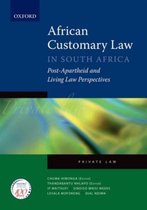
Himonga C and Nhlapo T, African Customary Law in South Africa: Post-Apartheid and Living Law Perspectives
(Oxford University Press 2014) 20–24.
3
Alexkor Ltd v Richtersveld Community 2004 (5) SA 460 (CC) para 51.
4
Bhe v Magistrate, Khayelitsha 2005 (1) SA 580 (CC) paras 41–45.
5
Rautenbach C, Introduction to Legal Pluralism in South Africa (5th edn, LexisNexis 2018) 42.
Page 1 of 9
College of Law
⋄
Indigenous Law
Semester 1 Assignment 01 — 2026
⋄
Module Code: IND2601
Module Name: Indigenous Law
Assignment No.: Assignment 01
Due Date: 17 August 2026
Semester: Semester 2, 2026
Unique Number: 314707
Submitted in partial fulfilment of the requirements for Indigenous Law
at the University of South Africa.
, UNISA | IND2601 Customary Law: Assignment 01
Question 1: Section 211(3) and the Recognition of Customary Law
Section 211(3) of the Constitution of the Republic of South Africa, 1996 provides that the
courts must apply customary law when that law is applicable, subject to the Constitution and
any legislation that specifically deals with customary law.1 This provision does not merely
tolerate customary law as a residual or subordinate system; it places a positive duty on the
courts to apply it, in the same way that they are obliged to apply common law, whenever the
facts of a matter call for it.
1.1 Constitutional Status of Customary Law
Before 1996, customary law was treated as a body of rules of inferior status, applied only
within the confines of separate courts and subject to repugnancy and validity tests imposed
by colonial and apartheid legislation.2 Section 211(3) reverses this position. Read together
with section 39(2), which requires every court to promote the spirit, purport and objects of
the Bill of Rights when developing any law, and with section 39(3), which recognises rights
derived from customary law to the extent that they are not inconsistent with the Bill of Rights,
section 211(3) confirms customary law as an independent and equal source of law within a
single constitutional legal order, rather than as a subsystem subordinate to the common law.3
The Constitutional Court has confirmed that customary law is protected by and subject to the
Constitution in its own right, and does not derive its validity from the common law or from
legislative recognition.4
1.2 The Duty to Apply Customary Law
The word "must" in section 211(3) is significant. It removes any judicial discretion to ignore
customary law where it is the applicable law, and it prevents courts from defaulting to the
common law simply because that is the system with which they are more familiar.5 This has
practical implications in areas such as succession, marriage and land, where a court must
first determine whether customary law applies to the parties before it, and, if so, apply that
law rather than imported common law rules.
1
Constitution of the Republic of South Africa, 1996, s 211(3).
2
Himonga C and Nhlapo T, African Customary Law in South Africa: Post-Apartheid and Living Law Perspectives
(Oxford University Press 2014) 20–24.
3
Alexkor Ltd v Richtersveld Community 2004 (5) SA 460 (CC) para 51.
4
Bhe v Magistrate, Khayelitsha 2005 (1) SA 580 (CC) paras 41–45.
5
Rautenbach C, Introduction to Legal Pluralism in South Africa (5th edn, LexisNexis 2018) 42.
Page 1 of 9