
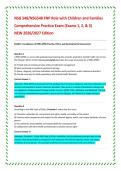
NSG 548/NSG548 FNP Role with Children and Families
Comprehensive Practice Exam (Exams 1, 2, & 3)
NEW 2026/2027 Edition
EXAM 1: Foundations of PMH-APRN Practice, Ethics, and Developmental Assessment
Question 1
A PMH-APRN is a nurse with graduate-level training who provides psychiatric-mental health care across
the lifespan. Which of the following accurately describes the scope of practice for a PMH-APRN?
A) Provide only counseling services without medication management
B) Work exclusively in inpatient psychiatric settings
C) Assess, diagnose, and treat individuals and families with psychiatric and/or substance disorders
D) Provide care only for adult populations with mental health disorders
Correct Answer: C
Rationale: PMH-APRNs are prepared at the graduate level to assess, diagnose, and treat individuals and
families with psychiatric and/or substance disorders. They work in a variety of healthcare settings and
are eligible for reimbursement through private insurers, HMOs, PPOs, Medicare, and Medicaid. The role
encompasses comprehensive psychiatric care across the lifespan, not limited to a single setting or
population .
Question 2
According to the ANA Code of Ethics, Provision 1 states that the nurse:
A) Promotes, advocates for, and protects the rights, health, and safety of the patient
B) Practices with compassion and respect for the inherent dignity, worth, and unique attributes of every
person
C) Has authority, accountability, and responsibility for nursing practice
D) Collaborates with other health professionals to protect human rights
Correct Answer: B
Rationale: Provision 1 of the ANA Code of Ethics establishes the foundational principle that nursing
practice must be grounded in compassion and respect for the inherent dignity, worth, and unique
attributes of every person. This principle underlies all nursing interactions and care delivery .
,Question 3
A client with depressive symptoms is prescribed a selective serotonin reuptake inhibitor (SSRI) by the
PMHNP. This intervention represents which practice setting/role?
A) Psychotherapy
B) Pharmacologic intervention
C) Crisis intervention
D) Case management
Correct Answer: B
Rationale: Prescribing medications to treat psychiatric disorders is a key component of the PMH-APRN's
pharmacologic management role. This represents a direct intervention using psychopharmacotherapy to
address the client's symptoms .
Question 4
In the Mental Status Examination (MSE), the term "affect" refers to:
A) The patient's self-reported emotional state
B) The observer's interpretation of the patient's emotional expression
C) The patient's cognitive ability
D) The patient's level of insight
Correct Answer: B
Rationale: Affect is the objective, observable expression of emotion—such as flat, blunted, labile, or
appropriate. Mood, by contrast, is the patient's self-reported emotional condition (e.g., "I feel
depressed"). This distinction is critical for accurate MSE documentation .
Question 5
Which of the following best defines anticipatory guidance in the context of family practice?
A) Treating an acute illness with evidence-based protocols
B) Referring a child to a specialist for developmental delay
C) Providing education about expected developmental milestones and safety precautions before a
problem occurs
D) Reviewing immunization records at a well-child visit
Correct Answer: C
Rationale: Anticipatory guidance helps families prepare for upcoming developmental changes and
prevent injury—for example, advising parents to move a toddler from a crib to a bed to prevent climbing-
related injuries. It is a proactive, preventive approach to health promotion .
, Question 6
A PMH-APRN is working in a primary care clinic. According to current practice trends, what role does this
setting play in psychiatric care?
A) Primary care is not equipped to handle any psychiatric conditions
B) Psychiatric care is only delivered in community mental health centers
C) PMH-APRNs cannot prescribe in primary care settings
D) Primary care has become the point of entry to psychiatric care for many clients
Correct Answer: D
Rationale: Many patients initially seek mental health care in primary care settings, making collaboration
and integration essential. Primary care has become a crucial access point for psychiatric evaluation and
treatment .
Question 7
The PMHNP provides the client with mindfulness techniques to try at home. This scenario best
represents which practice setting?
A) Pharmacologic intervention
B) Crisis intervention
C) Psychotherapy
D) Acute care
Correct Answer: C
Rationale: When the PMHNP utilizes a psychotherapeutic approach to help the client gain insight and
develop coping skills, this represents psychotherapy. Mindfulness techniques are a therapeutic
intervention within this domain .
Question 8
The therapeutic alliance refers to:
A) The legal contract between provider and patient
B) The physical environment of the therapy room
C) The prescription of psychotropic medications
D) The collaborative, trusting relationship between the clinician and patient
Correct Answer: D
Rationale: The therapeutic alliance is the foundation of effective psychiatric care, built through empathy,
active listening, respect, and clear boundaries. It is essential for treatment engagement and positive
outcomes .
Comprehensive Practice Exam (Exams 1, 2, & 3)
NEW 2026/2027 Edition
EXAM 1: Foundations of PMH-APRN Practice, Ethics, and Developmental Assessment
Question 1
A PMH-APRN is a nurse with graduate-level training who provides psychiatric-mental health care across
the lifespan. Which of the following accurately describes the scope of practice for a PMH-APRN?
A) Provide only counseling services without medication management
B) Work exclusively in inpatient psychiatric settings
C) Assess, diagnose, and treat individuals and families with psychiatric and/or substance disorders
D) Provide care only for adult populations with mental health disorders
Correct Answer: C
Rationale: PMH-APRNs are prepared at the graduate level to assess, diagnose, and treat individuals and
families with psychiatric and/or substance disorders. They work in a variety of healthcare settings and
are eligible for reimbursement through private insurers, HMOs, PPOs, Medicare, and Medicaid. The role
encompasses comprehensive psychiatric care across the lifespan, not limited to a single setting or
population .
Question 2
According to the ANA Code of Ethics, Provision 1 states that the nurse:
A) Promotes, advocates for, and protects the rights, health, and safety of the patient
B) Practices with compassion and respect for the inherent dignity, worth, and unique attributes of every
person
C) Has authority, accountability, and responsibility for nursing practice
D) Collaborates with other health professionals to protect human rights
Correct Answer: B
Rationale: Provision 1 of the ANA Code of Ethics establishes the foundational principle that nursing
practice must be grounded in compassion and respect for the inherent dignity, worth, and unique
attributes of every person. This principle underlies all nursing interactions and care delivery .
,Question 3
A client with depressive symptoms is prescribed a selective serotonin reuptake inhibitor (SSRI) by the
PMHNP. This intervention represents which practice setting/role?
A) Psychotherapy
B) Pharmacologic intervention
C) Crisis intervention
D) Case management
Correct Answer: B
Rationale: Prescribing medications to treat psychiatric disorders is a key component of the PMH-APRN's
pharmacologic management role. This represents a direct intervention using psychopharmacotherapy to
address the client's symptoms .
Question 4
In the Mental Status Examination (MSE), the term "affect" refers to:
A) The patient's self-reported emotional state
B) The observer's interpretation of the patient's emotional expression
C) The patient's cognitive ability
D) The patient's level of insight
Correct Answer: B
Rationale: Affect is the objective, observable expression of emotion—such as flat, blunted, labile, or
appropriate. Mood, by contrast, is the patient's self-reported emotional condition (e.g., "I feel
depressed"). This distinction is critical for accurate MSE documentation .
Question 5
Which of the following best defines anticipatory guidance in the context of family practice?
A) Treating an acute illness with evidence-based protocols
B) Referring a child to a specialist for developmental delay
C) Providing education about expected developmental milestones and safety precautions before a
problem occurs
D) Reviewing immunization records at a well-child visit
Correct Answer: C
Rationale: Anticipatory guidance helps families prepare for upcoming developmental changes and
prevent injury—for example, advising parents to move a toddler from a crib to a bed to prevent climbing-
related injuries. It is a proactive, preventive approach to health promotion .
, Question 6
A PMH-APRN is working in a primary care clinic. According to current practice trends, what role does this
setting play in psychiatric care?
A) Primary care is not equipped to handle any psychiatric conditions
B) Psychiatric care is only delivered in community mental health centers
C) PMH-APRNs cannot prescribe in primary care settings
D) Primary care has become the point of entry to psychiatric care for many clients
Correct Answer: D
Rationale: Many patients initially seek mental health care in primary care settings, making collaboration
and integration essential. Primary care has become a crucial access point for psychiatric evaluation and
treatment .
Question 7
The PMHNP provides the client with mindfulness techniques to try at home. This scenario best
represents which practice setting?
A) Pharmacologic intervention
B) Crisis intervention
C) Psychotherapy
D) Acute care
Correct Answer: C
Rationale: When the PMHNP utilizes a psychotherapeutic approach to help the client gain insight and
develop coping skills, this represents psychotherapy. Mindfulness techniques are a therapeutic
intervention within this domain .
Question 8
The therapeutic alliance refers to:
A) The legal contract between provider and patient
B) The physical environment of the therapy room
C) The prescription of psychotropic medications
D) The collaborative, trusting relationship between the clinician and patient
Correct Answer: D
Rationale: The therapeutic alliance is the foundation of effective psychiatric care, built through empathy,
active listening, respect, and clear boundaries. It is essential for treatment engagement and positive
outcomes .


