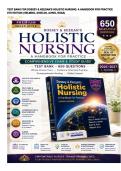
TEST BANK FOR DOSSEY & KEEGAN'S HOLISTIC NURSING: A HANDBOOK FOR PRACTICE
8TH EDITION (HELMING, SHIELDS, AVINO, ROSA)
,Comprehensive Table of Contents
Part I – Foundations of Holistic Nursing
• Chapter 1: Introduction to Holistic Nursing
• Chapter 2: Holistic Nursing: Scope and Standards of Practice
• Chapter 3: The Theory of Integral Nursing
• Chapter 4: The Science of Holistic Nursing
• Chapter 5: Holistic Nursing Across Diverse Practice Settings
• Chapter 6: Holistic Ethics
• Chapter 7: Spirituality and Health
• Chapter 8: Nursing Theory in Holistic Nursing Practice
• Chapter 9: Holistic Leadership
Core Value 2 – Holistic Nurse Self-Reflection, Self-Development, and Self-Care
• Chapter 10: Self-Development: The Foundation of Holistic Self-Care
• Chapter 11: Self-Assessments
• Chapter 12: Nutrition
• Chapter 13: Exercise and Mindful Movement
Core Value 3 – Holistic Caring Process
• Chapter 14: The Holistic Caring Process
• Chapter 15: Energetic Interconnectedness
• Chapter 16: Psychoneuroimmunology
• Chapter 17: Interprofessional Practice
• Chapter 18: Aesthetics in Holistic Nursing
• Chapter 19: Peaceful Transitions Through Life
Core Value 4 – Holistic Communication, Therapeutic Relationships, Healing Environments, and Cultural Care
• Chapter 20: Evolving from Therapeutic to Holistic Communication
• Chapter 21: Relationships
• Chapter 22: Nurse Coaching
• Chapter 23: Facilitating Lifestyle Change: Motivational Interviewing and Appreciative Inquiry
, • Chapter 24: Transcultural Engagement
• Chapter 25: Environmental Health
Core Value 5 – Holistic Education and Research
• Chapter 26: Holistic Nursing Education: Self-Reflection, Growth, Development, and Lifelong Learning
• Chapter 27: Creating, Appraising, and Applying Evidence to Enhance Holistic Nursing Practice
Advanced Concepts
• Chapter 28: Opportunities and Challenges in Advanced Holistic Nursing
• Chapter 29: Narrative Reflections of Advanced Holistic Nurses
• Chapter 30: Advanced Pharmacotherapeutics
• Chapter 31: Role of Advanced Holistic Nurses While Working with Patients with Chronic
Noncommunicable Disease Health Challenges
• Chapter 32: Cognitive-Affective Strategies to Promote Resilience and Well-Being
• Chapter 33: Holistic Approaches to Substance Use Recovery and Smoking Cessation
• Chapter 34: Current Trends in Sacred Medicine
• Chapter 35: Global Holistic Nursing
Comprehensive Final Review
• Integrated NCLEX-Style Clinical Judgment
• Evidence-Based Practice Applications
• Leadership & Ethical Decision-Making
• Cultural Competence & Global Health
• Holistic Patient-Centered Care
• Health Promotion & Disease Prevention
• Interprofessional Collaboration
• Professional Development & Lifelong Learning
• Comprehensive Certification Readiness Review
Core Value I: Holistic Philosophies, Theories, and Ethics
Chapter 1: Nursing History and the Evolution of Holistic Nursing
,Question 1
A nursing instructor asks a group of first-year students to identify the primary goal of holistic nursing. Which
student response indicates the best understanding of this philosophy?
A. Holistic nursing focuses primarily on curing disease through medical treatment.
B. Holistic nursing addresses the physical, emotional, mental, spiritual, social, cultural, and environmental
dimensions of health.
C. Holistic nursing emphasizes complementary therapies instead of conventional healthcare.
D. Holistic nursing limits nursing care to physical assessment findings.
Correct Answer: B
Detailed Rationale
Holistic nursing is a philosophy of practice that recognizes every individual as a whole person whose health is
influenced by interconnected physical, emotional, psychological, spiritual, cultural, social, and environmental
factors. Rather than concentrating exclusively on illness, holistic nurses strive to promote healing, well-being,
and optimal functioning by developing individualized, person-centered plans of care. This approach
complements evidence-informed nursing practice and values the therapeutic relationship as an essential
component of healing.
Why the Other Options Are Incorrect
A. This reflects the traditional biomedical model, which focuses primarily on disease treatment rather than
whole-person care.
C. Holistic nursing integrates conventional and complementary interventions when appropriate; it does not
replace evidence-based healthcare.
D. Physical assessment is important but represents only one aspect of a comprehensive holistic assessment.
Holistic Philosophy Integration
Holistic nursing begins with understanding the individual as an integrated whole rather than a collection of
symptoms or diagnoses.
Clinical Pearl
Patients frequently identify emotional or spiritual concerns as equally important as physical symptoms during
recovery.
NCLEX Success Strategy
When the word holistic appears, choose the option that considers the entire person, not just the illness.
Question 2
,During orientation, a newly hired nurse asks why Florence Nightingale is frequently associated with holistic
nursing. Which response by the nurse educator is most accurate?
A. She established the first nursing licensure examination.
B. She demonstrated that environmental conditions significantly influence healing and recovery.
C. She introduced complementary therapies into modern nursing.
D. She believed psychological health was unrelated to physical health.
Correct Answer: B
Detailed Rationale
Florence Nightingale recognized that factors such as fresh air, clean water, adequate nutrition, sanitation, light,
and quiet surroundings directly affected patient recovery. Her environmental philosophy remains one of the
earliest examples of whole-person nursing care and continues to influence holistic nursing practice today.
Why the Other Options Are Incorrect
A. Nursing licensure developed many years after Nightingale's work.
C. Although holistic nursing may include complementary therapies, Nightingale's primary contribution
centered on environmental healing.
D. Nightingale recognized the importance of emotional comfort alongside physical care.
Holistic Philosophy Integration
Healing environments support the body's natural ability to recover and promote overall well-being.
Clinical Pearl
Simple environmental interventions—such as reducing unnecessary noise and improving patient comfort—can
positively influence healing.
NCLEX Success Strategy
Associate Florence Nightingale with environment, sanitation, and healing.
Question 3
A patient living with advanced heart failure tells the nurse, "I know my illness won't go away, but I finally feel at
peace." Which holistic nursing concept does this statement best illustrate?
A. Healing can occur even when curing is not possible.
B. Cure and healing always occur together.
C. Healing depends solely on successful medical treatment.
D. Healing ends once chronic illness develops.
Correct Answer: A
, Detailed Rationale
Holistic nursing distinguishes healing from curing. While curing refers to eliminating disease, healing involves
achieving a sense of wholeness, peace, meaning, or improved quality of life despite illness. Patients with
chronic or terminal conditions may experience emotional, psychological, relational, or spiritual healing even
when their disease cannot be cured.
Why the Other Options Are Incorrect
B. Healing and curing are separate concepts.
C. Healing involves many dimensions beyond medical interventions.
D. Chronic illness does not prevent healing from occurring.
Holistic Philosophy Integration
Holistic nursing recognizes that healing encompasses the whole person, not merely disease resolution.
Clinical Pearl
Supporting hope, meaning, and dignity is an important nursing intervention in chronic illness.
NCLEX Success Strategy
Differentiate healing (wholeness) from curing (elimination of disease).
Question 4
While completing an admission assessment, the nurse asks about the patient's family support, cultural beliefs,
stress level, nutrition, sleep, and spiritual practices in addition to collecting physical health information. Which
principle of holistic nursing is the nurse demonstrating?
A. Task-oriented documentation
B. Comprehensive whole-person assessment
C. Biomedical disease management
D. Physician-directed assessment
Correct Answer: B
Detailed Rationale
Holistic nursing assessments extend beyond physical symptoms to include emotional, cultural, spiritual,
environmental, and social influences on health. Collecting this information helps nurses develop individualized
plans of care that support healing and promote patient-centered outcomes.
Why the Other Options Are Incorrect
,A. Task completion alone does not reflect holistic assessment.
C. Disease management is only one component of nursing care.
D. Nurses independently perform comprehensive nursing assessments.
Holistic Philosophy Integration
Every aspect of a person's life can influence health, healing, and recovery.
Clinical Pearl
Open-ended questions often reveal concerns that structured assessment tools may overlook.
NCLEX Success Strategy
Assessment questions involving multiple dimensions of health usually indicate holistic nursing.
Question 5
A patient receiving chemotherapy tells the nurse, "Meditation helps me stay calm before each treatment."
What is the nurse's best response?
A. "You should stop meditating while receiving treatment."
B. "Medication is the only effective way to reduce anxiety."
C. "Tell me more about how meditation helps you cope."
D. "Meditation has no place in professional nursing care."
Correct Answer: C
Detailed Rationale
Holistic nurses encourage patients to discuss personal coping strategies and recognize that practices such as
meditation may support emotional well-being when they are safe and meaningful to the individual. Exploring
these experiences strengthens the therapeutic relationship and promotes individualized care.
Why the Other Options Are Incorrect
A. There is no indication that meditation is unsafe in this situation.
B. Anxiety management often involves both pharmacologic and nonpharmacologic approaches.
D. Holistic nursing values patient-centered coping strategies when appropriate.
Holistic Philosophy Integration
Respecting individual beliefs and preferences strengthens healing partnerships.
Clinical Pearl
,Therapeutic communication begins with curiosity rather than judgment.
NCLEX Success Strategy
Choose responses that explore patient concerns instead of dismissing them.
Question 6
Which statement best reflects the evolution of modern holistic nursing practice?
A. Holistic nursing discourages scientific research.
B. Holistic nursing combines compassionate care with evidence-informed, person-centered practice.
C. Holistic nursing focuses exclusively on complementary therapies.
D. Holistic nursing minimizes collaboration with other healthcare professionals.
Correct Answer: B
Detailed Rationale
Modern holistic nursing integrates compassionate relationships, clinical expertise, patient values, and scientific
knowledge to promote healing. The philosophy supports collaboration with interdisciplinary teams while
recognizing each person's unique needs and preferences.
Why the Other Options Are Incorrect
A. Scientific inquiry strengthens holistic nursing practice.
C. Complementary therapies are optional components, not the defining feature.
D. Collaboration is essential to quality holistic care.
Holistic Philosophy Integration
Science and compassion work together to promote whole-person healing.
Clinical Pearl
Effective nursing combines technical competence with authentic human presence.
NCLEX Success Strategy
Look for answers that integrate patient-centered care with professional nursing practice.
Question 7
A nurse notices that a patient recovering from surgery has become increasingly withdrawn despite stable vital
signs and good pain control. Which nursing action best demonstrates holistic care?
,A. Wait until the next physician visit before discussing the patient's behavior.
B. Continue monitoring only physical assessment findings.
C. Explore the patient's emotional concerns, coping strategies, support system, and spiritual needs.
D. Focus exclusively on discharge planning.
Correct Answer: C
Detailed Rationale
Recovery involves more than physical stability. Emotional distress, loneliness, anxiety, and spiritual concerns
may significantly affect healing. Holistic nursing requires nurses to investigate these dimensions and provide
individualized interventions that address the patient's overall well-being.
Why the Other Options Are Incorrect
A. Nurses should independently assess psychosocial concerns.
B. Physical findings alone may not reveal the underlying problem.
D. Discharge planning is important but does not address the patient's immediate concerns.
Holistic Philosophy Integration
Healing occurs when nurses acknowledge both visible and invisible aspects of illness.
Clinical Pearl
Changes in mood may be the earliest sign that additional support is needed.
NCLEX Success Strategy
When physical findings are stable but behavior changes, assess psychosocial factors.
Question 8
Following a health education session, a patient asks how holistic nursing differs from routine nursing care.
Which explanation by the nurse is most appropriate?
A. Holistic nursing focuses mainly on alternative medicine.
B. Holistic nursing emphasizes treating the diagnosis before addressing the patient.
C. Holistic nursing considers the patient's values, goals, relationships, environment, and overall well-being
while providing evidence-informed care.
D. Holistic nursing is practiced only in specialized wellness centers.
Correct Answer: C
, Detailed Rationale
Holistic nursing is not defined by where it is practiced or by specific therapies. Instead, it is a philosophy that
recognizes the importance of understanding the person's experiences, beliefs, goals, relationships, and
environment while delivering individualized, high-quality nursing care.
Why the Other Options Are Incorrect
A. Alternative therapies may be included but do not define holistic nursing.
B. Holistic care begins with the person rather than the diagnosis.
D. Holistic nursing is practiced in all healthcare settings.
Holistic Philosophy Integration
Patient values guide individualized healing plans.
Clinical Pearl
Listening carefully to a patient's priorities often improves adherence to the care plan.
NCLEX Success Strategy
Holistic nursing is identified by its philosophy, not by its setting.
Question 9
An interdisciplinary team is developing a care plan for a patient whose cultural healing practices differ from
conventional recommendations. Which nursing action best reflects holistic clinical judgment?
A. Exclude the patient's preferences to maintain consistency.
B. Encourage discussion of the patient's preferences while evaluating their safety and compatibility with the
treatment plan.
C. Tell the patient that cultural practices should not influence healthcare decisions.
D. Delay addressing the patient's concerns until discharge.
Correct Answer: B
Detailed Rationale
Holistic nursing respects patient autonomy and cultural diversity while ensuring safe, effective care. Nurses
advocate for respectful dialogue, evaluate potential risks and benefits, and collaborate with the healthcare
team to integrate patient preferences whenever appropriate.
Why the Other Options Are Incorrect
A. Ignores patient-centered care.
8TH EDITION (HELMING, SHIELDS, AVINO, ROSA)
,Comprehensive Table of Contents
Part I – Foundations of Holistic Nursing
• Chapter 1: Introduction to Holistic Nursing
• Chapter 2: Holistic Nursing: Scope and Standards of Practice
• Chapter 3: The Theory of Integral Nursing
• Chapter 4: The Science of Holistic Nursing
• Chapter 5: Holistic Nursing Across Diverse Practice Settings
• Chapter 6: Holistic Ethics
• Chapter 7: Spirituality and Health
• Chapter 8: Nursing Theory in Holistic Nursing Practice
• Chapter 9: Holistic Leadership
Core Value 2 – Holistic Nurse Self-Reflection, Self-Development, and Self-Care
• Chapter 10: Self-Development: The Foundation of Holistic Self-Care
• Chapter 11: Self-Assessments
• Chapter 12: Nutrition
• Chapter 13: Exercise and Mindful Movement
Core Value 3 – Holistic Caring Process
• Chapter 14: The Holistic Caring Process
• Chapter 15: Energetic Interconnectedness
• Chapter 16: Psychoneuroimmunology
• Chapter 17: Interprofessional Practice
• Chapter 18: Aesthetics in Holistic Nursing
• Chapter 19: Peaceful Transitions Through Life
Core Value 4 – Holistic Communication, Therapeutic Relationships, Healing Environments, and Cultural Care
• Chapter 20: Evolving from Therapeutic to Holistic Communication
• Chapter 21: Relationships
• Chapter 22: Nurse Coaching
• Chapter 23: Facilitating Lifestyle Change: Motivational Interviewing and Appreciative Inquiry
, • Chapter 24: Transcultural Engagement
• Chapter 25: Environmental Health
Core Value 5 – Holistic Education and Research
• Chapter 26: Holistic Nursing Education: Self-Reflection, Growth, Development, and Lifelong Learning
• Chapter 27: Creating, Appraising, and Applying Evidence to Enhance Holistic Nursing Practice
Advanced Concepts
• Chapter 28: Opportunities and Challenges in Advanced Holistic Nursing
• Chapter 29: Narrative Reflections of Advanced Holistic Nurses
• Chapter 30: Advanced Pharmacotherapeutics
• Chapter 31: Role of Advanced Holistic Nurses While Working with Patients with Chronic
Noncommunicable Disease Health Challenges
• Chapter 32: Cognitive-Affective Strategies to Promote Resilience and Well-Being
• Chapter 33: Holistic Approaches to Substance Use Recovery and Smoking Cessation
• Chapter 34: Current Trends in Sacred Medicine
• Chapter 35: Global Holistic Nursing
Comprehensive Final Review
• Integrated NCLEX-Style Clinical Judgment
• Evidence-Based Practice Applications
• Leadership & Ethical Decision-Making
• Cultural Competence & Global Health
• Holistic Patient-Centered Care
• Health Promotion & Disease Prevention
• Interprofessional Collaboration
• Professional Development & Lifelong Learning
• Comprehensive Certification Readiness Review
Core Value I: Holistic Philosophies, Theories, and Ethics
Chapter 1: Nursing History and the Evolution of Holistic Nursing
,Question 1
A nursing instructor asks a group of first-year students to identify the primary goal of holistic nursing. Which
student response indicates the best understanding of this philosophy?
A. Holistic nursing focuses primarily on curing disease through medical treatment.
B. Holistic nursing addresses the physical, emotional, mental, spiritual, social, cultural, and environmental
dimensions of health.
C. Holistic nursing emphasizes complementary therapies instead of conventional healthcare.
D. Holistic nursing limits nursing care to physical assessment findings.
Correct Answer: B
Detailed Rationale
Holistic nursing is a philosophy of practice that recognizes every individual as a whole person whose health is
influenced by interconnected physical, emotional, psychological, spiritual, cultural, social, and environmental
factors. Rather than concentrating exclusively on illness, holistic nurses strive to promote healing, well-being,
and optimal functioning by developing individualized, person-centered plans of care. This approach
complements evidence-informed nursing practice and values the therapeutic relationship as an essential
component of healing.
Why the Other Options Are Incorrect
A. This reflects the traditional biomedical model, which focuses primarily on disease treatment rather than
whole-person care.
C. Holistic nursing integrates conventional and complementary interventions when appropriate; it does not
replace evidence-based healthcare.
D. Physical assessment is important but represents only one aspect of a comprehensive holistic assessment.
Holistic Philosophy Integration
Holistic nursing begins with understanding the individual as an integrated whole rather than a collection of
symptoms or diagnoses.
Clinical Pearl
Patients frequently identify emotional or spiritual concerns as equally important as physical symptoms during
recovery.
NCLEX Success Strategy
When the word holistic appears, choose the option that considers the entire person, not just the illness.
Question 2
,During orientation, a newly hired nurse asks why Florence Nightingale is frequently associated with holistic
nursing. Which response by the nurse educator is most accurate?
A. She established the first nursing licensure examination.
B. She demonstrated that environmental conditions significantly influence healing and recovery.
C. She introduced complementary therapies into modern nursing.
D. She believed psychological health was unrelated to physical health.
Correct Answer: B
Detailed Rationale
Florence Nightingale recognized that factors such as fresh air, clean water, adequate nutrition, sanitation, light,
and quiet surroundings directly affected patient recovery. Her environmental philosophy remains one of the
earliest examples of whole-person nursing care and continues to influence holistic nursing practice today.
Why the Other Options Are Incorrect
A. Nursing licensure developed many years after Nightingale's work.
C. Although holistic nursing may include complementary therapies, Nightingale's primary contribution
centered on environmental healing.
D. Nightingale recognized the importance of emotional comfort alongside physical care.
Holistic Philosophy Integration
Healing environments support the body's natural ability to recover and promote overall well-being.
Clinical Pearl
Simple environmental interventions—such as reducing unnecessary noise and improving patient comfort—can
positively influence healing.
NCLEX Success Strategy
Associate Florence Nightingale with environment, sanitation, and healing.
Question 3
A patient living with advanced heart failure tells the nurse, "I know my illness won't go away, but I finally feel at
peace." Which holistic nursing concept does this statement best illustrate?
A. Healing can occur even when curing is not possible.
B. Cure and healing always occur together.
C. Healing depends solely on successful medical treatment.
D. Healing ends once chronic illness develops.
Correct Answer: A
, Detailed Rationale
Holistic nursing distinguishes healing from curing. While curing refers to eliminating disease, healing involves
achieving a sense of wholeness, peace, meaning, or improved quality of life despite illness. Patients with
chronic or terminal conditions may experience emotional, psychological, relational, or spiritual healing even
when their disease cannot be cured.
Why the Other Options Are Incorrect
B. Healing and curing are separate concepts.
C. Healing involves many dimensions beyond medical interventions.
D. Chronic illness does not prevent healing from occurring.
Holistic Philosophy Integration
Holistic nursing recognizes that healing encompasses the whole person, not merely disease resolution.
Clinical Pearl
Supporting hope, meaning, and dignity is an important nursing intervention in chronic illness.
NCLEX Success Strategy
Differentiate healing (wholeness) from curing (elimination of disease).
Question 4
While completing an admission assessment, the nurse asks about the patient's family support, cultural beliefs,
stress level, nutrition, sleep, and spiritual practices in addition to collecting physical health information. Which
principle of holistic nursing is the nurse demonstrating?
A. Task-oriented documentation
B. Comprehensive whole-person assessment
C. Biomedical disease management
D. Physician-directed assessment
Correct Answer: B
Detailed Rationale
Holistic nursing assessments extend beyond physical symptoms to include emotional, cultural, spiritual,
environmental, and social influences on health. Collecting this information helps nurses develop individualized
plans of care that support healing and promote patient-centered outcomes.
Why the Other Options Are Incorrect
,A. Task completion alone does not reflect holistic assessment.
C. Disease management is only one component of nursing care.
D. Nurses independently perform comprehensive nursing assessments.
Holistic Philosophy Integration
Every aspect of a person's life can influence health, healing, and recovery.
Clinical Pearl
Open-ended questions often reveal concerns that structured assessment tools may overlook.
NCLEX Success Strategy
Assessment questions involving multiple dimensions of health usually indicate holistic nursing.
Question 5
A patient receiving chemotherapy tells the nurse, "Meditation helps me stay calm before each treatment."
What is the nurse's best response?
A. "You should stop meditating while receiving treatment."
B. "Medication is the only effective way to reduce anxiety."
C. "Tell me more about how meditation helps you cope."
D. "Meditation has no place in professional nursing care."
Correct Answer: C
Detailed Rationale
Holistic nurses encourage patients to discuss personal coping strategies and recognize that practices such as
meditation may support emotional well-being when they are safe and meaningful to the individual. Exploring
these experiences strengthens the therapeutic relationship and promotes individualized care.
Why the Other Options Are Incorrect
A. There is no indication that meditation is unsafe in this situation.
B. Anxiety management often involves both pharmacologic and nonpharmacologic approaches.
D. Holistic nursing values patient-centered coping strategies when appropriate.
Holistic Philosophy Integration
Respecting individual beliefs and preferences strengthens healing partnerships.
Clinical Pearl
,Therapeutic communication begins with curiosity rather than judgment.
NCLEX Success Strategy
Choose responses that explore patient concerns instead of dismissing them.
Question 6
Which statement best reflects the evolution of modern holistic nursing practice?
A. Holistic nursing discourages scientific research.
B. Holistic nursing combines compassionate care with evidence-informed, person-centered practice.
C. Holistic nursing focuses exclusively on complementary therapies.
D. Holistic nursing minimizes collaboration with other healthcare professionals.
Correct Answer: B
Detailed Rationale
Modern holistic nursing integrates compassionate relationships, clinical expertise, patient values, and scientific
knowledge to promote healing. The philosophy supports collaboration with interdisciplinary teams while
recognizing each person's unique needs and preferences.
Why the Other Options Are Incorrect
A. Scientific inquiry strengthens holistic nursing practice.
C. Complementary therapies are optional components, not the defining feature.
D. Collaboration is essential to quality holistic care.
Holistic Philosophy Integration
Science and compassion work together to promote whole-person healing.
Clinical Pearl
Effective nursing combines technical competence with authentic human presence.
NCLEX Success Strategy
Look for answers that integrate patient-centered care with professional nursing practice.
Question 7
A nurse notices that a patient recovering from surgery has become increasingly withdrawn despite stable vital
signs and good pain control. Which nursing action best demonstrates holistic care?
,A. Wait until the next physician visit before discussing the patient's behavior.
B. Continue monitoring only physical assessment findings.
C. Explore the patient's emotional concerns, coping strategies, support system, and spiritual needs.
D. Focus exclusively on discharge planning.
Correct Answer: C
Detailed Rationale
Recovery involves more than physical stability. Emotional distress, loneliness, anxiety, and spiritual concerns
may significantly affect healing. Holistic nursing requires nurses to investigate these dimensions and provide
individualized interventions that address the patient's overall well-being.
Why the Other Options Are Incorrect
A. Nurses should independently assess psychosocial concerns.
B. Physical findings alone may not reveal the underlying problem.
D. Discharge planning is important but does not address the patient's immediate concerns.
Holistic Philosophy Integration
Healing occurs when nurses acknowledge both visible and invisible aspects of illness.
Clinical Pearl
Changes in mood may be the earliest sign that additional support is needed.
NCLEX Success Strategy
When physical findings are stable but behavior changes, assess psychosocial factors.
Question 8
Following a health education session, a patient asks how holistic nursing differs from routine nursing care.
Which explanation by the nurse is most appropriate?
A. Holistic nursing focuses mainly on alternative medicine.
B. Holistic nursing emphasizes treating the diagnosis before addressing the patient.
C. Holistic nursing considers the patient's values, goals, relationships, environment, and overall well-being
while providing evidence-informed care.
D. Holistic nursing is practiced only in specialized wellness centers.
Correct Answer: C
, Detailed Rationale
Holistic nursing is not defined by where it is practiced or by specific therapies. Instead, it is a philosophy that
recognizes the importance of understanding the person's experiences, beliefs, goals, relationships, and
environment while delivering individualized, high-quality nursing care.
Why the Other Options Are Incorrect
A. Alternative therapies may be included but do not define holistic nursing.
B. Holistic care begins with the person rather than the diagnosis.
D. Holistic nursing is practiced in all healthcare settings.
Holistic Philosophy Integration
Patient values guide individualized healing plans.
Clinical Pearl
Listening carefully to a patient's priorities often improves adherence to the care plan.
NCLEX Success Strategy
Holistic nursing is identified by its philosophy, not by its setting.
Question 9
An interdisciplinary team is developing a care plan for a patient whose cultural healing practices differ from
conventional recommendations. Which nursing action best reflects holistic clinical judgment?
A. Exclude the patient's preferences to maintain consistency.
B. Encourage discussion of the patient's preferences while evaluating their safety and compatibility with the
treatment plan.
C. Tell the patient that cultural practices should not influence healthcare decisions.
D. Delay addressing the patient's concerns until discharge.
Correct Answer: B
Detailed Rationale
Holistic nursing respects patient autonomy and cultural diversity while ensuring safe, effective care. Nurses
advocate for respectful dialogue, evaluate potential risks and benefits, and collaborate with the healthcare
team to integrate patient preferences whenever appropriate.
Why the Other Options Are Incorrect
A. Ignores patient-centered care.