

ecology biology
Study online at https://quizlet.com/_h5gk77
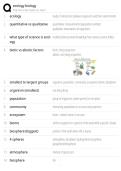
1. ecology study of interactions between organisms and their environments
2. quantitative vs qualitative quantitative: measurements/population numbers
qualitative: observations of organisms
3. what type of science is ecol- multidisciplinary (need knowledge from various science feilds)
ogy
4. biotic vs abiotic factors biotic: living organisms
abiotic: non-living organisms
5. smallest to largest groups organism, population, community, ecosystem, biome, biosphere
6. organism (smallest) one living thing
7. population group of organisms (same species) in one place
8. community interacting populations in an area (many species)
9. ecosystem biotic + abiotic factors in an area
10. biome all the ecosystems in a portion of the world with a specific climate
11. biosphere (biggest) portion of the earth where life is found
12. 4 spheres atmosphere, biosphere, hydrosphere/cryosphere,
geosphere(lithosphere)
13. atmosphere mixture of gases (air)
14. biosphere life
1/7
, ecology biology
Study online at https://quizlet.com/_h5gk77
15. hydrosphere water
16. cryosphere frozen water
17. geosphere/lithosphere earth, rocks, minerals, etc.
18. weather vs climate weather: daily temp and precipitation
climate: weather if a location over a long time
19. climatogram graph that shows the temp and precipitation in an area (changes
over time)
20. what areas on earth receive most: equator
the most/least solar radia- least: poles
tion
21. what does the unequal heat- global winds and different climates
ing of the earth cause
22. what are the 3 large circula- rising hot air and sinking cold air
tion patterns are caused by
23. 1. rising air creates an area 1. low
of ____ pressure (produces 2. high
2/7
Study online at https://quizlet.com/_h5gk77
1. ecology study of interactions between organisms and their environments
2. quantitative vs qualitative quantitative: measurements/population numbers
qualitative: observations of organisms
3. what type of science is ecol- multidisciplinary (need knowledge from various science feilds)
ogy
4. biotic vs abiotic factors biotic: living organisms
abiotic: non-living organisms
5. smallest to largest groups organism, population, community, ecosystem, biome, biosphere
6. organism (smallest) one living thing
7. population group of organisms (same species) in one place
8. community interacting populations in an area (many species)
9. ecosystem biotic + abiotic factors in an area
10. biome all the ecosystems in a portion of the world with a specific climate
11. biosphere (biggest) portion of the earth where life is found
12. 4 spheres atmosphere, biosphere, hydrosphere/cryosphere,
geosphere(lithosphere)
13. atmosphere mixture of gases (air)
14. biosphere life
1/7
, ecology biology
Study online at https://quizlet.com/_h5gk77
15. hydrosphere water
16. cryosphere frozen water
17. geosphere/lithosphere earth, rocks, minerals, etc.
18. weather vs climate weather: daily temp and precipitation
climate: weather if a location over a long time
19. climatogram graph that shows the temp and precipitation in an area (changes
over time)
20. what areas on earth receive most: equator
the most/least solar radia- least: poles
tion
21. what does the unequal heat- global winds and different climates
ing of the earth cause
22. what are the 3 large circula- rising hot air and sinking cold air
tion patterns are caused by
23. 1. rising air creates an area 1. low
of ____ pressure (produces 2. high
2/7


