

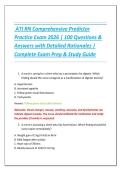
ATI RN Comprehensive Predictor
Practice Exam 2026 | 100 Questions &
Answers with Detailed Rationales |
Complete Exam Prep & Study Guide
1. A nurse is caring for a client who has a prescription for digoxin. Which
finding should the nurse recognize as a manifestation of digoxin toxicity?
A. Hypertension
B. Increased appetite
C. Yellow-green visual disturbances
D. Tachycardia
Answer: Yellow-green visual disturbances
Rationale: Visual changes, nausea, vomiting, anorexia, and dysrhythmias can
indicate digoxin toxicity. The nurse should withhold the medication and notify
the provider if toxicity is suspected.
2. A nurse is assessing a client who has heart failure. Which finding should the
nurse report immediately?
A. Weight gain of 2 kg (4.4 lb) in 48 hr
B. Mild fatigue after activity
C. Heart rate of 78/min
D. Blood pressure of 118/72 mm Hg
,Answer: Weight gain of 2 kg (4.4 lb) in 48 hr
Rationale: Rapid weight gain indicates fluid retention and worsening heart
failure. The provider should be notified so treatment can be adjusted.
3. A nurse is caring for a client who has COPD. Which intervention should the
nurse implement?
A. Administer oxygen at the highest available flow rate
B. Encourage pursed-lip breathing
C. Restrict fluid intake
D. Encourage prolonged bed rest
Answer: Encourage pursed-lip breathing
Rationale: Pursed-lip breathing prolongs exhalation, decreases air trapping, and
improves ventilation in clients with COPD.
4. A client is receiving a blood transfusion and develops chills, fever, and low
back pain. What is the nurse's priority action?
A. Slow the transfusion
B. Stop the transfusion
C. Administer acetaminophen
D. Obtain a urine specimen
Answer: Stop the transfusion
Rationale: These findings can indicate an acute hemolytic transfusion reaction.
The nurse should immediately stop the blood product and maintain IV access
with normal saline using new tubing.
5. A nurse is teaching a client who has diabetes mellitus about recognizing
hypoglycemia. Which finding should the nurse include?
A. Warm, dry skin
B. Bradycardia
,C. Tremors and diaphoresis
D. Fruity breath odor
Answer: Tremors and diaphoresis
Rationale: Hypoglycemia commonly causes sweating, tremors, palpitations,
hunger, anxiety, and confusion.
6. A nurse is caring for a client who has a potassium level of 2.8 mEq/L. Which
finding should the nurse anticipate?
A. Muscle weakness
B. Hyperactive reflexes
C. Peaked T waves
D. Hypertension
Answer: Muscle weakness
Rationale: Hypokalemia can cause muscle weakness, fatigue, constipation, and
cardiac dysrhythmias.
7. A nurse is caring for a client who has a serum sodium level of 122 mEq/L.
Which finding is the priority?
A. Dry skin
B. Confusion
C. Increased thirst
D. Muscle cramps
Answer: Confusion
Rationale: Severe hyponatremia can cause cerebral edema and neurological
changes, including confusion, seizures, and decreased level of consciousness.
8. A nurse is assessing a client who has a chest tube. Which finding requires
immediate intervention?
, A. Tidaling in the water-seal chamber
B. Continuous bubbling in the water-seal chamber
C. Drainage of 50 mL during the first hour
D. Mild discomfort at the insertion site
Answer: Continuous bubbling in the water-seal chamber
Rationale: Continuous bubbling in the water-seal chamber usually indicates an
air leak. The nurse should assess the system and connections.
9. A nurse is caring for a client who has a suspected stroke. Which finding is
most concerning?
A. Sudden unilateral weakness
B. Mild headache
C. Blood pressure of 130/80 mm Hg
D. Heart rate of 76/min
Answer: Sudden unilateral weakness
Rationale: Sudden unilateral weakness is a classic manifestation of an acute
stroke and requires immediate evaluation and treatment.
10.A nurse is caring for a client who has increased intracranial pressure. Which
intervention should the nurse implement?
A. Keep the client's neck flexed
B. Position the client flat
C. Elevate the head of the bed about 30°
D. Encourage frequent coughing
Answer: Elevate the head of the bed about 30°
Rationale: Elevating the head promotes venous drainage from the brain and can
help reduce intracranial pressure.
11.A nurse is caring for a client who has a seizure. Which action should the
nurse take?
Practice Exam 2026 | 100 Questions &
Answers with Detailed Rationales |
Complete Exam Prep & Study Guide
1. A nurse is caring for a client who has a prescription for digoxin. Which
finding should the nurse recognize as a manifestation of digoxin toxicity?
A. Hypertension
B. Increased appetite
C. Yellow-green visual disturbances
D. Tachycardia
Answer: Yellow-green visual disturbances
Rationale: Visual changes, nausea, vomiting, anorexia, and dysrhythmias can
indicate digoxin toxicity. The nurse should withhold the medication and notify
the provider if toxicity is suspected.
2. A nurse is assessing a client who has heart failure. Which finding should the
nurse report immediately?
A. Weight gain of 2 kg (4.4 lb) in 48 hr
B. Mild fatigue after activity
C. Heart rate of 78/min
D. Blood pressure of 118/72 mm Hg
,Answer: Weight gain of 2 kg (4.4 lb) in 48 hr
Rationale: Rapid weight gain indicates fluid retention and worsening heart
failure. The provider should be notified so treatment can be adjusted.
3. A nurse is caring for a client who has COPD. Which intervention should the
nurse implement?
A. Administer oxygen at the highest available flow rate
B. Encourage pursed-lip breathing
C. Restrict fluid intake
D. Encourage prolonged bed rest
Answer: Encourage pursed-lip breathing
Rationale: Pursed-lip breathing prolongs exhalation, decreases air trapping, and
improves ventilation in clients with COPD.
4. A client is receiving a blood transfusion and develops chills, fever, and low
back pain. What is the nurse's priority action?
A. Slow the transfusion
B. Stop the transfusion
C. Administer acetaminophen
D. Obtain a urine specimen
Answer: Stop the transfusion
Rationale: These findings can indicate an acute hemolytic transfusion reaction.
The nurse should immediately stop the blood product and maintain IV access
with normal saline using new tubing.
5. A nurse is teaching a client who has diabetes mellitus about recognizing
hypoglycemia. Which finding should the nurse include?
A. Warm, dry skin
B. Bradycardia
,C. Tremors and diaphoresis
D. Fruity breath odor
Answer: Tremors and diaphoresis
Rationale: Hypoglycemia commonly causes sweating, tremors, palpitations,
hunger, anxiety, and confusion.
6. A nurse is caring for a client who has a potassium level of 2.8 mEq/L. Which
finding should the nurse anticipate?
A. Muscle weakness
B. Hyperactive reflexes
C. Peaked T waves
D. Hypertension
Answer: Muscle weakness
Rationale: Hypokalemia can cause muscle weakness, fatigue, constipation, and
cardiac dysrhythmias.
7. A nurse is caring for a client who has a serum sodium level of 122 mEq/L.
Which finding is the priority?
A. Dry skin
B. Confusion
C. Increased thirst
D. Muscle cramps
Answer: Confusion
Rationale: Severe hyponatremia can cause cerebral edema and neurological
changes, including confusion, seizures, and decreased level of consciousness.
8. A nurse is assessing a client who has a chest tube. Which finding requires
immediate intervention?
, A. Tidaling in the water-seal chamber
B. Continuous bubbling in the water-seal chamber
C. Drainage of 50 mL during the first hour
D. Mild discomfort at the insertion site
Answer: Continuous bubbling in the water-seal chamber
Rationale: Continuous bubbling in the water-seal chamber usually indicates an
air leak. The nurse should assess the system and connections.
9. A nurse is caring for a client who has a suspected stroke. Which finding is
most concerning?
A. Sudden unilateral weakness
B. Mild headache
C. Blood pressure of 130/80 mm Hg
D. Heart rate of 76/min
Answer: Sudden unilateral weakness
Rationale: Sudden unilateral weakness is a classic manifestation of an acute
stroke and requires immediate evaluation and treatment.
10.A nurse is caring for a client who has increased intracranial pressure. Which
intervention should the nurse implement?
A. Keep the client's neck flexed
B. Position the client flat
C. Elevate the head of the bed about 30°
D. Encourage frequent coughing
Answer: Elevate the head of the bed about 30°
Rationale: Elevating the head promotes venous drainage from the brain and can
help reduce intracranial pressure.
11.A nurse is caring for a client who has a seizure. Which action should the
nurse take?


