WGU D703
WGU D703
Study online at https://quizlet.com/_h1l2es
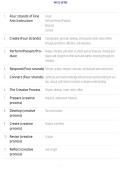
1. Four strands of Fine Create
Arts Instruction Perform/Present/Produce
Respond
Connect
2. Create (Four strands) Conceptualize, generate, develop, and organize artistic ideas. Refine
through persistence, reflection, and evaluation.
3. Perform/Present/Pro- Analyze, interpret, and select an artistic work to showcase. Develop tech-
duce niques and concepts to refine work and express meaning through pre-
sentation.
4. Respond (Four strands) Perceive, analyze, interpret, articulate, and evaluate work and process
5. Connect (Four strands) Synthesize and relate knowledge with personal meaning relating to soci-
etal, cultural, and historical contexts to deepen understanding.
6. The Creative Process Prepare, develop, create, revise, reflect
7. Prepare (creative Research, understand, reference
process)
8. Develop (creative Plan and visualize
process)
9. Create (creative Produce and refine
process)
10. Revise (creative Critique
process)
11. Reflect (creative Gain insight
process)
1/6
, WGU D703
WGU D703
Study online at https://quizlet.com/_h1l2es
12. Elements of Dance Body, energy, space time, action
13. Body (Dance Element) How dancers physically express themselves through movement including
alignment, flexibility, strength, and coordination
14. Energy (Dance Ele- Dynamics of movement to convey different emotions or to emphasize
ment) certain aspects. Includes intensity, speed, weight, and motion flow
15. Space (Dance element) The area movement occurs. Includes direction, level, pathway and focus
16. Time (Dance element) Rhythm, tempo, and duration of movement.
17. Action (Dance element) Specific movements and sequences such as gestures, steps, jumps, turns,
and balances
18. Elements of Drama Character, contrast, dramatic focus, language, mood, movement, place,
relationship, role, situation, space, symbol, tension, time
19. Character (Drama ele- Essence of a performance, embodies the story through personality, value,
ment) and belief
20. Contrast (Drama ele- Differences in characters, situations, and themes. Adds tensions to make
ment) them more dynamic and engaging
21. Dramatic Focus (Drama Central point of interest in a scene or play created through dialogue,
element) action, and symbolism
22. Language (Drama ele- Primary mode of character communication and requires an understand-
ment) ing of tone and inflection
23. Mood (Drama element) Emotional tone of the play created by sound, lighting and music
24. Place (Drama element) Encompasses the setting, time period, and social context
25. Connections between characters
2/6
WGU D703
Study online at https://quizlet.com/_h1l2es
1. Four strands of Fine Create
Arts Instruction Perform/Present/Produce
Respond
Connect
2. Create (Four strands) Conceptualize, generate, develop, and organize artistic ideas. Refine
through persistence, reflection, and evaluation.
3. Perform/Present/Pro- Analyze, interpret, and select an artistic work to showcase. Develop tech-
duce niques and concepts to refine work and express meaning through pre-
sentation.
4. Respond (Four strands) Perceive, analyze, interpret, articulate, and evaluate work and process
5. Connect (Four strands) Synthesize and relate knowledge with personal meaning relating to soci-
etal, cultural, and historical contexts to deepen understanding.
6. The Creative Process Prepare, develop, create, revise, reflect
7. Prepare (creative Research, understand, reference
process)
8. Develop (creative Plan and visualize
process)
9. Create (creative Produce and refine
process)
10. Revise (creative Critique
process)
11. Reflect (creative Gain insight
process)
1/6
, WGU D703
WGU D703
Study online at https://quizlet.com/_h1l2es
12. Elements of Dance Body, energy, space time, action
13. Body (Dance Element) How dancers physically express themselves through movement including
alignment, flexibility, strength, and coordination
14. Energy (Dance Ele- Dynamics of movement to convey different emotions or to emphasize
ment) certain aspects. Includes intensity, speed, weight, and motion flow
15. Space (Dance element) The area movement occurs. Includes direction, level, pathway and focus
16. Time (Dance element) Rhythm, tempo, and duration of movement.
17. Action (Dance element) Specific movements and sequences such as gestures, steps, jumps, turns,
and balances
18. Elements of Drama Character, contrast, dramatic focus, language, mood, movement, place,
relationship, role, situation, space, symbol, tension, time
19. Character (Drama ele- Essence of a performance, embodies the story through personality, value,
ment) and belief
20. Contrast (Drama ele- Differences in characters, situations, and themes. Adds tensions to make
ment) them more dynamic and engaging
21. Dramatic Focus (Drama Central point of interest in a scene or play created through dialogue,
element) action, and symbolism
22. Language (Drama ele- Primary mode of character communication and requires an understand-
ment) ing of tone and inflection
23. Mood (Drama element) Emotional tone of the play created by sound, lighting and music
24. Place (Drama element) Encompasses the setting, time period, and social context
25. Connections between characters
2/6