C190 Biology- WGU
C190 Biology- WGU
Study online at https://quizlet.com/_8g2o36
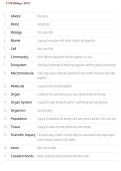
1. Abiotic Non-living
2. Biotic living things
3. Biology The study of life
4. Biome A group of ecosystems with similar climates and organisms
5. Cell Basic unit of life
6. Community All the different populations that live together in an area
7. Ecosystem A biological community of interacting organisms and their physical environment.
8. Macromolecule A very large organic molecule composed of many smaller molecules-technically
polymers
9. Molecule A group of atoms bonded together
10. Organ A collection of tissues that carry out a specialized function of the body
11. Organ System A group of organs that work together in performing vital body functions.
12. Organism Any living thing
13. Population A group of individuals that belong to the same species and live in the same area
14. Tissue A group of similar cells that perform the same function.
15. Scientific Inquiry The diverse ways in which scientists study the natural world and propose expla-
nations based on evidence they gather.
16. Atom Basic unit of matter
17. Covalent bonds Bonds created by sharing electrons with other atoms.
, C190 Biology- WGU
C190 Biology- WGU
Study online at https://quizlet.com/_8g2o36
18. Chemical Bonds An attraction between two atoms resulting from a sharing of outer-shell electrons
or the presence of opposite charges on the atoms. The bonded atoms gain
complete outer electron shells.
19. Electronegativity A measure of the ability of an atom in a chemical compound to attract electrons
20. Electron A subatomic particle that has a negative charge
21. Hydrogen Bonds Very weak bonds; occurs when a hydrogen atom in one molecule is attracted to
the electrostatic atom in another molecule
22. Ionic bonds Formed when one or more electrons are transferred from one atom to another
23. Neutron A subatomic particle that has no charge and that is found in the nucleus of an
atom
24. Proton A subatomic particle that has a positive charge and that is found in the nucleus of
an atom
25. Adhesion An attraction between molecules of different substances. Sticks to others!
26. Cohesion Attraction between molecules of the same substance. Sticks to itself!
27. Hydrophilic Attracted to water
28. Hydrophobic Water fearing
29. Surface Tension A measure of how difficult it is to stretch or break the surface of a liquid
30. Solute A substance that is dissolved in a solution.
31. Solutions A mixture where substances are distributed evenly. Has a solvent & solute.
32. Solvent A liquid substance capable of dissolving other substances
33. Amino Acids building blocks of proteins and monomers
, C190 Biology- WGU
C190 Biology- WGU
Study online at https://quizlet.com/_8g2o36
34. Carbohydrates the starches and sugars present in foods. Broken down into simple sugars
35. Enzymes Catalysts for chemical reactions in living things
36. Fats lipids that are solid at room temperature
37. Glucose the form of sugar that circulates in the blood and provides the major source of
energy for body tissues. When its level is low, we feel hunger.
38. Inorganic mole- Compounds that do not contain carbon
cules
39. Lipids Energy-rich organic compounds, such as fats, oils, and waxes, that are made of
carbon, hydrogen, and oxygen.
40. Monomer A simple compound whose molecules can join together to form polymers
41. Monosaccha- glucose, fructose, galactose
rides
42. Oils lipids that are liquid at room temperature
43. Organic Mole- carbon-based molecules
cules
44. Phospholipids A molecule that is a constituent of the inner bilayer of biological membranes,
having a polar, hydrophilic head and a nonpolar, hydrophobic tail.
45. Polymer A long molecule consisting of many similar or identical monomers linked together.
46. Polysaccharide Carbohydrates that are made up of more than two monosaccharides
47. Protein An organic compound that is made of one or more chains of amino acids and that
is a principal component of all cells
C190 Biology- WGU
Study online at https://quizlet.com/_8g2o36
1. Abiotic Non-living
2. Biotic living things
3. Biology The study of life
4. Biome A group of ecosystems with similar climates and organisms
5. Cell Basic unit of life
6. Community All the different populations that live together in an area
7. Ecosystem A biological community of interacting organisms and their physical environment.
8. Macromolecule A very large organic molecule composed of many smaller molecules-technically
polymers
9. Molecule A group of atoms bonded together
10. Organ A collection of tissues that carry out a specialized function of the body
11. Organ System A group of organs that work together in performing vital body functions.
12. Organism Any living thing
13. Population A group of individuals that belong to the same species and live in the same area
14. Tissue A group of similar cells that perform the same function.
15. Scientific Inquiry The diverse ways in which scientists study the natural world and propose expla-
nations based on evidence they gather.
16. Atom Basic unit of matter
17. Covalent bonds Bonds created by sharing electrons with other atoms.
, C190 Biology- WGU
C190 Biology- WGU
Study online at https://quizlet.com/_8g2o36
18. Chemical Bonds An attraction between two atoms resulting from a sharing of outer-shell electrons
or the presence of opposite charges on the atoms. The bonded atoms gain
complete outer electron shells.
19. Electronegativity A measure of the ability of an atom in a chemical compound to attract electrons
20. Electron A subatomic particle that has a negative charge
21. Hydrogen Bonds Very weak bonds; occurs when a hydrogen atom in one molecule is attracted to
the electrostatic atom in another molecule
22. Ionic bonds Formed when one or more electrons are transferred from one atom to another
23. Neutron A subatomic particle that has no charge and that is found in the nucleus of an
atom
24. Proton A subatomic particle that has a positive charge and that is found in the nucleus of
an atom
25. Adhesion An attraction between molecules of different substances. Sticks to others!
26. Cohesion Attraction between molecules of the same substance. Sticks to itself!
27. Hydrophilic Attracted to water
28. Hydrophobic Water fearing
29. Surface Tension A measure of how difficult it is to stretch or break the surface of a liquid
30. Solute A substance that is dissolved in a solution.
31. Solutions A mixture where substances are distributed evenly. Has a solvent & solute.
32. Solvent A liquid substance capable of dissolving other substances
33. Amino Acids building blocks of proteins and monomers
, C190 Biology- WGU
C190 Biology- WGU
Study online at https://quizlet.com/_8g2o36
34. Carbohydrates the starches and sugars present in foods. Broken down into simple sugars
35. Enzymes Catalysts for chemical reactions in living things
36. Fats lipids that are solid at room temperature
37. Glucose the form of sugar that circulates in the blood and provides the major source of
energy for body tissues. When its level is low, we feel hunger.
38. Inorganic mole- Compounds that do not contain carbon
cules
39. Lipids Energy-rich organic compounds, such as fats, oils, and waxes, that are made of
carbon, hydrogen, and oxygen.
40. Monomer A simple compound whose molecules can join together to form polymers
41. Monosaccha- glucose, fructose, galactose
rides
42. Oils lipids that are liquid at room temperature
43. Organic Mole- carbon-based molecules
cules
44. Phospholipids A molecule that is a constituent of the inner bilayer of biological membranes,
having a polar, hydrophilic head and a nonpolar, hydrophobic tail.
45. Polymer A long molecule consisting of many similar or identical monomers linked together.
46. Polysaccharide Carbohydrates that are made up of more than two monosaccharides
47. Protein An organic compound that is made of one or more chains of amino acids and that
is a principal component of all cells