D351 WGU
D351 WGU
Study online at https://quizlet.com/_eit4sl
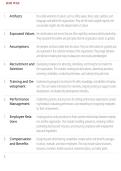
1. Artifacts the visible elements of culture, such as office layout, dress code, symbols, and
language used within the organization. They are the most tangible aspects and
can provide insights into the deeper levels of culture.
2. Espoused Values the stated values and norms that are often explicitly communicated by leadership.
They represent the beliefs and principles that the organization claims to uphold.
3. Assumptions the deepest and least visible level of culture. They are often taken for granted and
are ingrained in the collective mindset of the organization. They shape behavior
and decision-making but may not always be consciously acknowledged.
4. Recruitment and Developing strategies for attracting, identifying, and hiring the best talent for
Selection the organization. This includes creating job descriptions, advertising positions,
screening candidates, conducting interviews, and making hiring decisions
5. Training and De- Implementing programs to enhance the skills, knowledge, and abilities of employ-
velopment ees. This can involve orientation for new hires, ongoing training to support career
development, and leadership development initiatives.
6. Performance Establishing systems and processes for setting performance expectations, provid-
Management ing feedback, evaluating performance, and rewarding or recognizing employees
for their achievements
7. Employee Rela- Creating policies and procedures to foster positive relationships between employ-
tions ees and the organization. This includes handling grievances, resolving conflicts,
promoting diversity and inclusion, and ensuring compliance with employment
laws and regulations
8. Compensation Designing and administering competitive compensation and benefits packages
and Benefits to attract, motivate, and retain employees. This may include salary structures,
bonuses, incentives, health insurance, retirement plans, and other perks
9.
1/5
, D351 WGU
D351 WGU
Study online at https://quizlet.com/_eit4sl
Workforce Plan- Anticipating future staffing needs and developing strategies to ensure the organi-
ning zation has the right people in the right roles at the right time. This involves analyzing
workforce trends, forecasting demand, and implementing succession planning
initiatives
10. Employee En- Implementing initiatives to enhance employee satisfaction, motivation, and com-
gagement and mitment to the organization. This can include promoting a positive work culture,
Retention providing opportunities for career growth, and offering work-life balance pro-
grams
11. HR Technology Leveraging technology and data analytics to streamline HR processes, improve
and Data Analyt- decision-making, and enhance the employee experience. This may include im-
ics plementing HRIS (Human Resource Information Systems), talent management
software, and analytics tools for workforce planning and predictive modeling
12. OUCH Objective
Uniform in application
Consistent in effect
Has job relatedness
13. Objective HR decisions and actions should be based on objective criteria rather than subjec-
tive biases or personal opinions. This helps ensure fairness and equity in processes
such as recruitment, selection, performance evaluation, and disciplinary actions
14. Uniform in Appli- Policies and procedures should be consistently applied to all employees across
cation the organization. This consistency helps prevent discrimination or favoritism and
promotes a sense of fairness and transparency
15. Consistent in Ef- HR practices should have consistent outcomes for all employees, regardless of their
fect demographic characteristics or other non-job-related factors. Consistency in the
effects of HR decisions helps mitigate the risk of disparate impact and ensures
compliance with anti-discrimination laws
2/5
D351 WGU
Study online at https://quizlet.com/_eit4sl
1. Artifacts the visible elements of culture, such as office layout, dress code, symbols, and
language used within the organization. They are the most tangible aspects and
can provide insights into the deeper levels of culture.
2. Espoused Values the stated values and norms that are often explicitly communicated by leadership.
They represent the beliefs and principles that the organization claims to uphold.
3. Assumptions the deepest and least visible level of culture. They are often taken for granted and
are ingrained in the collective mindset of the organization. They shape behavior
and decision-making but may not always be consciously acknowledged.
4. Recruitment and Developing strategies for attracting, identifying, and hiring the best talent for
Selection the organization. This includes creating job descriptions, advertising positions,
screening candidates, conducting interviews, and making hiring decisions
5. Training and De- Implementing programs to enhance the skills, knowledge, and abilities of employ-
velopment ees. This can involve orientation for new hires, ongoing training to support career
development, and leadership development initiatives.
6. Performance Establishing systems and processes for setting performance expectations, provid-
Management ing feedback, evaluating performance, and rewarding or recognizing employees
for their achievements
7. Employee Rela- Creating policies and procedures to foster positive relationships between employ-
tions ees and the organization. This includes handling grievances, resolving conflicts,
promoting diversity and inclusion, and ensuring compliance with employment
laws and regulations
8. Compensation Designing and administering competitive compensation and benefits packages
and Benefits to attract, motivate, and retain employees. This may include salary structures,
bonuses, incentives, health insurance, retirement plans, and other perks
9.
1/5
, D351 WGU
D351 WGU
Study online at https://quizlet.com/_eit4sl
Workforce Plan- Anticipating future staffing needs and developing strategies to ensure the organi-
ning zation has the right people in the right roles at the right time. This involves analyzing
workforce trends, forecasting demand, and implementing succession planning
initiatives
10. Employee En- Implementing initiatives to enhance employee satisfaction, motivation, and com-
gagement and mitment to the organization. This can include promoting a positive work culture,
Retention providing opportunities for career growth, and offering work-life balance pro-
grams
11. HR Technology Leveraging technology and data analytics to streamline HR processes, improve
and Data Analyt- decision-making, and enhance the employee experience. This may include im-
ics plementing HRIS (Human Resource Information Systems), talent management
software, and analytics tools for workforce planning and predictive modeling
12. OUCH Objective
Uniform in application
Consistent in effect
Has job relatedness
13. Objective HR decisions and actions should be based on objective criteria rather than subjec-
tive biases or personal opinions. This helps ensure fairness and equity in processes
such as recruitment, selection, performance evaluation, and disciplinary actions
14. Uniform in Appli- Policies and procedures should be consistently applied to all employees across
cation the organization. This consistency helps prevent discrimination or favoritism and
promotes a sense of fairness and transparency
15. Consistent in Ef- HR practices should have consistent outcomes for all employees, regardless of their
fect demographic characteristics or other non-job-related factors. Consistency in the
effects of HR decisions helps mitigate the risk of disparate impact and ensures
compliance with anti-discrimination laws
2/5