

___________________________________________________________________
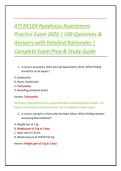
ATI NCLEX Readiness Assessment
Practice Exam 2026 | 100 Questions &
Answers with Detailed Rationales |
Complete Exam Prep & Study Guide
1. A nurse is assessing a client who has hypovolemic shock. Which finding
should the nurse expect?
A. Bradycardia
B. Warm, flushed skin
C. Tachycardia
D. Bounding peripheral pulses
Answer: Tachycardia
Rationale: Hypovolemic shock causes decreased circulating blood volume. The
body compensates by increasing heart rate to maintain cardiac output.
2. A nurse is caring for a client who has heart failure. Which finding indicates
worsening fluid retention?
A. Weight loss of 1 kg
B. Weight gain of 2 kg in 2 days
C. Heart rate of 72/min
D. Blood pressure of 118/70 mm Hg
Answer: Weight gain of 2 kg in 2 days
,Rationale: Rapid weight gain indicates fluid retention and can be an early sign
of worsening heart failure.
3. A nurse is teaching a client who has hypertension about dietary
modifications. Which statement indicates understanding?
A. "I should increase my intake of processed foods."
B. "I should add salt to my meals."
C. "I should limit foods that are high in sodium."
D. "I should avoid fruits and vegetables."
Answer: "I should limit foods that are high in sodium."
Rationale: Sodium restriction helps reduce fluid retention and can assist with
blood pressure control.
4. A nurse is assessing a client who has hypokalemia. Which finding should the
nurse expect?
A. Hyperactive reflexes
B. Muscle weakness
C. Peaked T waves
D. Facial twitching
Answer: Muscle weakness
Rationale: Hypokalemia can cause muscle weakness, fatigue, constipation, and
cardiac dysrhythmias.
5. A nurse is caring for a client who has hyperkalemia. Which ECG finding
should the nurse expect?
A. U waves
B. Prolonged QT interval
C. Peaked T waves
D. ST-segment elevation
Answer: Peaked T waves
,Rationale: Hyperkalemia commonly causes tall, peaked T waves and can
progress to life-threatening cardiac dysrhythmias.
6. A nurse is caring for a client who has COPD. Which intervention should the
nurse implement?
A. Encourage prolonged bed rest.
B. Administer oxygen at the highest possible flow rate.
C. Encourage pursed-lip breathing.
D. Restrict fluid intake to 500 mL/day.
Answer: Encourage pursed-lip breathing.
Rationale: Pursed-lip breathing helps keep airways open longer during
exhalation and promotes removal of trapped air.
7. A nurse is caring for a client who has asthma and develops acute wheezing
and dyspnea. Which medication should the nurse administer first?
A. Fluticasone
B. Montelukast
C. Albuterol
D. Salmeterol
Answer: Albuterol
Rationale: Albuterol is a short-acting bronchodilator used for rapid relief of
acute bronchospasm.
8. A nurse is assessing a client who has pneumonia. Which finding is most
concerning?
A. Productive cough
B. Temperature of 38.2°C (100.8°F)
C. Crackles in the lung bases
D. Oxygen saturation of 86%
Answer: Oxygen saturation of 86%
, Rationale: Significant hypoxemia is the priority because impaired oxygenation
can rapidly become life-threatening.
9. A nurse is caring for a client who has a chest tube. Which finding requires
immediate intervention?
A. Tidaling in the water-seal chamber
B. Mild discomfort at the insertion site
C. Continuous bubbling in the water-seal chamber
D. Small amount of drainage
Answer: Continuous bubbling in the water-seal chamber
Rationale: Continuous bubbling can indicate an air leak in the chest tube system
or from the client. The nurse should assess the system for the source.
10.A nurse is assessing a client who has a suspected pulmonary embolism.
Which finding should the nurse expect?
A. Bradycardia
B. Sudden dyspnea and chest pain
C. Increased appetite
D. Gradual weight gain
Answer: Sudden dyspnea and chest pain
Rationale: Pulmonary embolism commonly presents with sudden shortness of
breath, chest pain, tachycardia, and hypoxemia.
11.A nurse is caring for a client who has diabetes mellitus. Which finding is
consistent with hypoglycemia?
A. Polyuria
B. Fruity breath
C. Diaphoresis and tremors
D. Deep, rapid respirations
Answer: Diaphoresis and tremors
ATI NCLEX Readiness Assessment
Practice Exam 2026 | 100 Questions &
Answers with Detailed Rationales |
Complete Exam Prep & Study Guide
1. A nurse is assessing a client who has hypovolemic shock. Which finding
should the nurse expect?
A. Bradycardia
B. Warm, flushed skin
C. Tachycardia
D. Bounding peripheral pulses
Answer: Tachycardia
Rationale: Hypovolemic shock causes decreased circulating blood volume. The
body compensates by increasing heart rate to maintain cardiac output.
2. A nurse is caring for a client who has heart failure. Which finding indicates
worsening fluid retention?
A. Weight loss of 1 kg
B. Weight gain of 2 kg in 2 days
C. Heart rate of 72/min
D. Blood pressure of 118/70 mm Hg
Answer: Weight gain of 2 kg in 2 days
,Rationale: Rapid weight gain indicates fluid retention and can be an early sign
of worsening heart failure.
3. A nurse is teaching a client who has hypertension about dietary
modifications. Which statement indicates understanding?
A. "I should increase my intake of processed foods."
B. "I should add salt to my meals."
C. "I should limit foods that are high in sodium."
D. "I should avoid fruits and vegetables."
Answer: "I should limit foods that are high in sodium."
Rationale: Sodium restriction helps reduce fluid retention and can assist with
blood pressure control.
4. A nurse is assessing a client who has hypokalemia. Which finding should the
nurse expect?
A. Hyperactive reflexes
B. Muscle weakness
C. Peaked T waves
D. Facial twitching
Answer: Muscle weakness
Rationale: Hypokalemia can cause muscle weakness, fatigue, constipation, and
cardiac dysrhythmias.
5. A nurse is caring for a client who has hyperkalemia. Which ECG finding
should the nurse expect?
A. U waves
B. Prolonged QT interval
C. Peaked T waves
D. ST-segment elevation
Answer: Peaked T waves
,Rationale: Hyperkalemia commonly causes tall, peaked T waves and can
progress to life-threatening cardiac dysrhythmias.
6. A nurse is caring for a client who has COPD. Which intervention should the
nurse implement?
A. Encourage prolonged bed rest.
B. Administer oxygen at the highest possible flow rate.
C. Encourage pursed-lip breathing.
D. Restrict fluid intake to 500 mL/day.
Answer: Encourage pursed-lip breathing.
Rationale: Pursed-lip breathing helps keep airways open longer during
exhalation and promotes removal of trapped air.
7. A nurse is caring for a client who has asthma and develops acute wheezing
and dyspnea. Which medication should the nurse administer first?
A. Fluticasone
B. Montelukast
C. Albuterol
D. Salmeterol
Answer: Albuterol
Rationale: Albuterol is a short-acting bronchodilator used for rapid relief of
acute bronchospasm.
8. A nurse is assessing a client who has pneumonia. Which finding is most
concerning?
A. Productive cough
B. Temperature of 38.2°C (100.8°F)
C. Crackles in the lung bases
D. Oxygen saturation of 86%
Answer: Oxygen saturation of 86%
, Rationale: Significant hypoxemia is the priority because impaired oxygenation
can rapidly become life-threatening.
9. A nurse is caring for a client who has a chest tube. Which finding requires
immediate intervention?
A. Tidaling in the water-seal chamber
B. Mild discomfort at the insertion site
C. Continuous bubbling in the water-seal chamber
D. Small amount of drainage
Answer: Continuous bubbling in the water-seal chamber
Rationale: Continuous bubbling can indicate an air leak in the chest tube system
or from the client. The nurse should assess the system for the source.
10.A nurse is assessing a client who has a suspected pulmonary embolism.
Which finding should the nurse expect?
A. Bradycardia
B. Sudden dyspnea and chest pain
C. Increased appetite
D. Gradual weight gain
Answer: Sudden dyspnea and chest pain
Rationale: Pulmonary embolism commonly presents with sudden shortness of
breath, chest pain, tachycardia, and hypoxemia.
11.A nurse is caring for a client who has diabetes mellitus. Which finding is
consistent with hypoglycemia?
A. Polyuria
B. Fruity breath
C. Diaphoresis and tremors
D. Deep, rapid respirations
Answer: Diaphoresis and tremors


