

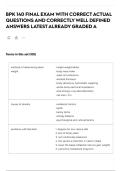
BPK 140 FINAL EXAM WITH CORRECT ACTUAL
QUESTIONS AND CORRECTLY WELL DEFINED
ANSWERS LATEST ALREADY GRADED A
Terms in this set (105)
methods of determining ideal -height-weight tables
weight -body mass index
-waist circumference
-skinfold thickness
-body density by hydrostatic weighing
-whole body electrical impedance
-dual energy x-ray absorptiometry
-cat scan / mri
causes of obesity -metabolic factors
-leptin
-family factor
-energy balance
-psychological and cultural factors
problems with fad diets 1. disguise for low calorie diet
2. loss of body water
3. not nutritionally balanced
4. too severe a reduction in caloric intake
5. lower the basal metabolic rate (so gain weight)
6. cannot be maintained long term
,anorexia nervosa inability to maintain body weight within 15% of
ideal weight, intense fear of getting fat, distorted
body image, denial or lack of insight into the
cause and seriousness of the weight loss
medical risks of anorexia nervosa fatigue, insomnia, hair loss, loss of period,
intolerance to cold, constipation, osteoporosis,
low blood pressure, fainting and irregular heart
beat.
bullemia nervosa episodes of binge eating followed by purging
with self induced vomiting or laxatives. during a
binge person feels out of control, afterwards
individual feels physically and emotionally
drained and disgusted
medical risks of bulemia nervosa stomach acid in vomit erodes tooth enamel,
damage to stomach / esophagus, dehydration
and disturbed body electrolyte balance can
cause irregular heartbeat and death.
guidelines for sound weight control 1. physical activity
2. diet
3. eating habits
4. social support
body mass index body mass / height - uses easily attainable data
to provide range of healthy weights
obesity a gross excess 20-30% of body weight or body
fat
, overfat the state of exceeding one's recommended
percentage of body fat by a certain margin
overweight the state of exceeding one's criterion weight by a
certain percentage or amount
set point theory each individual's body weight or body fat is
maintained within quite narrow limited around a
point called the set point
dietary recommendations for losing -An overall deficit in calories.
weight -A modest deficit in caloric intake rather than a
drastic deficit.
-A moderate reduction in caloric intake, sustained
over a period of time.
-Regular meals, rather than skipping meals.
-Eat a balanced diet with a variety of foods,
rather than diets that focus on a few foods or that
eliminate certain categories of foods
-eliminate "empty calorie" or "low nutrient
density" foods such as snack foods and alcohol.
-Choose lower-fat food options
QUESTIONS AND CORRECTLY WELL DEFINED
ANSWERS LATEST ALREADY GRADED A
Terms in this set (105)
methods of determining ideal -height-weight tables
weight -body mass index
-waist circumference
-skinfold thickness
-body density by hydrostatic weighing
-whole body electrical impedance
-dual energy x-ray absorptiometry
-cat scan / mri
causes of obesity -metabolic factors
-leptin
-family factor
-energy balance
-psychological and cultural factors
problems with fad diets 1. disguise for low calorie diet
2. loss of body water
3. not nutritionally balanced
4. too severe a reduction in caloric intake
5. lower the basal metabolic rate (so gain weight)
6. cannot be maintained long term
,anorexia nervosa inability to maintain body weight within 15% of
ideal weight, intense fear of getting fat, distorted
body image, denial or lack of insight into the
cause and seriousness of the weight loss
medical risks of anorexia nervosa fatigue, insomnia, hair loss, loss of period,
intolerance to cold, constipation, osteoporosis,
low blood pressure, fainting and irregular heart
beat.
bullemia nervosa episodes of binge eating followed by purging
with self induced vomiting or laxatives. during a
binge person feels out of control, afterwards
individual feels physically and emotionally
drained and disgusted
medical risks of bulemia nervosa stomach acid in vomit erodes tooth enamel,
damage to stomach / esophagus, dehydration
and disturbed body electrolyte balance can
cause irregular heartbeat and death.
guidelines for sound weight control 1. physical activity
2. diet
3. eating habits
4. social support
body mass index body mass / height - uses easily attainable data
to provide range of healthy weights
obesity a gross excess 20-30% of body weight or body
fat
, overfat the state of exceeding one's recommended
percentage of body fat by a certain margin
overweight the state of exceeding one's criterion weight by a
certain percentage or amount
set point theory each individual's body weight or body fat is
maintained within quite narrow limited around a
point called the set point
dietary recommendations for losing -An overall deficit in calories.
weight -A modest deficit in caloric intake rather than a
drastic deficit.
-A moderate reduction in caloric intake, sustained
over a period of time.
-Regular meals, rather than skipping meals.
-Eat a balanced diet with a variety of foods,
rather than diets that focus on a few foods or that
eliminate certain categories of foods
-eliminate "empty calorie" or "low nutrient
density" foods such as snack foods and alcohol.
-Choose lower-fat food options


