D671 - WGU
D671 - WGU
Study online at https://quizlet.com/_ijvtpl
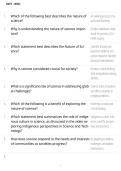
1. Which of the following best describes the nature of An evolving process of in-
science? quiry and discovery.
2. Why is understanding the nature of science impor- It helps individuals under-
tant? stand the process of sci-
entific inquiry.
3. Which statement best describes the Nature of Sci- Scientific theories are
ence? based on evidence and
can be revised or rejected
based on new evidence.
4. Why is science considered crucial for society? It fosters critical thinking
skills and problem-solving
abilities.
5. What is a significant role of science in addressing glob- Science drives innovation
al challenges? and offers solutions to
complex problems.
6. Which of the following is a benefit of exploring the Fostering curiosity and
nature of science? critical thinking
7. Which statement best summarizes the role of indige- Indigenous culture influ-
nous culture in science, as discussed in the video ex- ences scientific perspec-
ploring indigenous perspectives in Science and Tech- tives and practices.
nology?
8. How does science respond to the needs and interests By adapting to address
of communities as societies progress? challenges and explore
new frontiers
9.
, D671 - WGU
D671 - WGU
Study online at https://quizlet.com/_ijvtpl
What are the three dimensions of science instruction Disciplinary core ideas,
in the Next Generation Science Standards (NGSS)? science and engineering
practices, and crosscut-
ting concepts.
10. Which of the following best describes the purpose of They highlight overarch-
crosscutting concepts in science instruction? ing concepts that connect
different scientific disci-
plines and promote scien-
tific literacy.
11. What is one of the four major disciplines listed in the Engineering
Next Generation Science Standards (NGSS)?
12. Which of the three dimensions of science learning lays Core Disciplinary Ideas
the groundwork of scientific knowledge?
13. Standards dictate curriculum and activities in the ele- False
mentary science classroom.
14. Which of the following best describes alignment of The resources should
learning resources to elementary science standards? closely align with stan-
dards, ensuring that each
concept is adequately ad-
dressed and assessed.
15. Why is aligning curriculum to standards important for Because it ensures that
measuring student learning? learning experiences are
meaningful and coherent.
16. How do standards relate to curriculum planning? Standards can be consid-
ered a map guiding cur-
riculum development.
, D671 - WGU
D671 - WGU
Study online at https://quizlet.com/_ijvtpl
17. What role do standards play in ensuring effective Standards outline the es-
learning experiences? sential knowledge and
skills needed for success.
18. How does science help us understand the world By relying on inquiry,
around us? making observations, and
experiments to find an-
swers.
19. Which science resources best supports differentiated A set of leveled readers on
instruction for an elementary science classroom? various science topics with
accompanying hands-on
activities.
20. Which of the following is an example of erosion? Soil being carried away by
wind
21. Which boundary is associated with the formation of Convergent boundary
mountain ranges?
22. What term describes the process of water being ab- Transpiration
sorbed by plant roots and released into the atmos-
phere through their leaves?
23. What term describes the prediction of future weather Forecast
conditions based on scientific observations and data
analysis?
24. Which sphere is responsible for regulating the Earth's Atmosphere
climate and weather patterns?
25. Which of the following processes adds rock to Earth's Volcanic Activity
surface?
D671 - WGU
Study online at https://quizlet.com/_ijvtpl
1. Which of the following best describes the nature of An evolving process of in-
science? quiry and discovery.
2. Why is understanding the nature of science impor- It helps individuals under-
tant? stand the process of sci-
entific inquiry.
3. Which statement best describes the Nature of Sci- Scientific theories are
ence? based on evidence and
can be revised or rejected
based on new evidence.
4. Why is science considered crucial for society? It fosters critical thinking
skills and problem-solving
abilities.
5. What is a significant role of science in addressing glob- Science drives innovation
al challenges? and offers solutions to
complex problems.
6. Which of the following is a benefit of exploring the Fostering curiosity and
nature of science? critical thinking
7. Which statement best summarizes the role of indige- Indigenous culture influ-
nous culture in science, as discussed in the video ex- ences scientific perspec-
ploring indigenous perspectives in Science and Tech- tives and practices.
nology?
8. How does science respond to the needs and interests By adapting to address
of communities as societies progress? challenges and explore
new frontiers
9.
, D671 - WGU
D671 - WGU
Study online at https://quizlet.com/_ijvtpl
What are the three dimensions of science instruction Disciplinary core ideas,
in the Next Generation Science Standards (NGSS)? science and engineering
practices, and crosscut-
ting concepts.
10. Which of the following best describes the purpose of They highlight overarch-
crosscutting concepts in science instruction? ing concepts that connect
different scientific disci-
plines and promote scien-
tific literacy.
11. What is one of the four major disciplines listed in the Engineering
Next Generation Science Standards (NGSS)?
12. Which of the three dimensions of science learning lays Core Disciplinary Ideas
the groundwork of scientific knowledge?
13. Standards dictate curriculum and activities in the ele- False
mentary science classroom.
14. Which of the following best describes alignment of The resources should
learning resources to elementary science standards? closely align with stan-
dards, ensuring that each
concept is adequately ad-
dressed and assessed.
15. Why is aligning curriculum to standards important for Because it ensures that
measuring student learning? learning experiences are
meaningful and coherent.
16. How do standards relate to curriculum planning? Standards can be consid-
ered a map guiding cur-
riculum development.
, D671 - WGU
D671 - WGU
Study online at https://quizlet.com/_ijvtpl
17. What role do standards play in ensuring effective Standards outline the es-
learning experiences? sential knowledge and
skills needed for success.
18. How does science help us understand the world By relying on inquiry,
around us? making observations, and
experiments to find an-
swers.
19. Which science resources best supports differentiated A set of leveled readers on
instruction for an elementary science classroom? various science topics with
accompanying hands-on
activities.
20. Which of the following is an example of erosion? Soil being carried away by
wind
21. Which boundary is associated with the formation of Convergent boundary
mountain ranges?
22. What term describes the process of water being ab- Transpiration
sorbed by plant roots and released into the atmos-
phere through their leaves?
23. What term describes the prediction of future weather Forecast
conditions based on scientific observations and data
analysis?
24. Which sphere is responsible for regulating the Earth's Atmosphere
climate and weather patterns?
25. Which of the following processes adds rock to Earth's Volcanic Activity
surface?