WGU D202 Human Growth and Development
WGU D202 Human Growth and Development
Study online at https://quizlet.com/_d93h2n
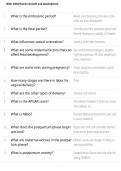
1. What is the embryonic period? Weeks 3-8 of pregnancy, formation of pla-
centa and brain development
2. What is the fetal period? From the end of the embryonic period until
the end of pregnancy, viability at 24 weeks
3. What influences sexual orientation? Genetics, birth order, hormones
4. What are some maternal factors that can Age, environmental teratogens, diabetes,
affect fetal development? high blood pressure, Rh factor, weight gain,
stress, depression
5. What are some risks during pregnancy? Ectopic pregnancy, preeclampsia, sponta-
neous abortion
6. How many stages are there in labor for Three
vaginal delivery?
7. What are the other types of delivery? Cesarean and induced
8. What is the APGAR score? Assessment of newborn's heart rate, muscle
tone, reflexes, etc.
9. What is NBAS? Neonatal Behavioral Assessment Scale used
to assess newborns.
10. When does the postpartum phase begin Begins after birth and ends when mother's
and end? body returns to pre-pregnancy form.
11. What are maternal worries in the postpar- Mother's needs and changes in taking on
tum phase? new responsibilities.
12. What is postpartum anxiety? Elevated sense of worry about the infant fol-
lowing childbirth.
, WGU D202 Human Growth and Development
WGU D202 Human Growth and Development
Study online at https://quizlet.com/_d93h2n
13. What is postpartum depression? Unusual sadness occurring after childbirth.
14. What is postpartum psychosis? Serious mental illness affecting new moth-
ers after childbirth.
15. Why should new mothers seek medical as- To address elevated worries about the in-
sistance for postpartum anxiety? fant.
16. What is physical growth? Increase in body size and organ size in ba-
bies.
17. What does physical development aid in? Maintenance of healthy weight, strong
bones, muscles, and heart.
18. What is motor development? Physical growth and strengthening of bones
and muscles in children.
19. What do gross motor skills focus on? Large muscle groups controlling head, tor-
so, arms, and legs.
20. What is the cephalocaudal path of devel- Development that proceeds from head to
opment? tail.
21. What is the proximodistal path of develop- Development that proceeds from midline
ment? outward.
22. What is sensory development? Processes used to take in information from
the environment.
23. How can sensory processes be affected? By the infant's developing motor abilities.
24. Why is nutrition important for health and It is related to improved infant, child, and
development? maternal health and stronger immune sys-
tems.
, WGU D202 Human Growth and Development
WGU D202 Human Growth and Development
Study online at https://quizlet.com/_d93h2n
25. What is kwashiorkor? A disease caused by protein deficiency.
26. When does kwashiorkor often occur? After the birth of another sibling.
27. What are genes? Inherited building blocks that determine
development.
28. What is mitosis? Nucleus makes copy of chromosomes and
splits into two cells.
29. What happens in meiosis? Chromosomes duplicate and divide twice,
resulting in four cells.
30. What is genotype? Sum total of inherited genes.
31. What is phenotype? Features that are expressed.
32. What are dominant genes? Express themselves in phenotype.
33. What are recessive genes? Express themselves only when paired with
similar gene.
34. What disorders are linked to genetics? Sickle cell disease, Tay-Sachs disease,
Tourette's syndrome, fragile X syndrome,
hemophilia.
35. What is a chromosomal abnormality? Inheriting too many or too few chromo-
somes.
36. What are teratogens? Environmental factors that can cause disor-
ders in infants.
37. What are examples of teratogens? Smoking, binge drinking, mercury expo-
sure, rubella.
, WGU D202 Human Growth and Development
WGU D202 Human Growth and Development
Study online at https://quizlet.com/_d93h2n
38. What is synaptogenesis? Rapid growth of synapses in the brain.
39. What is synaptic pruning? Elimination of unnecessary synapses.
40. What is neuroplasticity? Brain's ability to change and adapt.
41. Where does most neural activity occur in Cortex.
the infant brain?
42. How many hemispheres does the brain Two.
cortex have?
43. How many lobes are in each hemisphere Four.
of the brain?
44. What are the folds separating the lobes Fissures.
called?
45. What is the average amount of sleep for a Approximately 16.5 hours per 24-hour peri-
newborn? od.
46. What percentage of sleep time do new- Close to 50 percent.
borns spend in the REM phase?
47. What are the grasping and stepping re- More voluntary behaviors.
flexes eventually replaced by?
48. Which reflexes disappear within the first Grasping and stepping reflexes.
few months of life?
49. Which reflexes remain and serve impor- Eye-blink, swallowing, sneezing, and others.
tant functions?
50. What is the pincer grasp? Ability to grasp an object using the forefin-
ger and thumb.
WGU D202 Human Growth and Development
Study online at https://quizlet.com/_d93h2n
1. What is the embryonic period? Weeks 3-8 of pregnancy, formation of pla-
centa and brain development
2. What is the fetal period? From the end of the embryonic period until
the end of pregnancy, viability at 24 weeks
3. What influences sexual orientation? Genetics, birth order, hormones
4. What are some maternal factors that can Age, environmental teratogens, diabetes,
affect fetal development? high blood pressure, Rh factor, weight gain,
stress, depression
5. What are some risks during pregnancy? Ectopic pregnancy, preeclampsia, sponta-
neous abortion
6. How many stages are there in labor for Three
vaginal delivery?
7. What are the other types of delivery? Cesarean and induced
8. What is the APGAR score? Assessment of newborn's heart rate, muscle
tone, reflexes, etc.
9. What is NBAS? Neonatal Behavioral Assessment Scale used
to assess newborns.
10. When does the postpartum phase begin Begins after birth and ends when mother's
and end? body returns to pre-pregnancy form.
11. What are maternal worries in the postpar- Mother's needs and changes in taking on
tum phase? new responsibilities.
12. What is postpartum anxiety? Elevated sense of worry about the infant fol-
lowing childbirth.
, WGU D202 Human Growth and Development
WGU D202 Human Growth and Development
Study online at https://quizlet.com/_d93h2n
13. What is postpartum depression? Unusual sadness occurring after childbirth.
14. What is postpartum psychosis? Serious mental illness affecting new moth-
ers after childbirth.
15. Why should new mothers seek medical as- To address elevated worries about the in-
sistance for postpartum anxiety? fant.
16. What is physical growth? Increase in body size and organ size in ba-
bies.
17. What does physical development aid in? Maintenance of healthy weight, strong
bones, muscles, and heart.
18. What is motor development? Physical growth and strengthening of bones
and muscles in children.
19. What do gross motor skills focus on? Large muscle groups controlling head, tor-
so, arms, and legs.
20. What is the cephalocaudal path of devel- Development that proceeds from head to
opment? tail.
21. What is the proximodistal path of develop- Development that proceeds from midline
ment? outward.
22. What is sensory development? Processes used to take in information from
the environment.
23. How can sensory processes be affected? By the infant's developing motor abilities.
24. Why is nutrition important for health and It is related to improved infant, child, and
development? maternal health and stronger immune sys-
tems.
, WGU D202 Human Growth and Development
WGU D202 Human Growth and Development
Study online at https://quizlet.com/_d93h2n
25. What is kwashiorkor? A disease caused by protein deficiency.
26. When does kwashiorkor often occur? After the birth of another sibling.
27. What are genes? Inherited building blocks that determine
development.
28. What is mitosis? Nucleus makes copy of chromosomes and
splits into two cells.
29. What happens in meiosis? Chromosomes duplicate and divide twice,
resulting in four cells.
30. What is genotype? Sum total of inherited genes.
31. What is phenotype? Features that are expressed.
32. What are dominant genes? Express themselves in phenotype.
33. What are recessive genes? Express themselves only when paired with
similar gene.
34. What disorders are linked to genetics? Sickle cell disease, Tay-Sachs disease,
Tourette's syndrome, fragile X syndrome,
hemophilia.
35. What is a chromosomal abnormality? Inheriting too many or too few chromo-
somes.
36. What are teratogens? Environmental factors that can cause disor-
ders in infants.
37. What are examples of teratogens? Smoking, binge drinking, mercury expo-
sure, rubella.
, WGU D202 Human Growth and Development
WGU D202 Human Growth and Development
Study online at https://quizlet.com/_d93h2n
38. What is synaptogenesis? Rapid growth of synapses in the brain.
39. What is synaptic pruning? Elimination of unnecessary synapses.
40. What is neuroplasticity? Brain's ability to change and adapt.
41. Where does most neural activity occur in Cortex.
the infant brain?
42. How many hemispheres does the brain Two.
cortex have?
43. How many lobes are in each hemisphere Four.
of the brain?
44. What are the folds separating the lobes Fissures.
called?
45. What is the average amount of sleep for a Approximately 16.5 hours per 24-hour peri-
newborn? od.
46. What percentage of sleep time do new- Close to 50 percent.
borns spend in the REM phase?
47. What are the grasping and stepping re- More voluntary behaviors.
flexes eventually replaced by?
48. Which reflexes disappear within the first Grasping and stepping reflexes.
few months of life?
49. Which reflexes remain and serve impor- Eye-blink, swallowing, sneezing, and others.
tant functions?
50. What is the pincer grasp? Ability to grasp an object using the forefin-
ger and thumb.