
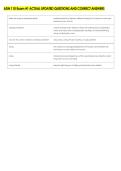
ADN 110 Exam #1 ACTUAL UPDATED QUESTIONS AND CORRECT ANSWERS
define the scope of professional identity professional identity is learned in different settings but it is important to have real
experiences (ex: clinical)
professional identity a sense of oneself, and in relation to others, that is influenced by characteristics,
norms, and values of the nursing discipline resulting in an individual thinking,
acting, and feeling like a nurse
what are the common attributes of professional identity? doing, being, acting ethically, flourishing, changing identities
doing the consensus or sociological perspective, this includes a skin orientation (ex:
showing you can do a skill proves success)
being the personal or psychological view of the nurse profession (ex: doing the correct
thing when no one is watching)
acting ethically doing the right thing (ex: not telling your family about pts condition)
, flourishing positive and transformational growth
changing identities reworking of the persons identity occurs in order to resolve new developmental
issue when new identity emerges
what are the primary roles and functions of the nurse? care provider, advocate, change agent, researcher, educator, leader, manager,
collaborator, delegator
what is the criteria for a profession? altruism, body of knowledge and research, accountability, higher education,
autonomy, code of ethics, professional organization, licensure, diversity
what are interventions for building a professional hearing expectations clearly, value debriefing and feedback from role models,
identity? engage in reflection, actively adopt a professional identity, understand your own
responsibilities and be accountable for them, build relationships with those
around you, develop personal self care habits, embrace any opportunity or
experiences with pts
exemplars of professional identity integrity, compassion, courage, humility, advocacy, human flourishing
integrity nurse does what she says she will do and acts with consistency/ purpose, basis of
trust (ex: saying you will be back in 10 mins ton recheck vitals)
compassion feeling what another is feeling and responding to it with the internet of doing
something to help (ex: responding to a pts call light with genuine interest
courage to affect change and " to stand in opposition for moral rightness" (ex: speaking up
when a colleague did not wash their hands before entering a room)
humility views the world with equanimity, taking neither a overstated amount of credit nor
blame for a particular situation (ex: clearly identifying your part in an error and not
accepting more blame than is yours)
advocacy last line of defense for a pt (ex: listening carefully to a help family members carry
out their wishes, and working with the hospital to do what you can to help
happen)
human flourishing when virtues or normative views of discipline are discussed (ex: encouraging pts
in their difficult times
what is the profession of nursing guided by? standards of practice (ANA) and nurse practice acts
define the scope of professional identity professional identity is learned in different settings but it is important to have real
experiences (ex: clinical)
professional identity a sense of oneself, and in relation to others, that is influenced by characteristics,
norms, and values of the nursing discipline resulting in an individual thinking,
acting, and feeling like a nurse
what are the common attributes of professional identity? doing, being, acting ethically, flourishing, changing identities
doing the consensus or sociological perspective, this includes a skin orientation (ex:
showing you can do a skill proves success)
being the personal or psychological view of the nurse profession (ex: doing the correct
thing when no one is watching)
acting ethically doing the right thing (ex: not telling your family about pts condition)
, flourishing positive and transformational growth
changing identities reworking of the persons identity occurs in order to resolve new developmental
issue when new identity emerges
what are the primary roles and functions of the nurse? care provider, advocate, change agent, researcher, educator, leader, manager,
collaborator, delegator
what is the criteria for a profession? altruism, body of knowledge and research, accountability, higher education,
autonomy, code of ethics, professional organization, licensure, diversity
what are interventions for building a professional hearing expectations clearly, value debriefing and feedback from role models,
identity? engage in reflection, actively adopt a professional identity, understand your own
responsibilities and be accountable for them, build relationships with those
around you, develop personal self care habits, embrace any opportunity or
experiences with pts
exemplars of professional identity integrity, compassion, courage, humility, advocacy, human flourishing
integrity nurse does what she says she will do and acts with consistency/ purpose, basis of
trust (ex: saying you will be back in 10 mins ton recheck vitals)
compassion feeling what another is feeling and responding to it with the internet of doing
something to help (ex: responding to a pts call light with genuine interest
courage to affect change and " to stand in opposition for moral rightness" (ex: speaking up
when a colleague did not wash their hands before entering a room)
humility views the world with equanimity, taking neither a overstated amount of credit nor
blame for a particular situation (ex: clearly identifying your part in an error and not
accepting more blame than is yours)
advocacy last line of defense for a pt (ex: listening carefully to a help family members carry
out their wishes, and working with the hospital to do what you can to help
happen)
human flourishing when virtues or normative views of discipline are discussed (ex: encouraging pts
in their difficult times
what is the profession of nursing guided by? standards of practice (ANA) and nurse practice acts


