

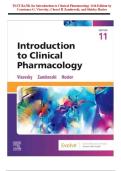
Test Bank for Introduction to Clinical Pharmacology, 11th Edition by Constance G. Visovsky, Cheryl H. Zambroski, and Shirley Hosler
Test Bank for Introduction to Clinical Pharmacology, 11th Edition by Constance G. Visovsky, Cheryl H. Zambroski, and Shirley Hosler Prepare for success in pharmacology with this comprehensive study companion designed to reinforce essential concepts found in Introduction to Clinical Pharmacology, 11th Edition by Constance G. Visovsky, Cheryl H. Zambroski, and Shirley Hosler. This resource is intended as a supplemental learning aid for students who want additional practice applying pharmacology principles, reviewing medication classifications, and strengthening clinical reasoning alongside their coursework. Clinical pharmacology is one of the most important subjects in nursing and allied health education because safe medication administration directly affects patient outcomes. Understanding drug classifications, mechanisms of action, therapeutic uses, adverse reactions, contraindications, precautions, drug interactions, dosage calculations, and patient education is essential for providing safe and effective care. This study resource is organized to help learners review these core topics in a structured and efficient manner. The material aligns with major concepts presented throughout the textbook, allowing students to review chapter content systematically while reinforcing knowledge through practice questions. It encourages active recall, critical thinking, and application of pharmacological principles to realistic patient care situations commonly encountered in healthcare settings. The resource covers fundamental pharmacology concepts including pharmacokinetics, pharmacodynamics, medication administration, dosage calculations, medication safety, legal and ethical considerations, adverse drug reactions, and patient education. Learners can strengthen their understanding of how medications are absorbed, distributed, metabolized, and eliminated while recognizing factors that influence drug effectiveness. Comprehensive review sections address the body's major systems and the medications commonly used to treat associated disorders. Topics include: Principles of clinical pharmacology Safe medication administration Drug classifications and prototypes Medication calculations Pharmacokinetics and pharmacodynamics Medication safety and error prevention Patient assessment before medication administration Patient teaching and medication adherence Drug interactions and contraindications Cultural and lifespan considerations in pharmacology Additional review includes medications affecting: Cardiovascular system Respiratory system Nervous system Endocrine system Gastrointestinal system Musculoskeletal system Immune system Renal system Reproductive system Integumentary system Learners also review medications commonly prescribed for hypertension, heart failure, arrhythmias, diabetes mellitus, asthma, chronic obstructive pulmonary disease (COPD), infections, pain management, psychiatric disorders, gastrointestinal disorders, autoimmune diseases, endocrine disorders, and many other conditions frequently encountered in clinical practice. Practice questions encourage students to analyze patient scenarios rather than simply memorize facts. Case-based exercises help develop clinical judgment by requiring learners to identify appropriate nursing interventions, recognize adverse reactions, prioritize patient safety, interpret medication orders, and evaluate therapeutic outcomes. This supplemental study guide also emphasizes medication safety standards, including the rights of medication administration, infection prevention, documentation principles, patient identification, allergy assessment, and monitoring for therapeutic and adverse effects. These concepts are critical for nursing students preparing for clinical rotations, laboratory competency assessments, and professional licensure examinations. Students preparing for classroom quizzes, unit examinations, comprehensive finals, and nursing licensing preparation will appreciate the organized format that promotes efficient review. Each practice session helps reinforce retention of key concepts while identifying knowledge gaps that require further study. The resource is especially beneficial for learners enrolled in nursing, practical nursing, vocational nursing, medical assisting, pharmacy technician, paramedic, and other allied health programs where pharmacology forms an essential component of the curriculum. Educators may also find this resource useful for generating classroom discussions, reinforcing lecture content, and encouraging active learning strategies. Students can use it individually or in study groups to improve understanding of difficult pharmacology concepts and strengthen confidence before examinations. Major learning objectives include: Understanding medication mechanisms of action Recognizing therapeutic indications Identifying adverse drug reactions Differentiating medication classifications Applying safe medication administration principles Developing sound clinical judgment Improving patient education skills Strengthening pharmacology vocabulary Reinforcing dosage calculation skills Promoting evidence-informed medication management Because pharmacology evolves continuously, students are encouraged to combine this study aid with current instructor guidance, official textbook content, institutional policies, and up-to-date clinical practice guidelines. Using multiple educational resources helps develop a well-rounded understanding of medication therapy while supporting safe and competent patient care. Whether reviewing one chapter at a time or preparing for cumulative examinations, this pharmacology review companion offers an organized approach to mastering essential concepts. Its structured format promotes confidence, reinforces critical knowledge, and supports long-term retention of clinical pharmacology principles that students will continue to apply throughout their healthcare careers. Designed to complement the Introduction to Clinical Pharmacology, 11th Edition textbook, this supplemental resource serves as a valuable addition to any healthcare student's study routine. Through repeated practice and concept reinforcement, learners can build the knowledge and confidence necessary to succeed academically while preparing for safe medication administration in real-world clinical settings.
Document information
- Uploaded on
- July 31, 2026
- Number of pages
- 160
- Written in
- 2025/2026
- Type
- Exam (elaborations)
- Contains
- Questions & answers


