

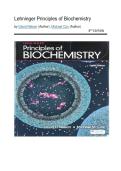
Lehninger Principles of Biochemistry
by David Nelson (Author), Michael Cox (Author)
8TH EDITION
,TABLE OF CONTENTS
Chapter 1 The Foundations of Biochemistry
Part I Structure and Catalysis
Chapter 2 Water, The Solvent of Life
Chapter 3 Amino Acids, Peptides, and Proteins
Chapter 4 The Three-Dimensional Structure of Proteins
Chapter 5 Protein Function
Chapter 6 Enzymes
Chapter 7 Carbohydrates and Glycobiology
Chapter 8 Nucleotides and Nucleic Acids
Chapter 9 DNA-Based Information Technologies
Chapter 10 Lipids
Chapter 11 Biological Membranes and Transport
Chapter 12 Biochemical Signaling
Part II Bioenergetics and Metabolism
Chapter 13 Introduction to Metabolism
Chapter 14 Glycolysis, Gluconeogenesis, and the Pentose Phosphate Pathway
Chapter 15 The Metabolism of Glycogen in Animals
Chapter 16 The Citric Acid Cycle
Chapter 17 Fatty Acid Catabolism
Chapter 18 Amino Acid Oxidation and the Production of Urea
Chapter 19 Oxidative Phosphorylation
Chapter 20 Photosynthesis and Carbohydrate Synthesis in Plants
Chapter 21 Lipid Biosynthesis
Chapter 22 Biosynthesis of Amino Acids, Nucleotides, and Related Molecules
Part III Information Pathways
Chapter 24 Genes and Chromosomes
Chapter 27 Protein Metabolism
,Chapter 28 Regulation of Gene Expression
, Test Bank: Lehninger Principles of Biochemistry, 8th Edition
Nelson, 2022 —
MULTIPLE CHOICE QUESTIONS
CHAPTER 1: The Foundations of Biochemistry
1. Which of the following best defines biochemistry?
A) The study of chemical reactions in industrial settings
B) The study of the chemical substances and processes occurring in living organisms
C) The study of organic chemistry in non-living systems
D) The study of geological chemical processes
Answer: B
2. Which of the following is NOT a property common to all living organisms?
A) The ability to perform metabolic transformations
B) The ability to replicate genetic information
C) The ability to maintain internal temperature equal to the environment
D) The ability to respond to environmental stimuli
Answer: C
3. The most abundant element by mass in living organisms is:
A) Hydrogen
B) Nitrogen
C) Oxygen
by David Nelson (Author), Michael Cox (Author)
8TH EDITION
,TABLE OF CONTENTS
Chapter 1 The Foundations of Biochemistry
Part I Structure and Catalysis
Chapter 2 Water, The Solvent of Life
Chapter 3 Amino Acids, Peptides, and Proteins
Chapter 4 The Three-Dimensional Structure of Proteins
Chapter 5 Protein Function
Chapter 6 Enzymes
Chapter 7 Carbohydrates and Glycobiology
Chapter 8 Nucleotides and Nucleic Acids
Chapter 9 DNA-Based Information Technologies
Chapter 10 Lipids
Chapter 11 Biological Membranes and Transport
Chapter 12 Biochemical Signaling
Part II Bioenergetics and Metabolism
Chapter 13 Introduction to Metabolism
Chapter 14 Glycolysis, Gluconeogenesis, and the Pentose Phosphate Pathway
Chapter 15 The Metabolism of Glycogen in Animals
Chapter 16 The Citric Acid Cycle
Chapter 17 Fatty Acid Catabolism
Chapter 18 Amino Acid Oxidation and the Production of Urea
Chapter 19 Oxidative Phosphorylation
Chapter 20 Photosynthesis and Carbohydrate Synthesis in Plants
Chapter 21 Lipid Biosynthesis
Chapter 22 Biosynthesis of Amino Acids, Nucleotides, and Related Molecules
Part III Information Pathways
Chapter 24 Genes and Chromosomes
Chapter 27 Protein Metabolism
,Chapter 28 Regulation of Gene Expression
, Test Bank: Lehninger Principles of Biochemistry, 8th Edition
Nelson, 2022 —
MULTIPLE CHOICE QUESTIONS
CHAPTER 1: The Foundations of Biochemistry
1. Which of the following best defines biochemistry?
A) The study of chemical reactions in industrial settings
B) The study of the chemical substances and processes occurring in living organisms
C) The study of organic chemistry in non-living systems
D) The study of geological chemical processes
Answer: B
2. Which of the following is NOT a property common to all living organisms?
A) The ability to perform metabolic transformations
B) The ability to replicate genetic information
C) The ability to maintain internal temperature equal to the environment
D) The ability to respond to environmental stimuli
Answer: C
3. The most abundant element by mass in living organisms is:
A) Hydrogen
B) Nitrogen
C) Oxygen


