
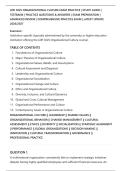
LDR 302S ORGANIZATIONAL CULTURE EXAM PRACTICE | STUDY GUIDE |
TESTBANK | PRACTICE QUESTIONS & ANSWERS | EXAM PREPARATION |
ADVANCED REVIEW | COMPREHENSIVE PRACTICE EXAM | LATEST UPDATE
2026/2027
Examiner:
Institution-specific (typically administered by the university or higher education
institution offering the LDR 302S Organizational Culture course).
TABLE OF CONTENTS
1. Foundations of Organizational Culture
2. Major Theories of Organizational Culture
3. Organizational Values, Beliefs, and Assumptions
4. Cultural Assessment and Diagnosis
5. Leadership and Organizational Culture
6. Organizational Socialization
7. Organizational Change and Culture
8. Ethics and Organizational Culture
9. Diversity, Inclusion, and Cultural Dynamics
10. Global and Cross-Cultural Management
11. Organizational Performance and Culture
12. Contemporary Issues in Organizational Culture
ORGANIZATIONAL CULTURE || LEADERSHIP || SHARED VALUES ||
ORGANIZATIONAL BEHAVIOR || CHANGE MANAGEMENT || CULTURAL
ASSESSMENT || ETHICS || DIVERSITY || SOCIALIZATION || STRATEGIC ALIGNMENT
|| PERFORMANCE || GLOBAL ORGANIZATIONS || DECISION MAKING ||
INNOVATION || CULTURAL TRANSFORMATION || GOVERNANCE ||
PROFESSIONAL PRACTICE
QUESTION 1.
A multinational organization consistently fails to implement strategic initiatives
despite having highly qualified employees and sufficient financial resources. An
,organizational analysis reveals deeply embedded assumptions that discourage
experimentation and cross-functional collaboration. Which intervention is most
likely to address the underlying cultural barrier?
A. Increase departmental performance targets without changing managerial
behaviors.
B. Redesign incentive systems while leadership models the desired collaborative
behaviors.
C. Replace all middle managers immediately.
D. Introduce additional operational procedures without addressing organizational
norms.
🔴 Correct Answer: B. Redesign incentive systems while leadership models the
desired collaborative behaviors.
🔵 Explanation: Organizational culture is reinforced through leadership behavior,
reward systems, and shared assumptions. Aligning incentives with visible leadership
commitment encourages sustainable cultural change. The remaining options either
ignore cultural drivers or rely on structural changes alone, which rarely transform
deeply held assumptions.
QUESTION 2.
According to widely accepted organizational culture frameworks, which cultural
element is generally considered the most difficult to observe directly?
A. Organizational symbols
B. Formal mission statements
C. Underlying basic assumptions
D. Dress code policies
🔴 Correct Answer: C. Underlying basic assumptions.
🔵 Explanation: Basic assumptions operate beneath conscious awareness and shape
employee perceptions and behaviors. Symbols, mission statements, and dress codes
are visible artifacts that provide clues about culture but do not fully explain its
underlying dynamics.
,QUESTION 3.
An organization rewards employees solely for individual achievements while
publicly promoting teamwork. What organizational consequence is most likely?
A. Greater trust in organizational communication
B. Improved collaboration across departments
C. Increased alignment between stated and enacted values
D. Development of employee cynicism toward organizational values
🔴 Correct Answer: D. Development of employee cynicism toward organizational
values.
🔵 Explanation: When reward systems contradict stated organizational values,
employees typically trust observed behaviors more than official messages. Such
inconsistencies reduce credibility and weaken cultural alignment. The other options
assume consistency that does not exist.
QUESTION 4.
Which scenario best illustrates a strong organizational culture?
A. Employees consistently interpret organizational priorities similarly despite
changing circumstances.
B. Every department independently develops conflicting organizational values.
C. Policies are ignored whenever workloads increase.
D. Employees frequently disagree about acceptable workplace behavior.
🔴 Correct Answer: A. Employees consistently interpret organizational priorities
similarly despite changing circumstances.
🔵 Explanation: Strong cultures create shared understanding and behavioral
consistency across the organization. The remaining scenarios demonstrate
fragmented norms, weak alignment, or inconsistent expectations that indicate weaker
cultural cohesion.
, QUESTION 5.
A leader intends to transform an organization from a highly bureaucratic culture to
one emphasizing innovation. Which initial leadership action is most consistent with
effective cultural transformation?
A. Eliminate every formal policy immediately.
B. Replace organizational branding.
C. Diagnose existing cultural assumptions before implementing change initiatives.
D. Focus exclusively on technology investments.
🔴 Correct Answer: C. Diagnose existing cultural assumptions before
implementing change initiatives.
🔵 Explanation: Effective cultural change begins with understanding the beliefs and
assumptions sustaining current behaviors. Technology, branding, or eliminating
procedures without diagnosis rarely addresses the underlying cultural system.
QUESTION 6.
Which leadership behavior most effectively reinforces an ethical organizational
culture?
A. Rewarding results regardless of the methods used
B. Applying ethical standards consistently at every organizational level
C. Delegating all ethical responsibilities to the compliance department
D. Prioritizing financial outcomes over stakeholder interests
🔴 Correct Answer: B. Applying ethical standards consistently at every
organizational level.
🔵 Explanation: Ethical cultures depend on consistent leadership behavior and
accountability. Leaders establish credibility by applying standards uniformly. The other
options encourage ethical inconsistency or shift responsibility away from leadership.
QUESTION 7.
TESTBANK | PRACTICE QUESTIONS & ANSWERS | EXAM PREPARATION |
ADVANCED REVIEW | COMPREHENSIVE PRACTICE EXAM | LATEST UPDATE
2026/2027
Examiner:
Institution-specific (typically administered by the university or higher education
institution offering the LDR 302S Organizational Culture course).
TABLE OF CONTENTS
1. Foundations of Organizational Culture
2. Major Theories of Organizational Culture
3. Organizational Values, Beliefs, and Assumptions
4. Cultural Assessment and Diagnosis
5. Leadership and Organizational Culture
6. Organizational Socialization
7. Organizational Change and Culture
8. Ethics and Organizational Culture
9. Diversity, Inclusion, and Cultural Dynamics
10. Global and Cross-Cultural Management
11. Organizational Performance and Culture
12. Contemporary Issues in Organizational Culture
ORGANIZATIONAL CULTURE || LEADERSHIP || SHARED VALUES ||
ORGANIZATIONAL BEHAVIOR || CHANGE MANAGEMENT || CULTURAL
ASSESSMENT || ETHICS || DIVERSITY || SOCIALIZATION || STRATEGIC ALIGNMENT
|| PERFORMANCE || GLOBAL ORGANIZATIONS || DECISION MAKING ||
INNOVATION || CULTURAL TRANSFORMATION || GOVERNANCE ||
PROFESSIONAL PRACTICE
QUESTION 1.
A multinational organization consistently fails to implement strategic initiatives
despite having highly qualified employees and sufficient financial resources. An
,organizational analysis reveals deeply embedded assumptions that discourage
experimentation and cross-functional collaboration. Which intervention is most
likely to address the underlying cultural barrier?
A. Increase departmental performance targets without changing managerial
behaviors.
B. Redesign incentive systems while leadership models the desired collaborative
behaviors.
C. Replace all middle managers immediately.
D. Introduce additional operational procedures without addressing organizational
norms.
🔴 Correct Answer: B. Redesign incentive systems while leadership models the
desired collaborative behaviors.
🔵 Explanation: Organizational culture is reinforced through leadership behavior,
reward systems, and shared assumptions. Aligning incentives with visible leadership
commitment encourages sustainable cultural change. The remaining options either
ignore cultural drivers or rely on structural changes alone, which rarely transform
deeply held assumptions.
QUESTION 2.
According to widely accepted organizational culture frameworks, which cultural
element is generally considered the most difficult to observe directly?
A. Organizational symbols
B. Formal mission statements
C. Underlying basic assumptions
D. Dress code policies
🔴 Correct Answer: C. Underlying basic assumptions.
🔵 Explanation: Basic assumptions operate beneath conscious awareness and shape
employee perceptions and behaviors. Symbols, mission statements, and dress codes
are visible artifacts that provide clues about culture but do not fully explain its
underlying dynamics.
,QUESTION 3.
An organization rewards employees solely for individual achievements while
publicly promoting teamwork. What organizational consequence is most likely?
A. Greater trust in organizational communication
B. Improved collaboration across departments
C. Increased alignment between stated and enacted values
D. Development of employee cynicism toward organizational values
🔴 Correct Answer: D. Development of employee cynicism toward organizational
values.
🔵 Explanation: When reward systems contradict stated organizational values,
employees typically trust observed behaviors more than official messages. Such
inconsistencies reduce credibility and weaken cultural alignment. The other options
assume consistency that does not exist.
QUESTION 4.
Which scenario best illustrates a strong organizational culture?
A. Employees consistently interpret organizational priorities similarly despite
changing circumstances.
B. Every department independently develops conflicting organizational values.
C. Policies are ignored whenever workloads increase.
D. Employees frequently disagree about acceptable workplace behavior.
🔴 Correct Answer: A. Employees consistently interpret organizational priorities
similarly despite changing circumstances.
🔵 Explanation: Strong cultures create shared understanding and behavioral
consistency across the organization. The remaining scenarios demonstrate
fragmented norms, weak alignment, or inconsistent expectations that indicate weaker
cultural cohesion.
, QUESTION 5.
A leader intends to transform an organization from a highly bureaucratic culture to
one emphasizing innovation. Which initial leadership action is most consistent with
effective cultural transformation?
A. Eliminate every formal policy immediately.
B. Replace organizational branding.
C. Diagnose existing cultural assumptions before implementing change initiatives.
D. Focus exclusively on technology investments.
🔴 Correct Answer: C. Diagnose existing cultural assumptions before
implementing change initiatives.
🔵 Explanation: Effective cultural change begins with understanding the beliefs and
assumptions sustaining current behaviors. Technology, branding, or eliminating
procedures without diagnosis rarely addresses the underlying cultural system.
QUESTION 6.
Which leadership behavior most effectively reinforces an ethical organizational
culture?
A. Rewarding results regardless of the methods used
B. Applying ethical standards consistently at every organizational level
C. Delegating all ethical responsibilities to the compliance department
D. Prioritizing financial outcomes over stakeholder interests
🔴 Correct Answer: B. Applying ethical standards consistently at every
organizational level.
🔵 Explanation: Ethical cultures depend on consistent leadership behavior and
accountability. Leaders establish credibility by applying standards uniformly. The other
options encourage ethical inconsistency or shift responsibility away from leadership.
QUESTION 7.


